
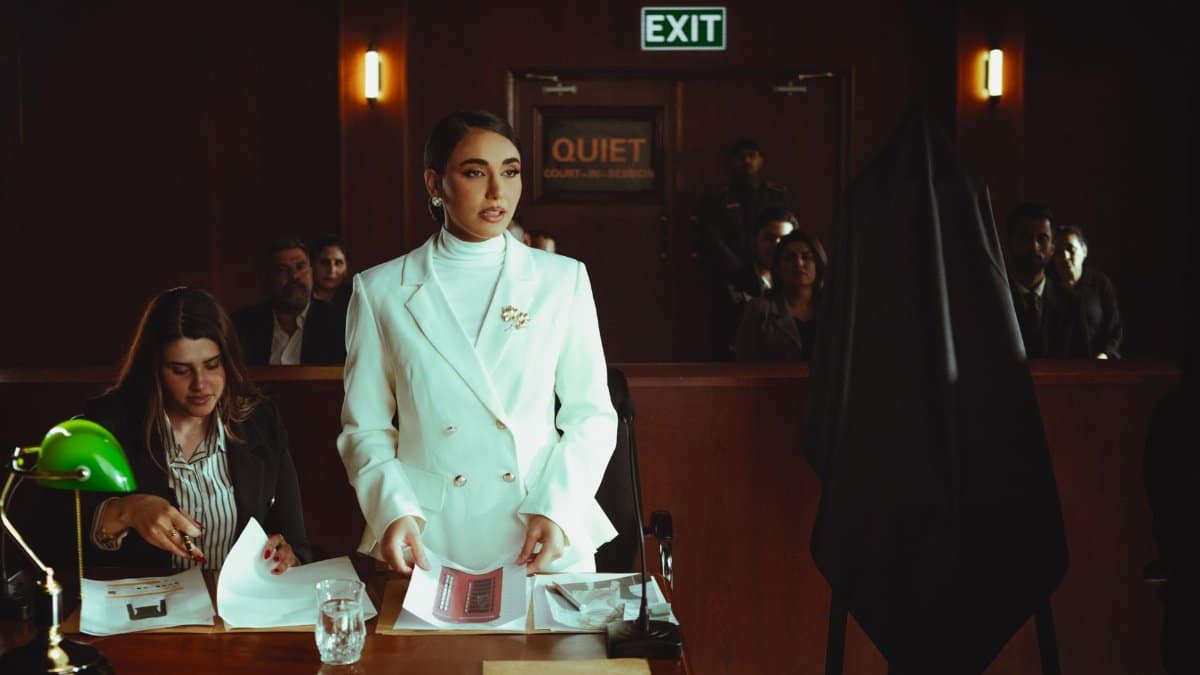
The hallway outside a Hennepin County courtroom carried the noise of a rally compressed into a few square yards of tile. Phones rose. Questions overlapped. Security staff tried to keep a path clear while cameras hunted for a face that already lives online. In that crush, James O’Keefe and Cam Higby, conservative influencers with large followings, made a first appearance in the Minneapolis voter fraud case and left the same day, released without bail, with another hearing set for Jan. 13. The scene was chaotic. The legal meaning of the day was narrower than the spectacle suggested.
A courthouse that briefly became a stage

People who cover courts know the difference between a filing and a verdict, and between a hallway and a record. On this morning the distinction was hard to see from the outside. Supporters and critics packed the same space. Some came to witness. Some came to post. The result was a public square grafted onto a building designed for quieter work: whispered conferences, paper passed between counsel, a judge managing a calendar rather than a crowd.
Local reporting, including an account in the Star Tribune, described the appearance and the release without bail. That reporting is the right place to start, because the internet version of the day traveled faster than any transcript. A link to that coverage sits here: Star Tribune report on the court appearance. Readers who want the sequence, rather than the shout, should treat the news report as a starting point and the court file as the authority.
Two names the audience already knew

O’Keefe is a familiar figure in conservative media, long associated with hidden camera projects and with a style of confrontation that treats exposure as the point. Higby is newer to many national readers but not to the audiences that follow election arguments on social platforms. Neither man walked into the building as an unknown defendant. They walked in as people whose followers already had a theory of the case, often formed before any judge spoke.
That fame changes the temperature, not the elements of criminal procedure. A recognizable defendant draws more cameras. More cameras draw more commentary. Commentary then circles back as evidence of public passion, which is not the same thing as evidence of a crime. The Minneapolis voter fraud case now carries that extra weight: a legal matter and a content engine, running on the same names.
What release without bail actually signals
Release without bail is easy to misread. It is not an acquittal. It is not a finding that the accusations are thin. It is a decision, at an early stage, that the court did not require money or detention to secure the next appearance. Judges weigh flight risk, the nature of the allegations as then presented, community ties, and the practical question of whether a person will come back. Those factors can point toward release even when the underlying dispute is serious.
The opposite mistake is just as common. Supporters sometimes treat freedom to leave the building as proof that the state has nothing. Opponents sometimes treat the mere filing as proof that the state has everything. Neither reading survives contact with how American criminal courts actually open a case. The first appearance is an administrative and constitutional checkpoint. It is where identity is confirmed, rights are stated, and the calendar begins. It is rarely where the story ends.
The Jan. 13 hearing and the work between dates

The next date on the public horizon is Jan. 13. Between now and then, lawyers will do the untelevised work that decides whether a case grows, narrows, or collapses. Discovery requests, motions, and negotiations over what may be said in open court all happen far from the hallway. Influencers are skilled at filling that gap with narrative. Courts are built to resist being filled that way.
For readers, the useful habit is simple. Mark the date. Notice what is actually scheduled. A hearing can be procedural. It can also be the moment when a judge hears argument that changes the shape of the prosecution. Until the docket says otherwise, speculation about pleas, dismissals, or dramatic revelations is just speculation wearing a confident tone.
Influencers inside a system built for parties, not audiences

Criminal courts are adversary systems. The parties are the state and the accused. Victims, witnesses, and the public have roles, but the architecture is not a broadcast studio. When defendants are also content creators, that architecture strains. A statement made for followers can become a statement a prosecutor seeks to use. A video filmed for clarity can become a video the other side calls incomplete. The incentive to speak, which is the business model, can sit in tension with the advice to wait.
Defense lawyers in high profile matters often spend as much time managing the client’s public voice as they do managing exhibits. That is not unique to conservative media. It appears whenever a defendant has a platform large enough to move a narrative overnight. The Minneapolis setting simply makes the collision obvious: a local courthouse, a national audience, and a subject, voting, that already divides the country into camps that do not share a common picture of the facts.
Allegation, proof, and the patience a fraud claim requires

Voter fraud is a grave accusation because it strikes at the mechanism by which a democracy chooses its government. It is also an accusation that has been inflated, minimized, and merchandised in recent years, depending on who is speaking and what election they lost or won. A serious public does not need to choose between naivete and cynicism. It needs to insist that claims meet evidence, and that evidence meet the standards of the forum in which it is offered.
A criminal case is one such forum. It demands proof beyond a reasonable doubt if it reaches a trial, and it demands lawful process long before that. Journalism is another forum, with a different standard: verification, attribution, and a willingness to say what is not yet known. Social media is a third, and its standard is often attention. Mixing the three, then calling the mixture certainty, is how communities talk themselves into conclusions the record does not yet support.
Why this appearance landed so hard in Minneapolis

Minneapolis has spent years under a national microscope, from policing to protest to the ordinary strain of governing a city that outsiders treat as a symbol. Election administration is a poor place for symbolism. Ballots are local objects. They are printed, mailed, received, cured when the law allows a cure, and counted under rules that are dull on purpose. When national personalities arrive and attach those routines to a fraud narrative, residents are asked to watch their own civic machinery through someone else’s lens.
That does not mean outside scrutiny is illegitimate. Public records exist so that anyone, local or not, can test official claims. It does mean that scrutiny should be traceable. A video clip without chain of custody, a crowd sourced rumor without a document, or a courtroom entrance treated as a conviction all fail that test. The city deserves critics who can point to a form, a statute, and a date, not only to a feeling that something must be wrong.
Civic trust as a moral question, not a slogan
There is a spiritual dimension to this fight, if the word is used carefully. Not a denomination, and not a campaign hymn. A question of whether a community can still treat truth as something owed to neighbors rather than as a weapon reserved for enemies. Accusing people of stealing an election, or accusing accusers of inventing the theft, both carry moral weight. Loose accusation injures the accused. Reflexive dismissal injures voters who have real reasons to ask how a count was done.
Faith traditions, secular and religious, have long language for this posture: do not bear false witness; do not rush to judgment; do not confuse zeal with knowledge. Those are not legal standards. They are civic ones. They ask influencers, prosecutors, defense lawyers, and audiences to accept a slower kind of righteousness than a clip can deliver. In the Minneapolis voter fraud case, that slower righteousness is the only kind that will still be standing when the cameras leave the hallway.
What the record can hold, and what it cannot

A polished public argument often smuggles in numbers, studies, and sweeping claims about how rare or how common illegal voting is. Those claims deserve links, methods, and a clear population, not a gesture toward “everyone knows.” This article will not invent a percentage to decorate a courthouse scene. National studies of voter fraud have repeatedly found proven cases to be uncommon relative to ballots cast, while also documenting that individual prosecutions do occur and should be taken seriously when the facts support them. Readers who want those broader findings should go to primary sources such as state audit reports and academic reviews, and should read the methods, not only the headline.
Applied here, the caution is practical. One case in one city does not prove a national pattern. The absence of a national pattern does not prove that this case is empty. The only honest bridge between those poles is the evidence the parties will be required to show, under rules of relevance and reliability that social platforms do not use.
How to watch the next chapter without being used by it

There is a way to follow this matter that respects both curiosity and restraint. Read the charging documents when they are public. Note the precise accusations rather than the nicknames attached to them. Watch whether either side asks the court to limit public comment, and whether anyone complies. Compare what is said on a livestream with what is said on the record. If a detail cannot be sourced to a filing, a hearing, or a named official statement, hold it lightly.
O’Keefe and Higby are entitled to the presumption of innocence. The state is entitled to present its case if it has one. The public is entitled to a process that is visible without being turned into theater. Those three entitlements can coexist, but only if audiences refuse the cheaper product: a chaotic clip offered as a conclusion.
The long middle, where most cases actually live

Famous defendants create the illusion that every week will bring a reveal. Most criminal matters live instead in a long middle: postponed hearings, dense motions, arguments about what a jury may hear if a jury is ever seated. The release without bail opens that middle. It does not close the Minneapolis voter fraud case. Jan. 13 will open it a little further, or it will turn out to be another procedural step that matters to lawyers more than to viewers.
Either outcome is compatible with a serious civic life. What is not compatible is the habit of treating every entrance and exit as destiny. The courthouse returned two men to the street. It did not return the public to certainty. Certainty, if it comes, will arrive later, in writing, under a judge’s name, and it will be narrower than the shouts that filled the hall.