
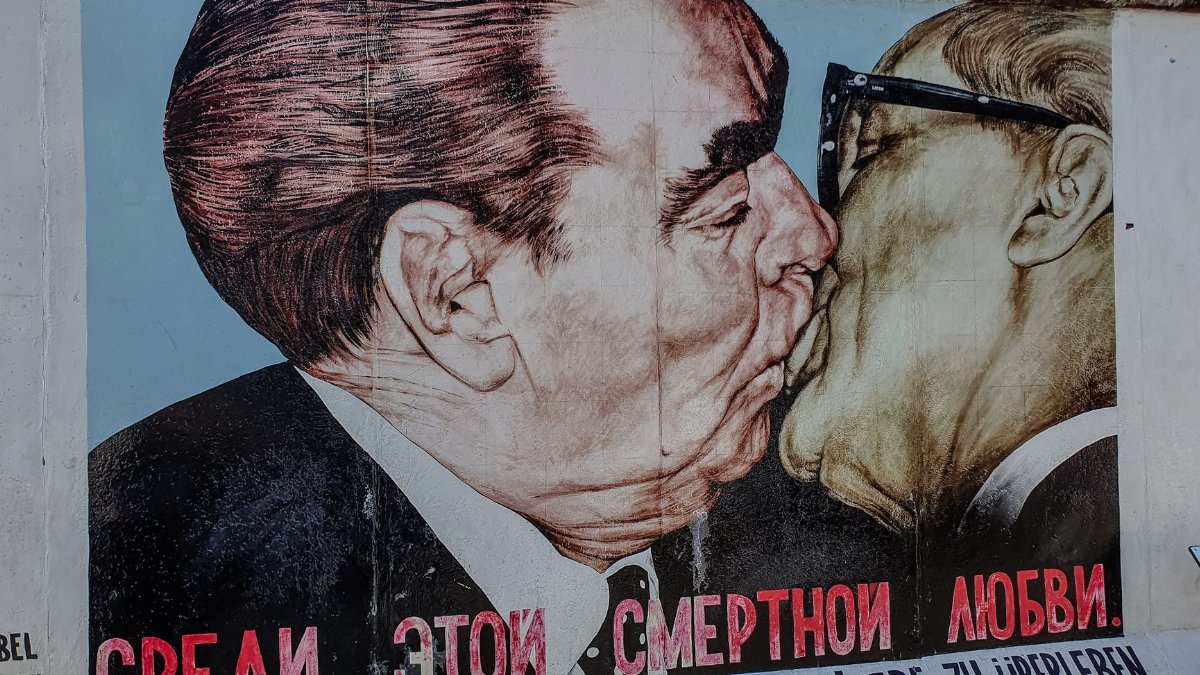
For many Americans, November 9 arrives each autumn with a familiar image: young people standing on a concrete barrier, hammers raised, while searchlights sweep a divided capital. That image belongs to Berlin Wall history, yet the story behind it is less tidy than the photograph suggests. The barrier had separated families for 28 years. Its opening in 1989 was not the product of a single heroic plan. It followed a bungled announcement, a crowd that refused to go home, and a government that had lost the will to fire on its own people.
A capital sealed before breakfast
Before dawn on August 13, 1961, East German police and soldiers closed the line between East Berlin and West Berlin. Streets that had been passable at dinner were blocked by morning. Transit workers, nurses, and students who lived on one side and worked on the other found the route gone. In those first hours the barrier was wire, roadblocks, and armed men. Concrete slabs, a cleared strip, floodlights, dogs, and watchtowers came afterward. West Berlin, already an island inside East Germany, became a sealed island. The surprise was part of the method. Leaders in East Berlin wanted to stop a flight of people that had been emptying the state of skilled workers and the young.
Why a dictatorship needed a wall
The wall was not a traffic project that got out of hand. From the end of the war until 1961, millions left East Germany for the West, many of them through Berlin, where movement was easier than along the rural frontier. Pay, goods, and the chance to speak without fear pulled them west. The ruling party called the new barrier an antifascist protection rampart, a phrase meant to reverse the moral story and cast confinement as defense. Allied governments protested and did not tear it down. In the nuclear standoff of the Cold War, a wall was grim, but a war over Berlin looked worse. That calculation left ordinary Berliners living inside a decision made in the name of stability.
Ordinary days beside an armed border
Routine bent around the concrete in ways that now sound unreal. Trains passed darkened stations where they no longer stopped. Congregations split. A grandmother might live a short walk away and remain unreachable for years. Permits, when they existed, functioned as political favors. West Berliners could sometimes visit under rules that shifted with the mood of the state. East Berliners generally could not travel the other direction. Western radio, letters, and jokes carried news across, but a careless remark could draw the secret police. Children grew up treating the barrier as landscape, the way other children treat a river. Adults knew it was a policy with guns behind it. Any serious pass through Berlin Wall history starts with those constrained days, not only with the night the gates opened.
The people who tried to cross
Escape attempts became a record of ingenuity and grief. People dug tunnels, hid in cars, swam canals, and built crude flying machines. Some reached the West and became symbols. Many were arrested. Others were shot. Well over a hundred people were killed at the Berlin Wall itself, and the wider German border claimed still more lives that never entered the famous photographs. The names matter more than a round figure. Peter Fechter, an 18 year old shot in 1962 and left to die in the open strip, became an image the West could not forget. Each death was also a warning to those who stayed. The state was willing to spend blood to keep its workforce from walking away. Families of the dead spent decades asking for a full accounting.
An autumn when fear stopped working
By 1989 the wall still stood, but the system around it was cracking. Hungary opened a path toward Austria, and thousands of East Germans left through that gap. Embassies filled with people who refused to go home. In Leipzig and other cities, Monday marches grew from small church gatherings into crowds the police hesitated to crush. Mikhail Gorbachev had made clear that Moscow would not send tanks to rescue hard line allies as it once had. Erich Honecker, the East German leader, was pushed aside in October. The party still spoke as if it commanded events. In practice it was bargaining with a public that no longer believed the old threats. Exit visas, street protest, and talk of reform fed one another. None of that guaranteed a peaceful night in Berlin. It made a peaceful night possible.
The sentence that opened the gates
On the evening of November 9, 1989, Gunter Schabowski, a party spokesman, faced foreign reporters with a note he had not fully absorbed. Asked when eased travel rules would begin, he said they were effective immediately. The plan had been orderly applications and stamps, not a rush to the border. Television carried a simpler message: the gates were open. People walked to the checkpoints. At Bornholmer Street the crowd swelled, guards called for instructions, and clear orders did not arrive in time. Shortly before midnight an officer opened the barrier rather than order a massacre. Other crossings followed. Strangers embraced. Some climbed the wall because, for the first time, climbing it was not a death sentence. The regime did not vanish in that hour. Its claim to control movement did.
What fell, and what did not
The pictures moved faster than the politics. Within months Germany was on the road to reunification, completed on October 3, 1990. Soviet power in Eastern Europe receded. For people who had lived with the barrier, the change was intimate before it was geopolitical. A person could visit a sister. A student could enroll across the old line. Yet the opening did not erase inequality, suspicion, or the files of the secret police. Eastern factories closed. Some Westerners treated new fellow citizens as newcomers in their own country. Freedom of movement was real. A shared sense of belonging took longer, and in some arguments it is still unfinished. Honest Berlin Wall history has to hold both facts at once. The joy was not propaganda, and the morning after was not a fairy tale.
How the story is kept in public
Remaining slabs, painted fragments, and a double row of stones in the pavement now mark a line that armed guards once enforced. Visitors stand where the death strip ran and try to picture a street with no passage. Survivors still speak, though fewer each year, and their accounts keep the episode from shrinking into a logo. Museums ask guests to look at orders, maps, and personal objects rather than only at celebration footage. Teachers who treat Berlin Wall history as a live question, not a closed legend, tend to dwell on choice. Who ordered the seal. Who enforced it. Who resisted. Who looked away. The barrier was an instrument of a dictatorship. Remembering it clearly is a civic task, not a souvenir.
One date, more than one memory

Germans sometimes call November 9 a fateful date, and the label is earned. In 1938, on that day, the Nazi regime unleashed a nationwide pogrom against Jews, the violence remembered as Kristallnacht. In 1923 Hitler attempted his failed Beer Hall Putsch in Munich, a prelude to later catastrophe. The 1989 opening sits on the same square of the calendar as crimes that Germany has spent decades confronting in public. That overlap is one reason reunification was set for October, not for the night the gates opened. Celebration without the darker memory would be thin. Grief without the 1989 release would also miss the truth. A mature public culture can hold joy and shame on one date without blending them into a single mood or a single lesson.
Remembrance as a form of attention
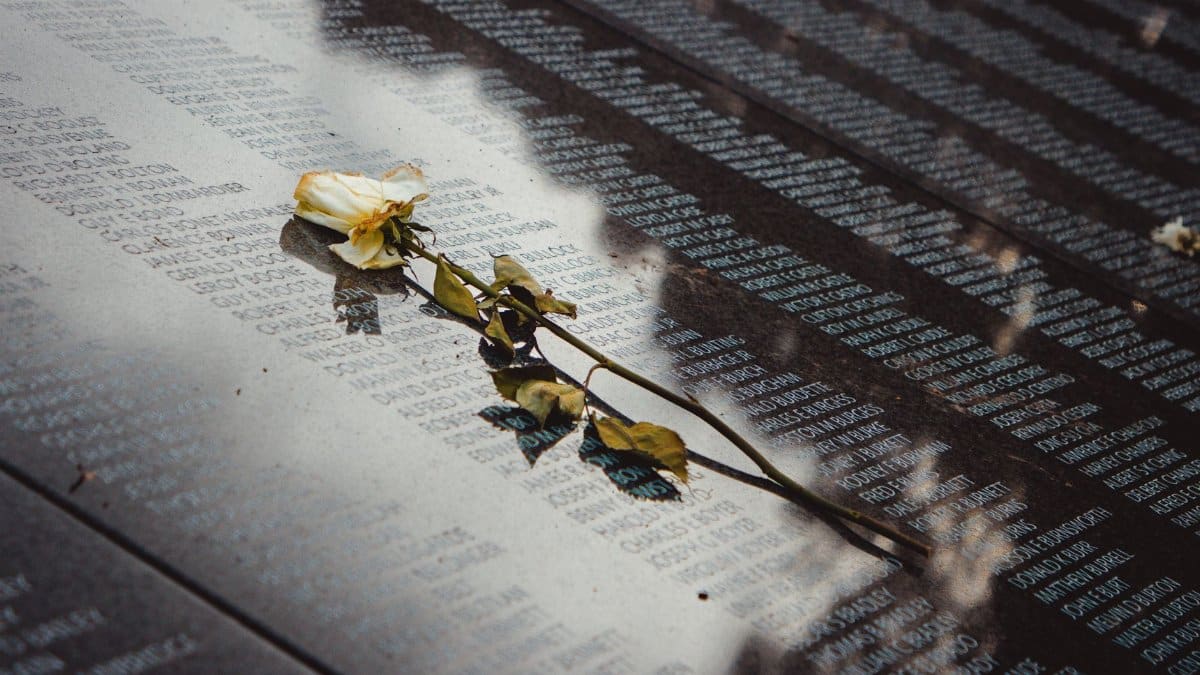
People still walk the former route in a quiet way that resembles a civic pilgrimage, even when no sermon is offered and no party claims the path. They pause at crosses, read names, and look through gaps where apartment blocks once faced a floodlit strip. That walk does not restore the dead or tidy the politics that followed. It does insist that a border enforced by rifle fire is not an abstraction. For a category of news often devoted to meaning and inward life, the point is plain enough. Memory is a discipline. It asks for names, dates, and the refusal to let a famous photograph stand in for the years that photograph cannot show. Anniversaries become useful when they slow people down.
What the anniversary still asks
A clip can play, a caption can repeat, and an event can shrink into a symbol of victory. The better use of the day is more demanding. It asks what institutions do when people leave, what governments do when embarrassment threatens their power, and what neighbors owe one another across a line drawn by force. For readers far from Berlin, the lesson is not that every wall falls if the crowd is large enough. Some walls stand. The lesson is narrower and harder. Political facts that look permanent are sometimes only enforced, and enforcement can fail when enough people withdraw consent and when those with guns refuse the final order. Berlin Wall history, told without romance, is a record of that refusal as much as of the concrete itself.