
On a clear afternoon in Pacific Heights, Lafayette Park stopped looking like a neighborhood lawn and started looking like a punchline with a memory. People arrived in black turtlenecks, pale makeup, and red lipstick, some carrying props that suggested lab coats and venture capital decks. The occasion was an Elizabeth Holmes look-alike contest, and the size of the crowd made the joke feel less like a private gag and more like a civic gathering. Strangers compared costumes, phones came out, and the grass filled with a version of Silicon Valley that the city could finally laugh at in public.
A green space turned into a stage
Lafayette Park sits above the traffic of Sacramento Street, a place where dogs, toddlers, and office workers usually share the same patch of sun. On this day the ordinary rhythm gave way to a loose procession of imitators. Some had studied photographs. Others had grabbed whatever black knit was closest to the closet door. The effect was cumulative. One costume is a costume. A field of them becomes a comment.
San Francisco has a long habit of turning scandal into street theater. The city mocks its own industries even while it depends on them. A contest in a park fits that habit better than a panel in a conference hall. Nobody needed a microphone to explain the reference. The turtleneck did the work.
The uniform that outlasted the company
Elizabeth Holmes built a public image as carefully as any product demo. The black turtleneck, the severe blonde hair, the unblinking stare, and the deepened voice became a package that photographers could recognize from across a room. That package was meant to signal seriousness, a founder who had borrowed the visual language of Steve Jobs and stripped it of warmth.
Theranos promised blood tests from a few drops, a story so clean that investors and retail partners wanted it to be true. The technology did not do what the company said it did. Patients received unreliable results. The firm collapsed under investigations, civil actions, and criminal prosecutions. Holmes was convicted of fraud. The turtleneck remained, which is why a park full of imitators could summon the whole saga without a single slide.
Why hundreds showed up

Hundreds of people do not cross the city for a costume unless the costume carries a shared story. Friends came in pairs. Some treated the afternoon as a date. Others arrived alone, curious about whether the rumor of the contest was real. The meta description of the day writes itself in the details: turtlenecks, lipstick, a disgraced founder reduced to a silhouette that anyone can rent from a closet.
Attendance at this scale says something about how scandal now circulates. People do not only read the verdict. They reenact the image. The Elizabeth Holmes look-alike is less a person than a shorthand, a way to point at ambition that outran evidence. Standing in the park, you could watch that shorthand multiply until it became the main event.
Humor with a hard edge
The laughter was real, and it was not entirely kind. Holmes is a convicted fraudster whose company put patients in the path of bad information. A contest can look like play while still functioning as judgment. The crowd seemed to understand both registers. People smiled for photos and then, in the next breath, recalled relatives who had believed the early coverage, or investors who had treated charisma as a substitute for data.
Satire works when the target is already famous enough to survive the joke. It curdles when the joke forgets the harm. The better costumes in the park did not celebrate the founder. They isolated the pose. A blank expression and a red mouth can be funny precisely because the original performance asked to be taken as destiny.
What the costume leaves out

A look alike contest flattens a person into accessories. It cannot show the employees who raised alarms, the journalists who kept asking for proof, or the patients who received results they should not have trusted. It also cannot show the ordinary labor of a criminal case, the years of filings and testimony that turned a magazine cover into a defendant.
That absence is part of the form. Street costume is fast. Court records are slow. The park offered the fast version, and the crowd accepted the trade. Still, the laughter landed differently for anyone who remembered that Theranos was not only a story about a voice and a sweater. It was a story about what happens when a company is allowed to skip the boring proof.
Silicon Valley watching itself
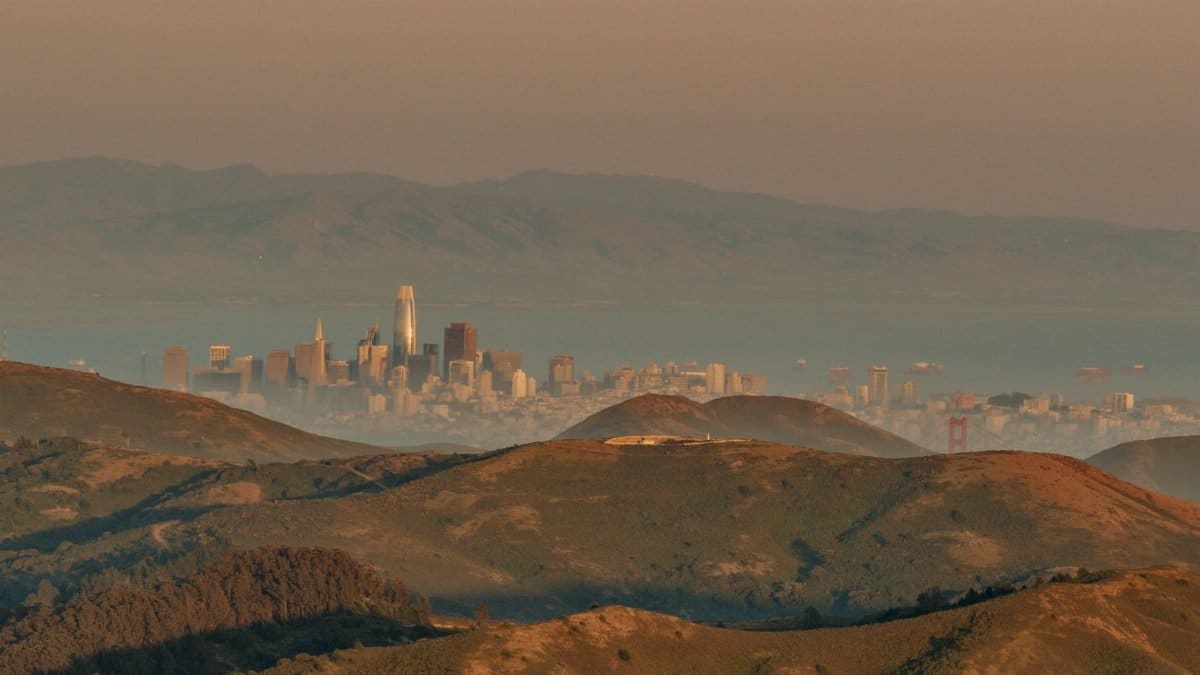
San Francisco has spent two decades living inside the industry it now parodies. Office towers, shuttle buses, and sudden fortunes changed neighborhoods. Lafayette Park is not a campus, which may be why the contest felt freeing. Here the industry appeared as costume rather than landlord.
The city has staged other public jokes about its myths, from protests outside headquarters to Halloween outfits that roast the latest app. This one had a sharper outline because the rise and fall are complete enough to parody. Theranos is no longer a bet. It is a caution. People can wear the caution without worrying that the company will answer back with a new funding round.
Red lipstick and the theater of certainty

The lipstick mattered as much as the knit. Holmes used a small set of visual choices to project control. Control is the fantasy at the center of a great deal of startup theater: the founder who does not doubt, the deck that does not hedge, the demo that does not fail on stage. Red lipstick on a pale face reads, in this costume, as a stamp of certainty.
In the park that certainty became copyable, which drained it of power. Once twenty people can do the face, the face stops looking like genius and starts looking like a choice. That is a useful demotion. Charisma is not evidence. A repeating costume makes the point more cleanly than a lecture.
Memory after the verdict

Criminal convictions do not end public fascination. They often organize it. Holmes remains a reference point in conversations about due diligence, about boards that failed to ask hard questions, and about media that preferred a prodigy narrative to a methods section. The contest did not add new facts to that record. It showed how thoroughly the facts have entered popular memory.
For middle aged readers who watched the original rise in real time, the park scene may feel like a second ending. The first ending was legal. The second is cultural. A figure becomes a costume when the culture has decided what the figure means. In this case the meaning is not mystery. It is warning.
The line between parody and sympathy
Not everyone in a crowd shares the same motive. Some came to ridicule. Some came because the visual was irresistible. A few may have felt a flicker of sympathy for a woman whose sentence is real and whose public image is no longer hers to manage. Sympathy and accountability can occupy the same afternoon, though they rarely share the same photo.
The healthiest reading of the contest keeps those feelings separate from the facts. Fraud is not erased by a good impression. Neither is a prison term softened by a park full of sweaters. The joke is about the performance that helped sell a false promise. It is not a brief for the person who gave it.
How a city files its myths
San Francisco collects stories the way other cities collect monuments. Some of those stories are gold rush tales. Some are about earthquakes. A growing number are about software, money, and the gap between a pitch and a product. An afternoon in Lafayette Park is a small filing in that archive. It will not replace the trial record. It will sit beside it as evidence that residents wanted to see the story with their own eyes, in daylight, among neighbors.
Local events often pretend to be smaller than they are. This one was a costume contest, yes. It was also a referendum on what the city is willing to laugh at now that the bills for a credulous decade have come due. People voted with their outfits.
What the cameras kept and what they missed

Phones turned the park into a second venue. Clips traveled farther than the grass. Online, the contest became a grid of nearly identical faces, which is its own kind of critique. Sameness is the opposite of the singular founder myth. The more the image copied itself, the less it could claim to be unique.
What the cameras missed was the quiet between poses. People talked about rent, about work, about whether they would stay in the city. The scandal was the reason for the gathering. The city was the subject underneath it. An Elizabeth Holmes look-alike contest can hold both, the national story and the local one, without announcing either.
A costume is not a conclusion

By late afternoon the turtlenecks had started to look warm. People peeled off toward buses and cars. The park returned, by degrees, to dogs and frisbees. Nothing in the grass resolved the larger argument about how investors, journalists, and boards should treat the next founder who speaks in absolutes.
That is fine. A contest is not a policy. It is a mirror, briefly held up. The reflection showed a city fluent in its own disappointments, willing to spend a sunny hour on a joke that still carries a moral. If the Elizabeth Holmes look-alike endures, it will be because the lesson is portable. Ask for the data. Do not confuse a uniform with proof. And when the proof fails, do not let the costume write the history by itself.
The afternoon as a kind of ritual

There is a ritual quality to public imitation, even when nobody calls it that. People gather, repeat a gesture, and leave with a shared picture of what they reject. In a city that often outsources meaning to product launches, a park contest is almost old fashioned. It requires bodies in one place. It requires weather. It ends when the light changes.
Spiritual language can overreach here, and it should not. No one was seeking absolution in lipstick. Still, the gathering did what rituals do. It marked a before and an after. Before, Holmes was a news story that arrived on screens. After, she was also a figure the city had dressed up, laughed at, and walked away from. The Elizabeth Holmes look-alike contest will be remembered less for who won than for the fact that so many people needed to stand in the same costume and see what it looked like from the outside.