

On a mild November night, the line outside a Houston arena moved with the unhurried confidence of people who already knew the words. Parents checked jackets. Teenagers filmed the facade. Somewhere near the doors, a chorus of Rayando el Sol started before the lights even dimmed. The Mana concert Houston stop had the feeling of a reunion more than a routine booking, a reminder that certain songs travel with people across borders, jobs, and decades.
A catalog that still fills the room
Maná has spent more than three decades asking large rooms to sing, and the request still lands. The group from Guadalajara, led by singer Fher Olvera and drummer Alex González, built a career on melodic rock that can feel private even when the ceiling is high and the seats run to the rafters. Houston has heard this catalog before. What stood out in early November 2026 was not surprise. It was continuity. People did not arrive to meet a new act. They arrived to test whether the old songs still belonged to them, and the answer came back in a single voice.
That loyalty is not an accident of nostalgia. Maná learned early how to write choruses that survive translation, radio formats, and the long gap between albums. The guitars stay bright. The rhythm section keeps a dance pulse under ballads that might otherwise drift. Olvera sings as if the letter he is reading was written that afternoon. In a city that hears live music every weekend, that directness still cuts through.
How a Mexican band became a Houston habit

The group began in the middle of the nineteen eighties, first under another name, then as Maná, and grew into one of the rare rock bands from Mexico to tour the world without sanding off its language. English language markets often treat Spanish rock as a niche. Maná treated it as the main road. Hits moved from Guadalajara radio to arenas in Los Angeles, Chicago, Madrid, and Houston, gathering listeners who did not share a passport but shared a set list.
Houston was a natural stop on that road. The metro area holds one of the largest Latino populations in the country, with deep ties to Mexico and Central America, and a concert economy built for touring acts that can sell both nostalgia and new material. For many fans, the Mana concert Houston date is less a special occasion than a standing appointment, renewed whenever the band circles back through Texas.
What the crowd came to sing
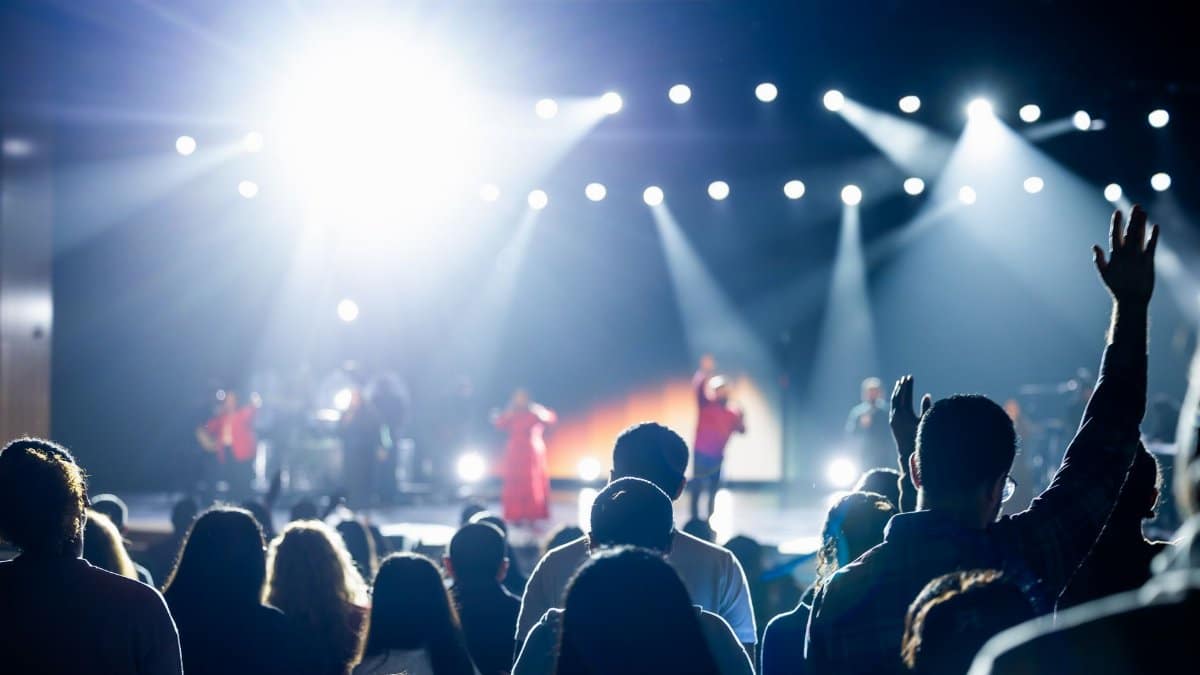
A Maná show lives or dies on recognition, and recognition arrived early. Vivir Sin Aire still draws the couples who met to that song and the children who grew up hearing it in a car. En el Muelle de San Blas carries its short story of waiting with a clarity that does not need a lecture from the stage. Labios Compartidos and Mariposa Traicionera push the tempo. Bendita Tu Luz softens the room again. Clavado en un Bar keeps its slightly drunken sway, half joke and half confession.
None of this requires a surprise guest or a radical rearrangement. The pleasure is communal precision. Thousands of people hit the same syllable at the same time, then laugh at themselves for doing it. In an era when many arena shows sell spectacle first, there is something almost old fashioned, in the best sense, about a band that trusts the song to do the heavy lifting. The lights help. The screens help. The voices do the real work.
Generations sharing the same seats

Walk the concourse before a Maná show and the age range is the story. Grandparents who bought the early cassettes stand beside teenagers who found the same tracks on a parent playlist. Some families treat the night as a ritual, the way other households treat a holiday mass or a season opener. Jackets get passed down the row. Someone translates a lyric for a friend who is hearing it live for the first time. Someone else does not need the translation and sings louder to prove it.
That mix gives the evening a civic feeling that pop concerts do not always earn. Houston is a city of arrivals, second jobs, and long drives. A shared chorus offers a brief suspension of all that logistics. It is not worship in a formal sense, yet it borrows the shape of worship: a room, a text everyone knows, a leader, a response. People leave hoarse and oddly settled, as if a private weather system has cleared.
The city as a listening room
Houston does not always get credit, outside Texas, for the seriousness of its live music life. The reputation leans toward sprawl, humidity, and sports. Inside the city, the calendar tells a different story. Arenas, theaters, and smaller rooms book country, hip hop, jazz, classical, and Latin bills in the same week. A band like Maná fits because the audience is already here, not because a promoter had to invent one.
The practical details matter. Parking lots fill early. Food vendors near the venue switch playlists. Restaurants in adjacent neighborhoods seat parties that will not linger, because the downbeat has a clock. Rideshares stack along the curb after the encore. None of that is glamorous, and all of it is how a big show actually lands in a city this large. The Mana concert Houston crowd moved through that machinery with the ease of people who have done it before and intend to do it again.
A gentler kind of stardom
Maná has always carried a public conscience alongside the love songs. The band has spoken for years about forests, water, and the costs of extraction, and has put money and attention behind Selva Negra, its environmental effort. On stage that advocacy rarely turns into a sermon. It surfaces as a sentence between songs, a dedication, a reminder that the same audience singing about heartbreak also lives in a physical world that needs care.
In Houston, a city tied to energy, shipping, and the Gulf, that note does not feel abstract. It does not need to scold to register. Fans who came for Mariposa Traicionera can still hear a line about the planet and file it beside the melody. The combination is part of why the band has aged with less cynicism than many of its peers. The romance stays. The responsibility stays. Neither cancels the other.
What promoters hear in the applause

From the business side, a night like this is a data point dressed up as a party. Strong advance sales, full sections, and merch lines that do not thin until the encore tell a promoter that Spanish language rock still moves tickets in Texas without a crossover gimmick. That matters in a market where touring costs have climbed and middling demand can turn a date into a loss. Maná is not middling demand. The band is a reminder that language is not a barrier when the emotional contract is clear.
Radio and streaming tell part of that story. The live room tells the rest. Streams can be solitary. A chorus of several thousand is not. Industry people like to say that catalog is king, and here the cliché happens to be accurate. Newer songs get a fair hearing. Older songs get the roar. The balance keeps the show from becoming a museum and keeps the veterans from feeling abandoned.
Spanish in the foreground
One quiet fact of the evening deserves saying plainly. The show did not apologize for Spanish. It did not pause to translate every verse or to frame the music as a guest in an English city. Houston, in this room, was simply a place where Spanish rock is home music. That confidence has cultural weight beyond one ticket. It tells younger artists that a full career can be built without treating bilingual life as a compromise.
It also tells longtime residents something they already know and like to hear confirmed. The soundtrack of this city is not singular. It includes accordions in parking lots, organ trios in small clubs, country ballads on the way to work, and, on certain nights, a Guadalajara band asking an arena to remember a pier, a butterfly, a love that did not last and a melody that did. The Mana concert Houston audience answered in kind.
After the house lights
When the house lights rise, the spell thins but does not vanish at once. People compare notes on which song hit hardest. Someone films a friend still singing in the aisle. Outside, the November air feels cooler than it did in line, or maybe exertion makes it seem so. The practical city returns: traffic, group texts, the question of where to eat. The songs ride along in pockets, half remembered, ready for the car stereo.
Large crowds are easy to describe and harder to explain. A head count does not capture why a particular chorus still works in 2026, or why a band from another country can feel local in Houston without pretending to be from here. The explanation sits in repetition, craft, and the simple fact that people need rooms where they can be unselfconscious together. Maná supplied the room. Houston supplied the voices.
What the night leaves behind
By the next morning the arena belongs to someone else, a sport or another tour, and the street looks ordinary. What remains is smaller and more durable. A parent will play Labios Compartidos while packing lunches. A commuter will catch En el Muelle de San Blas between traffic reports and feel, briefly, the pier and the waiting. A teenager who thought the show was only a family obligation will discover that one bridge has stuck in the mind.
That afterlife is the real measure of the Mana concert Houston night. Not the decibel level, not the length of the encore, not the photos that will fade down a feed. The measure is whether the songs keep doing quiet work in a loud city. On the evidence of the singing, they will. Houston has room for many kinds of faith, including the modest faith that a well made chorus can still gather strangers into a temporary congregation and send them home a little more themselves.