
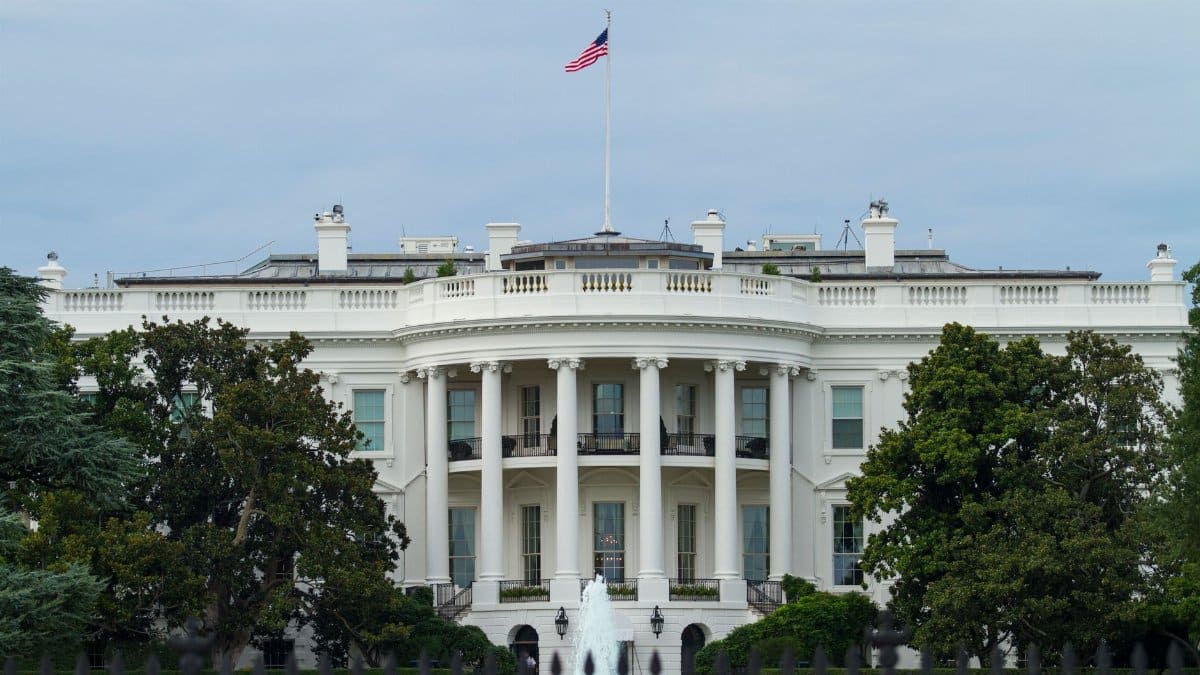
On a Saturday in November, President Trump said he had asked Dana White, the longtime chief of the Ultimate Fighting Championship, to become his press secretary. The remark traveled fast through sports pages and political desks alike, even as the White House offered no immediate confirmation. The phrase Dana White press secretary suddenly sat at the center of a question Washington knows well: when a president floats a name, is he making an appointment or testing a room? For readers who follow both cageside spectacle and the daily briefing, the idea is less a joke than a map of how power now speaks.
A name offered before the building answered

The Houston Chronicle reported the president’s statement from November 7, 2026, in a sports dispatch that quickly outgrew its section. Trump said he had asked Dana White to take the job. Officials at the White House did not immediately confirm the offer, which left reporters with a familiar gap between a presidential sentence and a personnel announcement. In that gap, speculation does the work that paperwork has not yet done. Allies parse tone. Rivals look for a tell. The public tries to decide whether the line was a firm invitation or a flourish meant for cameras.
What a press secretary is asked to do

The press secretary is not a mascot and not a guest host. The job is to stand at a podium, absorb questions, and carry the administration’s account of the day into a room that does not owe the president affection. It requires a memory for detail, a talent for refusal that does not sound like panic, and a willingness to be the face of decisions made elsewhere. Presidents have filled the role with campaign veterans, television personalities, and aides who learned the building from the inside. Rarely has the short list included a fight promoter whose public life is built on weigh ins, title shots, and sold out arenas. The mismatch is the story, and also the point.
Why Dana White already sounds like a political figure

Dana White did not arrive at this rumor as a stranger to partisan life. He has been a visible supporter of Trump, a fixture at rallies, and a narrator of combat sports who speaks in declarations rather than hedges. That style travels. In a media climate that rewards certainty, a man who can sell a main event in one breath can also sell a policy line. Whether he wants the daily grind of credential fights, pool sprays, and late calls from editors is another matter. Promoters live on anticipation. Press secretaries live on aftermath. The skills overlap less than the volume of the voice suggests.
The Dana White press secretary idea and the UFC brand

Putting the Dana White press secretary idea beside the UFC brand makes the cultural logic clearer, if not wiser. The company he runs turned a once marginal sport into a prime time habit for millions of Americans who may never watch a White House briefing. Those viewers already know his cadence: blunt, promotional, impatient with nuance. A presidency that treats attention as a resource might see that cadence as an asset. A press corps that treats accuracy as the price of access might see it as a liability. Both readings can be true at once. Brand power does not automatically become institutional trust, and institutional trust is what the briefing room is supposed to test every afternoon.
Silence where a confirmation would normally sit

Absence of confirmation is not the same as denial. Administrations sometimes let a presidential remark breathe before staff catch up with logistics, vetting, and the quiet calls that tell a nominee whether the offer is real. They also sometimes discover that a sentence spoken in public was warmer than the plan behind it. Until a statement appears on official letterhead, or until White himself describes a conversation in plain terms, the honest report is narrow. Trump said he asked. The building did not immediately say yes in public. Everything else is inference, and inference should be labeled as such.
Loyalty, spectacle, and the qualifications that matter now

Modern personnel choices often privilege loyalty and screen presence over the older craft of briefing books. That shift did not begin with this rumor, and it will not end if the rumor fades. Voters have watched press secretaries become characters in a serial drama, clipped for social platforms within minutes of leaving the podium. In that environment, a figure already famous outside Washington can look efficient. He does not need to be introduced. He arrives with an audience. The danger is that fame substitutes for the slower virtues: consistency under contradiction, respect for facts that inconvenience the boss, and the discipline to admit ignorance when ignorance is the true answer.
How earlier press shops earned or lost the room

History offers no single model, but it does offer a pattern. Press secretaries who lasted tended to know the difference between advocacy and invention. They could argue the president’s case without inventing a fact to fill a silence. They also understood that the room remembers. A sharp line wins a day. A broken promise about what the president said loses a year. If Dana White were to take the job, he would inherit that memory whether he wanted it or not. Reporters would compare his first week not only with his predecessor but with every promoter’s promise that a fight would be fair and a card would start on time. Metaphor is not governance, yet metaphor is how the public will judge the experiment.
The audience that already trusts the voice

There is a constituency for this kind of appointment that political reporters sometimes underestimate. Fight fans hear White as a man who delivers events, pays fighters in public view, and does not pretend the sport is gentle. Some of those fans also vote, and some of them experience official Washington as a dialect they do not speak. A familiar voice at the podium could feel, to them, like translation. Critics will call that feeling a lowering of standards. Supporters will call it democracy adjusting its ear. A serious account has to hold both claims without sneering. The question is not whether fans exist. The question is whether fandom is a sufficient preparation for explaining war, budgets, courts, and crises that cannot be hyped into a finish.
Ritual, belief, and the hunger for a certain voice

Public life has rituals that function a little like faith even when no church is involved. People gather, repeat phrases, and look for a figure who will tell them the day has a meaning. The briefing is one of those rituals. It is secular, contentious, and often unsatisfying, yet it marks time for a nation that wants someone to stand still and answer. In a season when institutions feel thin, the appeal of a commanding voice can look spiritual in the loose sense of the word: a longing for assurance. That longing is human. It is not, by itself, a reason to hand the assurance to a man whose profession is to make uncertainty exciting. Combat sports thrive on not knowing who wins. Government briefings are supposed to reduce the kinds of not knowing that scare people.
What would have to be true for the offer to stick

For the offer to become an appointment, several ordinary things would need to happen. White would have to want the work, not merely the headline. Lawyers would review conflicts, because a sitting executive of a major sports company cannot casually carry both roles without raising questions about time, money, and influence. The president would have to say the same thing tomorrow that he said on November 7, 2026, and staff would have to treat the sentence as policy rather than color. None of that is exotic. It is simply the unglamorous sequence that separates a quote from a job. Until that sequence appears, the responsible headline remains conditional.
Living with the Dana White press secretary rumor

Readers who type the words Dana White press secretary are not only chasing a personnel rumor. If the talk fades by next week, it will still have revealed something about the presidency and the culture that surrounds it. Attention is now a governing tool, and governing is now judged as entertainment. That does not make the offer wise, and it does not make it impossible. It makes it legible. A president spoke. A promoter was named. A building stayed quiet. The country, which has learned to treat such sequences as both news and spectacle, will decide how much weight the sentence deserves. Weight, unlike volume, is earned over time.