
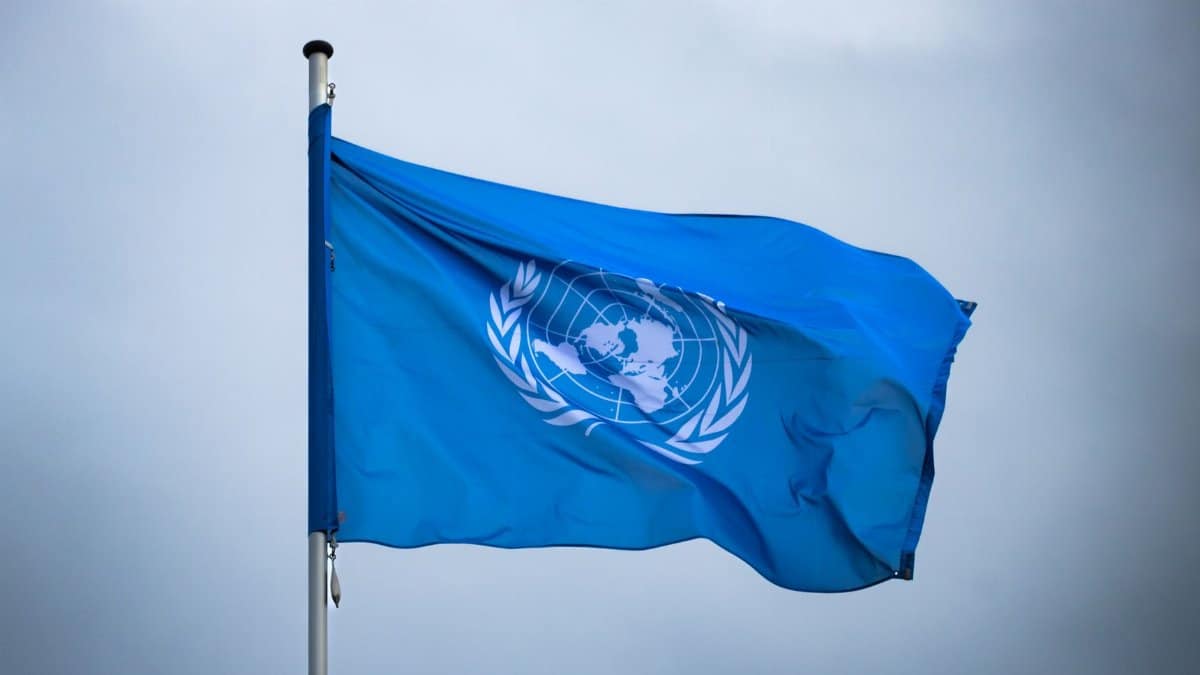
In a spare office above the East River, the man who has spent nearly a decade warning governments that delay has a price is preparing to leave. António Guterres, the outgoing United Nations Secretary General, has told the Associated Press that the world has reached a UN climate moment of truth. The phrase is not a slogan cut for a podium. It is his verdict on a decade of summits, broken timetables, and rising heat. Leaders heading toward COP31 will hear it as both a plea and a warning. For readers who have watched wildfire smoke stain summer skies and insurance bills climb, the question is no longer whether the climate is changing. It is whether politics can still meet the science before the damage becomes the normal condition of ordinary life.
What a departing chief can still say

The Associated Press account, framed as an exclusive, places Guterres at the end of his tenure and still unwilling to soften the message that defined it. He has long argued that the climate crisis is a test of whether international cooperation can function when national politics reward short horizons. Naming the hour in those terms raises the stakes. In ordinary speech, a moment of truth is the point at which excuses stop working. Applied to the United Nations climate process, it suggests that another round of carefully worded pledges will not be enough if emissions keep climbing and finance for poorer countries stays stuck in announcements.
He is not a scientist issuing a new paper. He is a political figure translating science into a demand on other political figures. That translation has always been his job, and it has always been the hardest part. Diplomats can agree on a paragraph and still leave oil, coal, and gas largely in place. Guterres has spent years saying the gap between promise and practice is the story, not a footnote. Departure does not retire that gap. It only removes one of the people willing to describe it in public without a national flag behind him.
The record the science will not renegotiate
The physical case does not wait for a communiqué. The Intergovernmental Panel on Climate Change, in its synthesis of the sixth assessment cycle, states that human activities, principally through greenhouse gas emissions, have unequivocally caused global warming, and that recent warming is unprecedented in at least the last two thousand years. The report is public at https://www.ipcc.ch/report/ar6/syr/. The World Meteorological Organization tracks the year by year consequences, from ocean heat to glacier loss, at https://wmo.int/. NASA keeps a plain language gateway to the instrumental record at https://climate.nasa.gov/.
None of those institutions needs a departing secretary general to validate a thermometer. What they cannot do is compel a legislature. That is why the UN climate moment of truth is a political phrase sitting on top of a scientific one. The science describes risk. The United Nations process is supposed to organize a response. When the response lags, the phrase starts to sound less like rhetoric and more like a deadline written in weather. Readers do not have to accept every diplomatic adjective to accept the measurements those links collect.
Why the next summit can still disappoint
COP31 is the next major meeting under the United Nations Framework Convention on Climate Change, the treaty process described at https://unfccc.int/. Summits of this kind have a familiar rhythm. Ministers arrive with national instructions. Activists fill the halls. A final text emerges after a night of brackets and bargains. Sometimes the text moves the world. Sometimes it mostly moves the press release.
Guterres has watched that rhythm from the inside. His warning, as relayed in the AP account, is that the coming conference cannot be treated as another ceremonial stop. If the UN climate moment of truth means anything concrete, it means governments must show how they will cut pollution in this decade, not in a distant decade that will be someone else’s problem. It also means they must say how they will pay for adaptation in places that did little to cause the heating and have little fiscal room to absorb it.
Readers should be skeptical of summit theater. They should also be skeptical of the claim that theater is all there is. The Paris Agreement, for all its gaps, created a shared accounting system. Countries report. Others can compare. Shame is a weak tool, but it is not nothing. The question for COP31 is whether shame, law, and money can be pulled into the same direction before the closing gavel turns urgency back into schedule.
Cash is the argument under the adjectives

Talk of truth can sound elevated. The dispute underneath it is often about cash. Developing countries have asked for predictable finance to build sea walls, cool hospitals, shift power grids, and recover after floods. Wealthy countries have pledged sums and then argued about what counts as a pledge. Loans get mixed with grants. Private capital is described as if it were already in the treasury.
Guterres has treated this accounting fight as a moral fact, not a technicality. A country that profited from a century of fossil fuel combustion cannot tell a low lying nation to be patient while the tide takes the road. That sentence will anger some finance ministries, and it should be tested against the numbers rather than waved away. The honest version is simple. Mitigation without finance is a lecture. Adaptation without finance is a wish.
There is a domestic version of the same argument in the United States. Households see premiums rise, crops fail in a bad season, and rivers rearrange neighborhoods. The costs arrive as line items, not as speeches. A UN climate moment of truth that ignores those line items will not travel beyond the conference center. Americans do not need a treaty glossary to recognize a bill.
What cities, farms, and congregations already do

While diplomats negotiate verbs, cities, utilities, insurers, and farmers are making quieter decisions. A municipal water department raises a pump. A school district rewrites a heat plan. A reinsurer revises a model and a coastal county learns that coverage is no longer assumed. These choices rarely open a climate summit, yet they are how a warming world becomes a budget.
Faith communities, which readers of spiritual news often follow more closely than foreign ministries, have entered the same practical lane. Congregations install solar arrays, open cooling centers, and argue from scripture or tradition that stewardship is not a metaphor. That is not a substitute for national policy. It is evidence that the language of responsibility has an audience outside diplomatic receptions. When Guterres speaks of truth, some listeners hear a civic duty, some hear a theological one, and some hear both.
The risk is that local virtue becomes an alibi for national delay. A church roof and a city ordinance cannot retire a coal fleet. They can show that the public is not waiting for permission to treat the crisis as real. They can also show, by their small scale, how much still depends on law, grids, and public money.
The limits of one official voice

It would be a mistake to treat a departing chief as a prophet whose words bind his successors. The Secretariat proposes. Member states dispose. Guterres can convene, scold, and frame. He cannot sign a national energy law or appropriate a dollar of another country’s budget. Anyone covering his exit should keep that constitutional fact in view, or the coverage will inflate a speech into a lever it does not have.
Still, framing matters. The phrase he has chosen is an attempt to deny governments the comfort of gradualism. Gradualism is attractive because it flatters existing capital and existing voters. On the timetable described by the IPCC, it is also a way of choosing higher risk. Naming that choice does not settle it. It makes the choice harder to disguise as mere procedure.
The next Secretary General will inherit both the unfinished work and the temptation to sand the message down in the name of access. Whether the office keeps the edge Guterres preferred will tell readers how the institution reads its own hour. Access without candor is a familiar bargain in New York. It has not, so far, lowered the temperature of the planet.
A test closer to home than the UN plaza

For a broad American audience, the useful question is closer than the flags outside headquarters. What would it mean to treat this season as a test rather than a backdrop? It would mean reading climate policy the way people read interest rates and grocery bills, as something that reallocates cost. It would mean asking candidates how fast they intend to cut pollution, who pays, and what they will do for towns already living with the damage. It would mean refusing the habit of treating every flood as a surprise.
Journalism has a part in that test. Exclusive interviews can clarify a leader’s intent. They cannot replace the emissions inventories, the budget tables, and the temperature series. The durable coverage is the coverage that returns, after the quote, to those tables. A handsome phrase that never meets a number is just atmosphere of another kind.
If there is a spiritual dimension, it is not mystical. It is the old demand that public speech match public facts. Guterres is wagering that leaders still feel that demand. The wager is open. Congregations and city councils can keep it alive in small rooms. Only governments can keep it alive in the treaties and the statutes that actually move fuel, steel, and money.
What to watch when the conference opens

When COP31 convenes, a reader can ignore much of the choreography and still follow a short list. Are major emitters submitting plans that bend emissions down in the near term, or only after distant dates have done their usual work? Is finance for adaptation specified in grants rather than in vague mobilization? Do the final decisions name a fossil fuel phaseout with dates, or do they retreat into ambiguity? Are funds for loss and damage actually capitalized?
Those are reportable questions. They do not require a person to become an expert in treaty law. They require attention. The UN climate moment of truth, if the phrase survives contact with the negotiating text, will be visible in the answers. If the answers are soft, the phrase will stand as an indictment of the meeting rather than a caption for it.
Guterres will not be the only voice in the room. Scientists, small island delegates, youth campaigners, and fossil fuel lobbyists will all claim the microphone. The departing chief’s contribution is to insist that the argument has a clock. The clock is not his invention. The atmosphere has been keeping it, indifferently, the whole time. What leaders do with that fact, in the text they sign and the budgets they pass, is the only measure that will matter once the exclusive has faded from the morning briefing.