
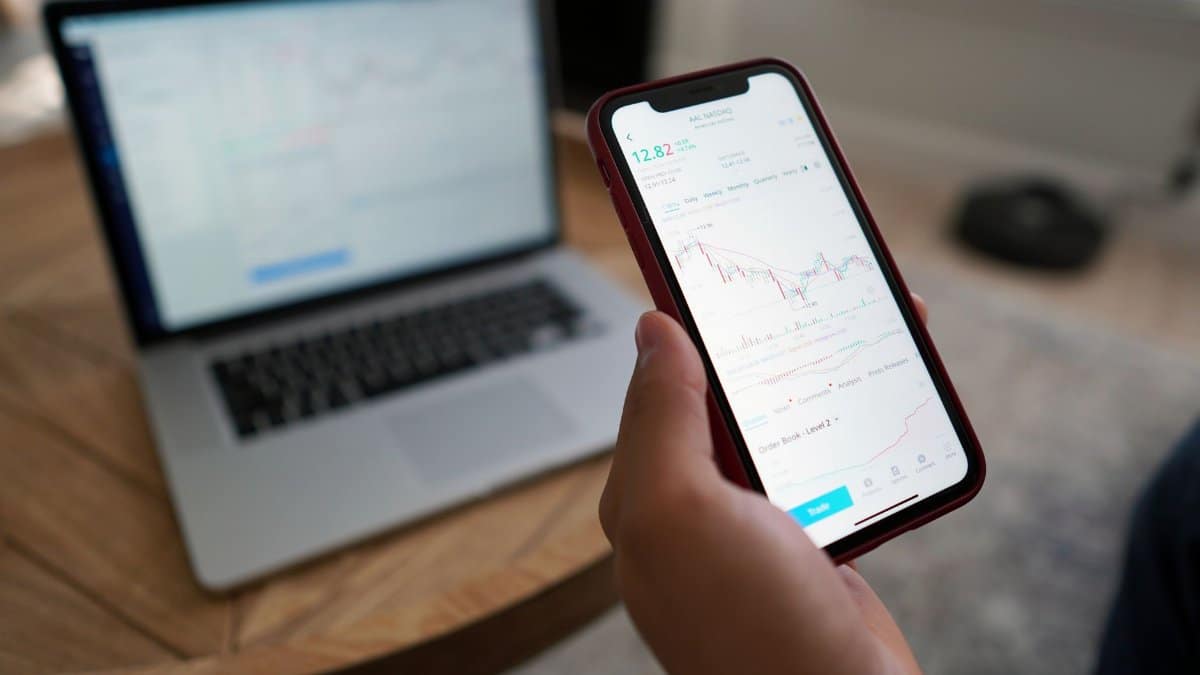
By late afternoon the glow on trading screens had settled into a hard red, and the usual bargaining over a few points had given way to something colder. Portfolio managers who had spent months arguing that artificial intelligence would justify almost any price were suddenly asked to defend those prices in real time, with buyers stepping back rather than stepping in. The Wall Street tech sell-off did not feel like a rumor or a single disappointing headline. It felt like a judgment on how much future profit had already been pulled into the present, and on how little room was left when that faith wavered.
A session that aged badly as the hours passed

The damage did not announce itself at the open. Early trading carried the familiar hope that overnight nerves would fade once American buyers returned to their desks. That hope lasted only as long as the first wave of orders. As the morning wore on, selling in the largest technology names spread from the most crowded trades into shares that had merely ridden along with them. What began as a rotation started to look like a retreat.
Floor brokers and electronic desks described the same pattern in different words. Bids were there, then they were thinner, then they were gone for anything but a lower price. In a market that has grown used to sharp reversals before the close, the absence of a late rescue mattered as much as the decline itself. Traders marked the day as the worst since June not because one statistic dazzled them, but because the tone never repaired.
Why technology absorbed the blow

For more than a year the market story has been simple enough to repeat at a dinner table. A handful of companies building the tools of artificial intelligence would pull the indexes higher, and everything else would follow at a polite distance. That concentration was a gift while the story held. It became a liability the moment investors wanted less of it.
When the leaders fall together, index funds cannot hide. A retirement account that looks diversified on a statement may still live and die with a few chip makers, cloud platforms, and software firms. On a day like this, that hidden concentration shows itself. The selling is not only about one earnings miss or one cautious comment from a chief executive. It is about the realization that the same stocks have been asked to carry too much of the national mood about growth, innovation, and the next decade of profits.
Valuation worries that will not stay in the background
The argument against the rally has been sitting in plain sight for months. Prices for the most admired technology companies assume years of unusually strong growth, unusually fat margins, and unusually patient shareholders. None of those assumptions is absurd. All of them can be true and still leave a stock vulnerable if the path to that future looks even slightly less smooth.
What changed on this session was not the existence of the worry. It was the willingness to act on it at the same time. Valuation is a dull word until it becomes a reason to sell into strength and then to keep selling when strength fails to appear. Investors who had treated every dip as an invitation began to treat this one as a question. How much of the artificial intelligence boom is already in the price, and how much is still a hope?
June as the measuring stick

Markets remember pain in seasons. June remains the last stretch when a broad technology decline felt similarly unforgiving, the last time optimists had to sit with losses that did not vanish before the weekend. Using that month as a benchmark is a way of saying the trouble is no longer a squall. It has a precedent inside the same year.
Comparisons of that kind can mislead. A bad day in autumn is not a copy of a bad stretch in early summer. Interest rate expectations, political calendars, and corporate guidance all shift. Still, memory is a trading tool. When desks say a session echoes June, they are telling clients that the old playbook of buying weakness on sight may need a pause. The Wall Street tech sell-off draws its force from that pause, from the gap between habit and hesitation.
The stories investors tell while prices fall

Every sharp decline arrives with a stack of explanations, and most of them contain a piece of truth. Some point to bond yields and the cost of waiting for distant profits. Some point to earnings that were fine but not magical. Some point to a crowded trade in which too many funds owned the same winners and had to leave through the same door. The honest account is usually a braid of those threads rather than a single cause.
What matters for the next week is which story hardens into consensus. If investors decide the issue is a brief scare about rates, they will look for calmer bond markets and step back in. If they decide the issue is that artificial intelligence spending will take longer to become profit, they will demand lower prices before they trust the leaders again. Narrative is not decoration in a market like this. It is the filter through which the next piece of news will be read.
Ordinary accounts feel a professional argument

It is easy to describe a selloff as a contest among professionals. The consequences land in kitchens and payroll offices. People who never open a trading terminal still own these stocks through target date funds, college savings plans, and the equity slice of a pension. A brutal day in technology is therefore not a niche drama. It is a national one, even when the headlines focus on a few famous tickers.
That does not mean every household should trade the afternoon. It does mean the language of the session deserves translation. A deepening decline in the stocks that powered the indexes is a reminder that paper gains can compress quickly when the most popular idea in finance meets a more skeptical price. Advisers who spent the year celebrating participation in the rally now have a harder conversation, one about time horizon, concentration, and the difference between a story and a guarantee.
Looking for a floor without pretending to see one

After a day this rough, the market hunts for signs that selling has exhausted itself. Stabilization can come from calmer yields, from a large buyer stepping into a battered name, or simply from the absence of fresh bad news. None of those signals is reliable on its own. A bounce can be a pause. A pause can be the start of repair. Distinguishing the two in real time is closer to judgment than to science.
Veteran investors tend to watch breadth as carefully as they watch the famous stocks. If only the giants are falling, the rest of the market may still be functioning. If selling spreads into industrials, banks, and smaller companies, the problem is no longer a technology argument. It is a confidence argument. On this session the center of gravity remained with technology, which is both a relief and a warning. Relief, because the damage had a source. Warning, because that source is large enough to move everything tied to it.
The habit of calling every decline a gift

A generation of investors has been trained to treat weakness as an opportunity. That training was earned in years when policy support arrived quickly and corporate profits recovered faster than feared. It is not foolish. It is also not a law. The Wall Street tech sell-off tests the reflex. Buying because prices are lower than last month is not the same as buying because the business case improved.
There is a discipline in waiting. It can look like timidity when a rebound arrives the next morning. It can look like wisdom if the rebound fails and the questions about valuation remain unanswered. The useful stance is neither cheerleading nor panic. It is a willingness to say that a popular trade can be both important to the economy and too expensive for the moment. Those two ideas can live in the same portfolio review.
What companies still have to prove

Behind the tape, the corporate task has not changed. The firms at the center of the artificial intelligence buildout still have to show that enormous spending on chips, data centers, and software becomes durable revenue rather than a cycle of investment that flatters suppliers and exhausts customers. Shareholders have been willing to fund that buildout at rich prices. Willingness is not infinite.
Executives who speak in the coming weeks will be heard against this session, not against the peak of enthusiasm. Guidance that once sounded ambitious may sound merely adequate. Spending plans that once signaled confidence may sound like a claim on cash that investors now want to see returned or justified in plainer terms. The market is not rejecting technology. It is asking technology to earn the faith it has already been paid.
A worse day is also a clearer day

Clarity is a strange gift of a bad session. When prices grind higher, disagreement hides inside the rally. When prices fall hard, the disagreement has to speak. Some investors still believe the leaders of this era will compound for years and that a violent afternoon is noise around a larger signal. Others believe the signal has been the price itself, running ahead of evidence. Both camps will find anecdotes by the end of the week. Neither will settle the argument with a single close.
What can be said without theater is simpler. Wall Street had its worst day since June because the stocks that had done the most to lift confidence did the most to remove it. The Wall Street tech sell-off deepened not from a mystery shock but from a shared doubt about price, patience, and proof. That doubt can fade. It can also spread. The next sessions will show which path investors choose when the screens are no longer uniformly red and the habit of buying has to be defended in daylight again.