
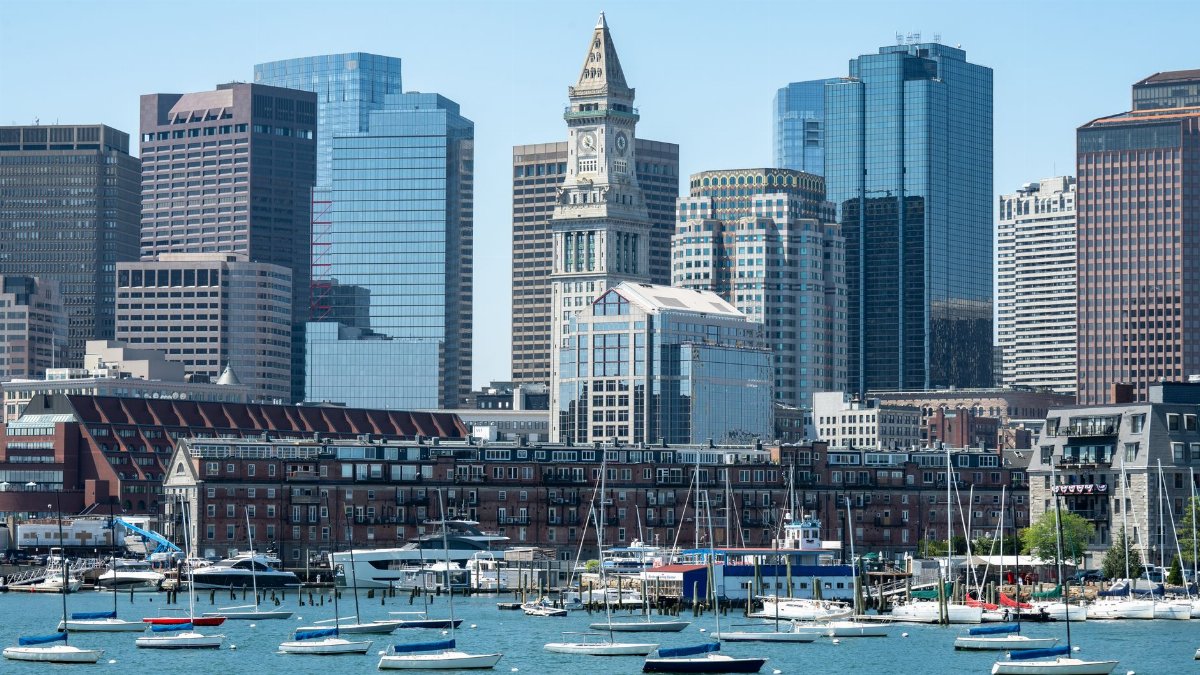
On a raw weekday morning the concourse at South Station still smells of coffee and wet wool. Commuters from the South Shore and the inland rail lines move in a practiced current toward the subway and the street. Above them a new glass shaft rises where drawings sat in drawers for decades. South Station Tower has finally opened, and the timing says as much about Boston as the height does. The city that spent years chasing signature towers is greeting this one in a cooler market, with quieter offices and lenders who no longer treat downtown glass as a sure bet.
A plan that outlasted several booms

The idea of building over the station is older than many of the people now riding through it. Air rights, the notion that a railroad can sell the sky above its tracks, have tempted Boston developers since the late twentieth century. Schemes came and went with interest rates, with recessions, and with arguments about how much shadow a tower should cast on a working terminal. What stands now is not a sudden gesture. It is the survivor of a long civic argument about whether the busiest rail hub in New England should also be a place to live and work.
That history matters because the building arrives carrying expectations from a richer cycle. In the years before the pandemic, Boston could point to the Seaport, to Kendall Square, and to a downtown that still filled lunch rooms at noon. A tower over the station looked like the logical next chapter: transit below, sought after office space above, a confident note from the Financial District. The chapter took so long to print that the plot changed. Capital got more expensive. The weekday crowd thinned. The rendering, once a promise of momentum, now has to justify itself in a city that is counting empty floors.
What rises above the tracks
The finished building is a mixed use skyscraper, offices in the lower stack and homes higher up, tied to a station that must keep running while the city rearranges itself around it. The architecture comes from the office long associated with Cesar Pelli, a firm whose Boston work already favors a calmer kind of height than the glass knives preferred in some other cities. The massing is meant to read as a civic object, not a private spire dropped onto a roof.
Inside, the promise is familiar for this generation of towers: efficient floors, views toward the harbor and the Back Bay, a lobby that tries to feel like a public room rather than a security checkpoint. Outside, the test is harsher. A building of this scale has to earn its place every day from people who will never ride the elevators. They will judge it by wind at the corner, by how the bus terminal feels, and by whether the new bulk makes the old station more legible or simply louder. Height is the easy fact. Fit is the one that lasts.
A terminal that never closed
South Station is not a relic waiting to be rescued by real estate. It is a working machine. Amtrak, commuter rail, intercity buses, and the subway meet here in a knot the region cannot afford to cut. Any tower on this site had to be built while trains kept their schedules. That constraint shaped the project as much as zoning did. Columns, transfers, and staging all had to respect tracks that do not pause for a crane.
For riders, the opening is therefore two events at once. There is the private building, with its tenants and its residents. There is also the public claim that growth at the hub can sit alongside the unglamorous work of getting people home. Boston has argued that case for years at North Station and along the Turnpike. South Station Tower is the latest, and perhaps the most visible, test of whether air rights can serve the traveler as well as the investor. If the passage from platform to street feels clearer, the public half of the bargain holds. If it feels like an obstacle course built for someone else’s lobby, the bargain fails in plain sight.
The office market waiting downstairs

The hard part is not the opening ceremony. It is the lease. Boston’s commercial market is no longer the seller’s room it was when many of these plans were refreshed. Hybrid work emptied floors that landlords had treated as permanent. Technology tenants slowed their expansion. Some older towers now compete by cutting rents or by spending heavily on lobbies and amenities that used to be optional.
A new building can still win. Tenants who want modern air systems, better light, and a direct path to the train will pay for quality if the rest of their costs cooperate. Brokers call this a flight to quality, a phrase that flatters the winners and hides the losers. The winners are often the newest towers. The losers are the plainer buildings a few blocks away, where vacant floors become a municipal problem as well as a private one. In that split, South Station Tower is both a vote of confidence and a competitor that can make the neighborhood’s weaker stock look older overnight. A city does not feel that shift on a skyline tour. It feels it in tax bills, in darkened windows after six, and in the smaller lunch trade on the side streets.
Homes in the air, costs on the ground
The residential portion answers a different shortage. Boston remains an expensive city in which to rent or buy, and a tower with homes over a transit hub fits the planning lesson the region has repeated for a generation: build where the trains already run. The lesson is sound. The fine print is less comforting. Homes in a signature tower are rarely the homes that teachers, cooks, and station workers can afford. They add supply, which matters, and they add a particular kind of supply, which matters differently.
Critics of luxury air rights projects are not imagining a fantasy in which no one should live downtown. They are asking who the skyline is for. A city can welcome new units and still admit that a condominium with a harbor view does not relieve pressure in Dorchester or in Brockton, where many of the morning commuters start their day. The tower can be sound urbanism and still be an incomplete answer to housing. Pretending otherwise is how civic language loses the trust of people who already know the rent.
Money, risk, and a narrower set of believers

Financing a tower of this scale in the current cycle requires a smaller circle of believers than it did a few years ago. Construction costs rose. Interest rates climbed off the floor. Lenders look at office absorption with a colder eye. Insurance, labor, and the sheer complexity of building over active tracks all sit on the same spreadsheet. That the project reached opening is evidence that someone was willing to hold the risk through the difficult middle years. It is not evidence that the next sponsor will find the same patience.
Hines, the developer most closely associated with the project, has a long record of waiting out cities. Patience is a strategy, not a mood. It also has a limit. If leasing is slow, if residential sales or rents disappoint, the lesson for the next air rights site will be written in red ink. Boston has other pads where towers were drawn and then deferred. Those drawings are now a kind of civic inventory of what the last boom thought it could afford, and of what the present one is unwilling to start.
The sidewalk verdict
Architecture criticism often arrives late, after the renderings have done their work. The earlier public conversation in Boston was about height, about shadows, and about whether the station’s historic headhouse would be diminished by the bulk behind it. Those questions do not vanish at opening. They become daily. A commuter who loses ten minutes in a reworked passageway will not be comforted by a skyline essay. A neighbor who loses afternoon light will not be moved by a leasing brochure.
There is also a plainer aesthetic judgment. Some will find the tower confident and calm, a grown up addition to a skyline that has had its share of anxious shapes. Others will see another glass extrusion, expensive and interchangeable with towers in cities that share little else with Boston. Both reactions can be honest. A city is not required to love every building it permits. It is required to live with them, and to notice, over years rather than weeks, whether the street got better or merely taller.
Why the next tower may wait

If South Station Tower feels like a closing chapter, that is because the pipeline behind it has thinned. Projects that looked inevitable in the last decade now sit in redesign, or in search of a tenant large enough to unlock a loan. Conversions of old offices into housing are discussed more often than new spires. The political mood has shifted too. Voters hear more about rents, schools, and the T than about which firm will claim the next roof in the Financial District.
None of this means Boston has finished building. Laboratories, housing on smaller lots, and renovations will continue. What may pause is the particular habit of marking confidence with a very tall tower over a famous site. In that sense the opening is a punctuation mark. It records what the city could still complete after the easy money ended, and it hints at what it may not start. Developers will read the lease rolls. So will the bond market, the transit agency, and the neighborhood groups who have learned that a permitted tower is not the same thing as a built one.
What the concourse can see
It is tempting to treat a skyscraper as a moral statement. The good, the bad, and the ugly are all available as captions, and each one fits some part of the picture. The good is real: a bet on transit, on density, on a downtown that still expects people to show up in person. The bad is real as well: a commercial market that cannot absorb space as fast as the last cycle assumed, and a housing market that sorts people by income before the elevator doors open. The ugly is the gap between the rendering and the region, the years of delay, the stations that still need repair, the blocks where vacancy is starting to look structural rather than temporary.
South Station Tower does not resolve that argument. It embodies it, which is a more useful fate for a building. Visitors can look up and see a city that still knows how to finish hard things. Commuters can look around and see a city that has not yet decided how widely those finished things will be shared. Both views are available from the same concourse, which is as close as Boston gets, these days, to an honest self portrait. The tower will be judged less by its opening week than by the ordinary Tuesdays that follow, when the coffee is ordinary, the trains are late or on time, and the lights in the new floors tell the truth about who showed up.