
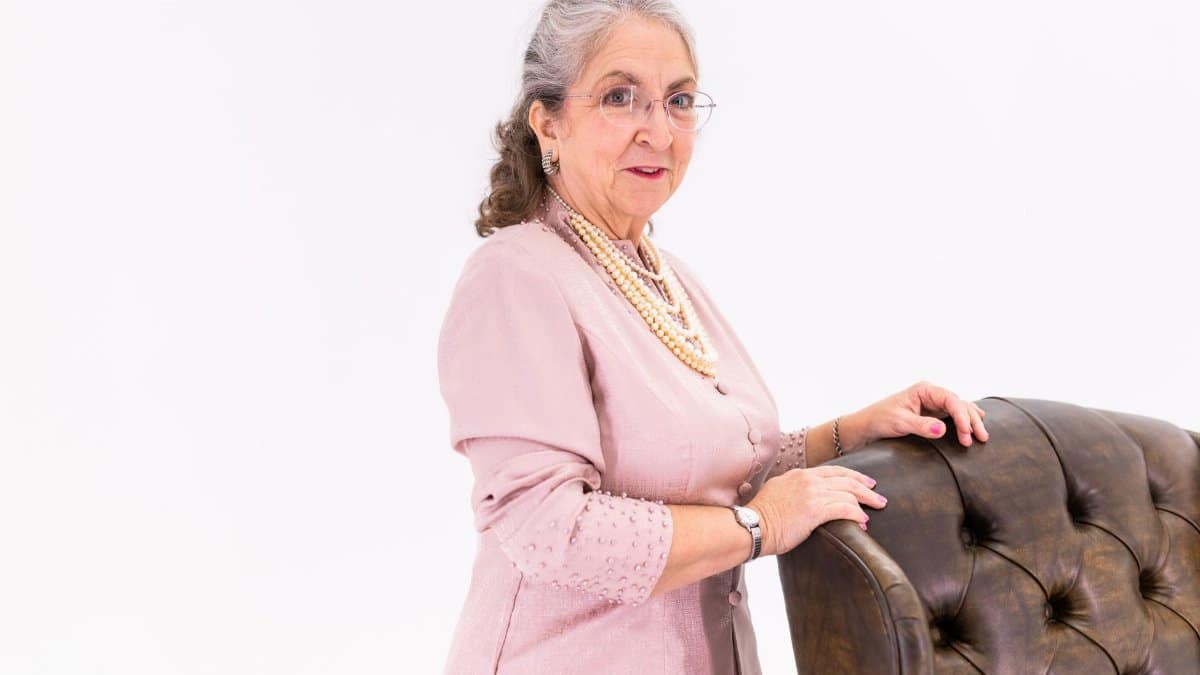
In a season when campaign money often moves quietly, a single check has become the loudest fact in the Ohio governor race. Illinois first lady MK Pritzker has committed $500,000 to support Democrat Amy Acton, a pledge now known in political circles by the blunt label MK Pritzker Amy Acton donation. The contribution followed a controversial advertisement from Republican Vivek Ramaswamy, and it has pulled a neighboring state’s first family into a contest that Ohio voters will decide for themselves. For readers far from Columbus, the episode is a plain lesson in how modern campaigns work. A television spot can provoke a donor. A donor can reset the week. And a week can harden into an argument about power, resentment, and the distance between the people who write checks and the people who cast ballots.
A check that crossed a state line
The Chicago Tribune reported the commitment in coverage dated October 21, 2026, framing it as a direct response to the Ramaswamy advertisement. Half a million dollars is not a casual courtesy. In a statewide race it can underwrite a serious stretch of television, a round of digital persuasion, or the staff time required to answer an attack before it settles into voter memory. It is also large enough to become its own message. Supporters can call it solidarity. Critics can call it interference. Both descriptions can be true at once, which is why the gift has traveled beyond the usual circuit of campaign consultants.
State lines still matter in American politics, even when money ignores them. Illinois and Ohio share a border, a river, and a long history of industrial change, but they do not share a ballot. A voter in Dayton does not elect the governor of Illinois. A voter in Peoria does not choose the governor of Ohio. When a figure as visible as a first lady steps into another state’s primary or general election fight, the gesture reads as more than philanthropy. It reads as a choice about which fight is worth joining, and about whose reputation is worth defending in public.
The woman writing the check

MK Pritzker is not an obscure donor hiding behind a committee name. She is the spouse of Illinois Governor JB Pritzker, and she has spent years as a public face of the administration in Springfield, appearing at civic events, arts gatherings, and causes tied to children and community health. The Pritzker name carries a fortune built in hotels and a political brand built in Democratic politics. That combination makes any large gift impossible to treat as private. Even when the check is hers rather than the governor’s, voters hear the family name first.
First ladies occupy an odd office. They hold no constitutional power, yet they move through public life with the authority of proximity. A speech, a visit, or a contribution can be read as a signal from the household that occupies the executive mansion. In Illinois, that household is already associated with ambitious national giving and with a governor who has not been shy about using personal wealth in politics. The Ohio commitment extends that pattern across the border. It asks observers to decide whether family philanthropy and campaign combat are still separable, or whether they have become the same act with two explanations.
Amy Acton and the race she is trying to win

Amy Acton entered public consciousness in Ohio as a physician and as director of the state health department during the first year of the coronavirus pandemic. She became a daily presence on television, explaining restrictions that many residents experienced as protection and many others experienced as overreach. She later left the post amid intense protest. Years on, she is a Democratic contender for governor, carrying both the credibility of a doctor who stood at a podium and the scars of a fight that never really ended.
That history is the reason a donation tied to her name lands with such force. To admirers, Acton represents competence under pressure and a willingness to absorb public anger in the name of public health. To detractors, she represents a style of governance that closed schools, strained businesses, and spoke in the language of emergency for too long. A campaign built on her biography cannot escape that split. Money sent in her defense will be welcomed by people who felt she was abandoned, and resented by people who believe she has never been held to account.
The advertisement that set the week in motion
The triggering event, as described in the reporting, was a controversial Vivek Ramaswamy campaign advertisement. The precise images and narration will be litigated by both sides, as campaign spots always are. What matters for the larger story is the sequence. An ad ran. A prominent Democrat outside Ohio answered with money. The answer then became news in its own right, which is often the point of answering at all. Campaigns do not only buy airtime. They buy a claim on the next news cycle.
Ramaswamy is a known quantity in national politics, a biotech entrepreneur who sought the Republican presidential nomination and then turned his attention to Ohio. His style is brisk, ideological, and built for clips that travel. An advertisement from that kind of candidate is designed to define an opponent before the opponent finishes defining herself. Acton’s allies appear to have judged that silence would let the spot harden into fact. The Pritzker commitment is one way to refuse that silence, though it also hands Republicans a fresh line of attack about outside wealth.
What half a million dollars actually buys
Voters often hear a large figure and imagine a single decisive blow. Campaign professionals hear a budget line. In a state the size of Ohio, $500,000 can matter enormously in a quiet month and look modest beside a barrage funded by national party committees, wealthy in state donors, and outside groups with bland names. The MK Pritzker Amy Acton donation is therefore best understood as leverage rather than as a finished strategy. It can seed a response, reassure nervous allies, and signal that Acton will not be left to answer a famous Republican with a shoestring operation.
It can also distort the internal life of a campaign. A gift this visible creates expectations. Staff must decide whether to spend it quickly, while the advertisement is still fresh, or to hold it for the weeks when undecided voters actually start paying attention. They must decide whether to thank the donor in public or to keep the gratitude muted so the candidate does not look rented. Those are not moral puzzles only. They are practical ones, and they shape the tone of every subsequent ad.
Out of state money and a familiar suspicion
Americans have argued about outside money for as long as they have argued about campaigns. The suspicion is simple and often fair. People who cannot vote in a state still try to shape its government, because state governments write rules that travel. Health policy, schools, labor law, and election administration do not stop at a border. A donor in Chicago can believe, without cynicism, that the identity of Ohio’s next governor will affect debates that reach Illinois. A voter in Ohio can believe, with equal sincerity, that the belief is none of her business.
The MK Pritzker Amy Acton donation sits squarely inside that argument. It is legal political support as described, not a secret transfer, and legality is not the same thing as legitimacy in the eyes of a skeptical public. Many middle aged voters have watched a generation of races flooded by committees they cannot name. They have learned to treat a large check as a clue. The clue is not always accurate. Sometimes a donor is paying a debt of friendship or of shared principle. Sometimes a donor is buying access to a future administration. The check itself does not say which story is true. The conduct that follows it does.
A family name that already means wealth
The Pritzker fortune makes the optics sharper than they would be for a donor of ordinary means. JB Pritzker has long been able to fund political ambition at a scale few candidates can match. That fact has been both a strength and a target in Illinois, where opponents have painted the family as insulated from the costs of the policies they favor. When MK Pritzker sends a large sum into Ohio, those old arguments travel with the money. Republicans do not need to invent a new caricature. They can dust off an existing one and aim it at Acton.
Democrats will answer that wealth is not a disqualification and that Republican donors of equal or greater means rarely apologize for their checks. The answer is politically useful and intellectually incomplete. Voters are allowed to dislike concentrated money on every side. They are allowed to notice when a defense of one check depends on pretending the other side’s checks do not exist, and when an attack on one check depends on the same pretense. The healthier standard is dull and consistent. Disclose the gift. Explain the purpose. Let the candidate stand on her own record anyway.
How Acton can accept help without being owned by it

The hardest task now belongs to Acton, not to the donor. A candidate who receives a famous check must show that the check did not purchase the message. That means talking about Ohio hospitals, Ohio schools, Ohio wages, and Ohio roads in language that does not sound drafted in another capital. It means answering the Ramaswamy advertisement on the substance of whatever claim it made, rather than answering only with gratitude toward Illinois. Voters can forgive an ally. They are slower to forgive a script.
There is a narrower political risk as well. Democratic primary voters, if the contest is still open or freshly decided in the public mind, may welcome the resources. General election voters in rural and suburban counties may hear only the surname. Campaigns that treat those two audiences as identical usually learn the difference too late. The MK Pritzker Amy Acton donation can fund the ads that try to close that gap. It cannot, by itself, close it.
What Ramaswamy gains from the reply

A controversial ad that draws a famous counterpunch is not always a failure. Ramaswamy can argue that the response proves his point, whatever the point of the spot was, because powerful Democrats felt compelled to intervene. He can tell Republican voters that the race has drawn the attention of a wealthy Illinois family, and that such attention is evidence of stakes rather than of meddling alone. In a media environment that rewards conflict, the donation is free publicity for the man it was meant to blunt.
That does not mean the gift was a mistake. Politics is full of moves that help both the person who makes them and the person who answers them. The advertisement put Acton on defense. The check put Ramaswamy back in the story as the candidate who can provoke a Pritzker. Each side will claim the exchange as proof of strength. The voters who decide the race may remember neither the spot nor the sum, only a vague sense that the contest grew louder and less local. Campaigns underestimate that kind of memory at their peril.
Rules, disclosure, and the limits of outrage

Campaign finance law is a thicket, and this article will not pretend to adjudicate filings that belong to regulators and to the campaigns themselves. What can be said in plain language is that large contributions are supposed to be visible. Visibility is the minimum condition of trust. If the commitment is reported, dated, and tied to a named person, the public can argue about it. If it is routed through layers of committees until the name disappears, the argument becomes a suspicion, and suspicion is harder to answer than a fact.
Outrage, meanwhile, has a short half life unless it attaches to a pattern. One gift of $500,000 is a headline. A season of similar gifts, from every direction, is the actual system. Readers who care about this story should watch what other donors do in the same race over the coming months. If only one check is treated as scandalous, the coverage is doing partisan work. If every large check is treated as news, the coverage is doing its job. The distinction is not subtle, and voters are better at noticing it than campaign operatives like to admit.
A story about health, power, and memory

Beneath the finance story sits an older argument about the pandemic years. Acton’s public life was shaped by orders, briefings, and a level of personal hostility that drove her from office. Ramaswamy’s politics have included a sharp critique of those years and of the officials who administered them. The advertisement and the donation are, in that sense, a sequel. They ask Ohio to decide whether the physician who led the health department in a crisis is fit to lead the state in ordinary time, and whether criticism of her record is fair debate or a revival of harassment.
Reasonable people will split on that question without being cruel. Some remember empty classrooms and delayed care and want no return to that style of authority. Some remember morgues, exhausted nurses, and a director who tried to explain tradeoffs in public. A governor’s race is a legitimate place to revisit those memories. It is a poor place to pretend they are simple. Money can amplify one memory over another. It cannot settle which memory was more faithful to what happened in Ohio kitchens and hospital corridors.
What readers should watch next

The useful questions are concrete. Does Acton spend the money on a direct answer to the advertisement, or on a broader introduction of her own platform. Does she appear with the Pritzkers, or keep the relationship at the level of a disclosed contribution. Does Ramaswamy release further spots that name the Illinois donor, and do those spots add facts or only atmosphere. Do other national Democrats follow with their own checks, turning one gift into a convoy. Each of those choices will tell voters more than the original headline.
It is also worth watching the quieter reaction inside Ohio. County party chairs, hospital leaders, teachers, and small business owners will decide whether the donation feels like backup or like a brand problem. Their judgment rarely arrives in a single quote. It arrives in turnout, in volunteer energy, and in the willingness of local validators to stand next to the candidate. A statewide race is still a collection of local permissions. Outside money can rent attention. It cannot rent those permissions for long.
The donation as a test of proportion
The MK Pritzker Amy Acton donation will be remembered less for the arithmetic than for the proportion. Was the response matched to the offense of the advertisement, or did it escalate a state race into a proxy fight between famous names. Proportion is a political virtue that does not trend. It asks donors to consider not only whether they can give, but whether their giving helps the candidate look like a future governor rather than like a cause. It asks candidates to accept help without borrowing someone else’s enemies. It asks voters to judge the record in front of them, not only the fortune behind a check.
Illinois has its own governor, its own budget fights, and its own reasons to watch the Pritzker household. Ohio has its own electorate, which has surprised national narrators more than once. The border between those facts is the real subject of this week. A first lady chose a side. A Republican ad helped provoke the choice. A Democratic physician running for governor must now show that the help she accepted has not replaced the case she needs to make. That case, in the end, is the only expenditure no donor can cover.