
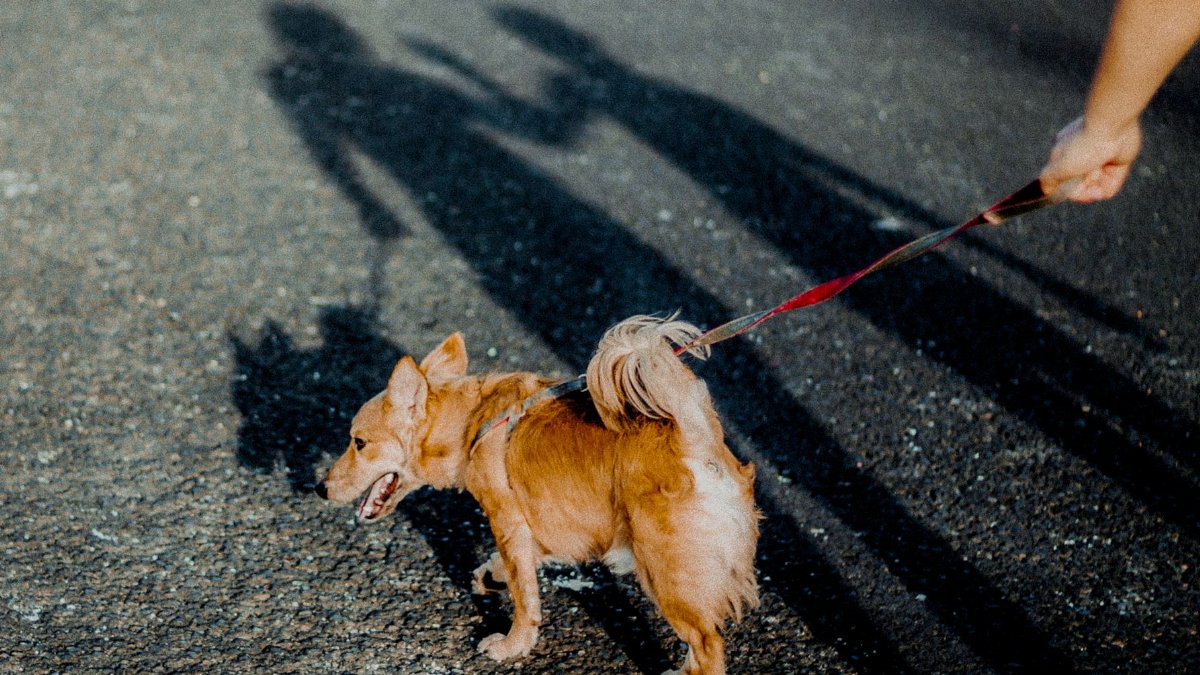
On a bright afternoon in the northern reaches of Yellowstone National Park, a small dog named Luna trotted back into the arms of the people who had spent more than a month fearing she was gone for good. The story traveled fast under the plain search phrase Luna dog Yellowstone reunion, a cluster of words that captured both the dread of a loss in wild country and the relief that followed. Rangers, visitors, and the family itself had imagined many endings. Few of them included a living animal stepping out of the sage and timber as if the park had only borrowed her.
The morning she was no longer there

Luna disappeared during an ordinary stop in a landscape that does not do ordinary. Her owners had come to see geysers, bison, and the wide sky that draws millions of people each year. A door left open a moment too long, a leash slipped, a scent on the wind: the precise instant remains private, as such instants often do. What is public is the gap that opened afterward. A small dog, light enough to vanish between sagebrush, was suddenly somewhere in a park larger than some states.
Friends who have lost animals in cities know the frantic loop of alleys and shelters. In Yellowstone the loop is different. There is no block to canvas, no neighbor who might have seen a collar. There is wind, thermal ground that can burn a paw, rivers that run cold even in summer, and animals that do not share a campsite ethic. The family began the only search available to them, calling a name into country that swallows sound.
What the park asked people to notice
Word moved through visitor centers, trailheads, and the informal networks that form when someone posts a photo of a missing pet. People were asked to watch pullouts, picnic areas, and the edges of boardwalks where a frightened dog might linger near human voices. They were also asked not to chase. A dog already spooked by bison, traffic, and strange smells will run farther if a crowd closes in.
Rangers are used to lost hikers, flat tires, and the occasional bison jam that stops a road for an hour. A missing companion animal sits in a different category. Staff can share descriptions and urge caution. They cannot assign a search team to every acre of backcountry for one small dog. The burden falls on time, luck, and the eyes of strangers who happen to look twice at a shape in the grass.
A park that does not keep pets easily
Yellowstone is not built for dogs the way a city park is. Rules limit where pets may go, partly to protect wildlife and partly to protect the pets. Thermal basins can look like solid ground and then give way. A bison that seems calm at fifty yards can close that distance faster than a person expects. Coyotes, wolves, and bears do not distinguish a house dog from any other small mammal.
Visitors sometimes treat those rules as scenery advice rather than safety. Luna’s absence made the point without a lecture. A month is a long time for an animal that depends on people for food and shelter. Nights in the park drop hard even when days feel mild. Water is abundant in some drainages and scarce on open benches. Anyone following the story understood that survival was possible and also far from guaranteed.
The search that refused to close
The owners did not treat the first week as a verdict. They returned to places she might recognize: the pullout where the car had stopped, the campground loops, the short walks where her scent might still mean something. They left word with lodges and with people who work the entrances. They asked travelers heading deeper into the park to keep a photo on their phones.
Hope in these cases is not a mood so much as a schedule. You check the same spots at dawn because animals move then. You check again near dusk. You answer every message, including the ones that turn out to be a different dog or a rock that looked, for a second, like a curled body. People who have waited on news from hospitals will recognize the posture. You stay useful because usefulness is the only available substitute for certainty.
Strangers who kept a description in mind
The wider public entered the story in the way modern travel stories often do, through posts and forwarded notes. A small dog, a famous park, a family unwilling to stop looking: the elements were simple enough to remember between geyser stops. Some visitors slowed at turnouts they might have passed. Some employees glanced twice at movement near service roads.
None of that guarantees a find. Attention is not a tracking dog. Still, attention changes odds at the margin, and margins are where lost animals are sometimes recovered. The phrase Luna dog Yellowstone reunion began as a wish more than a report, the kind of label people type when they want an update and are afraid of what the update might be.
How a month changes the people waiting
After the first days, the practical questions multiply. Do you stay in the region or go home and rely on others? Do you keep a rental car idling near the north or head toward the lake because someone thought they saw a flash of fur? Sleep becomes thin. Meals become fuel. Conversations with rangers repeat the same facts because repetition is how you avoid missing a detail.
Friends outside the park offer theories that range from kind to unbearable. She found a kind camper. She fell in with coyotes. She is hiding under a boardwalk and will come out when the crowds thin. The owners had to sort signal from noise without the luxury of knowing which was which. A month is long enough for grief to start rehearsing and short enough that you still jump when the phone lights up.
The afternoon the name fit again
Reunion stories are often told as if the moment arrives with music. The real version is usually clumsier. Someone sees an animal that matches a description. Someone else gets close enough to read a collar or to hear a response to a name. Hands shake. A leash appears. A call goes out to people who have been waiting with their shoes already on.
When Luna was found, the essential facts were these: she was alive, she was small, and she was once again with the people who had been saying her name into the wind. The precise spot and the precise finder matter less to the public record than the fact that the park gave her back. For the family, every detail will stay sharp. For everyone else, the headline is enough to rearrange a day.
What her body may have endured

A dog missing for more than a month in Yellowstone is not the same dog who left the car. Weight drops. Pads crack. Fear rewires ordinary noises into threats. Even a joyful return can include trembling, refusal of food at first, or a startle at every door. Owners who have been through this describe a second, quieter recovery that begins after the photographs.
Veterinarians who see traveling pets often talk about dehydration, parasites, and injuries from wire, rock, or traffic. None of that requires a special study to understand. It requires time, a calm room, and the willingness to let an animal set the pace. Luna’s reunion was the end of the search and the start of ordinary care, which is its own kind of news.
Why this story traveled farther than the park

Yellowstone already lives in the national imagination as a place where nature still has the last word. A lost dog makes that abstraction personal. People who will never visit the park could picture the family at a trailhead, calling into trees. People who have stood at Old Faithful could picture the boardwalks, the bison, the sudden emptiness beyond the pavement.
Local news sometimes gets dismissed as small. This was local in the sense that it happened in one park to one family, and it was not small to them. The wider interest came from recognition. Almost everyone has waited on something that might not come back. The Luna dog Yellowstone reunion gave that waiting a name, a landscape, and, unusually, a happy last line.
Rules that read differently after a loss

Park rules about pets can feel fussy until they do not. Leashes are short for a reason. Cars should be secure. Thermal areas are not lawns. Wildlife viewing means distance, not a photo with an animal that outweighs a sedan. None of those cautions guarantees that a door will never open at the wrong second. They do shrink the number of ways a day can go wrong.
Travelers reading about Luna may tighten a routine they already meant to keep. Water in the car. A collar with a phone number that works outside the home area. A plan for who watches the dog when everyone wants to see the same eruption. These are dull preparations. Dull is the point. The exciting version is the one that ends with posters.
Rangers, visitors, and the limits of help
It is tempting to cast the ending as a rescue engineered by an institution. The truer picture is mixed. Public employees shared information and managed a landscape that is already full of emergencies. Private people looked when they could. The dog, by whatever combination of instinct and chance, stayed alive long enough to be seen. Credit is wide because the failure, had it come, would have felt personal anyway.
That mix is how many good outcomes happen in large parks. No single desk controls the acreage. A visitor who slows down, a ranger who passes along a description, a family that refuses to treat silence as proof: together they sometimes close a gap that none of them could close alone. The Luna dog Yellowstone reunion belongs to that category of shared attention.
What the owners can say now
People in the middle of a public loss learn quickly which questions help. Where was she found, is she hurt, may we see a photo: those are fair. What did you do wrong, why did you bring a dog at all: those arrive dressed as concern and land as accusation. The family does not owe a confession to a crowd. They owe Luna food, quiet, and a veterinarian who is not in a hurry.
If they speak later, they may talk about the strangers who sent sightings that did not pan out and still mattered, because each message said the search was not only theirs. They may talk about the hour they stopped expecting the phone to be bad news. They may not talk at all. Either choice is compatible with gratitude.
A small animal against a famous map
Maps of Yellowstone show calderas, rivers, and roads with names that schoolchildren learn. They do not show the scale of a terrier or a spaniel against a valley. That mismatch is what made the month feel impossible and the return feel slightly unreal. The park did not become safer because one dog came back. It became, for a news cycle, legible as a place where a single life can still be lost and found.
Readers who want a moral can take a modest one. Wild parks remain wild even on the scenic drive. Companions need the same attention we give to bears and boiling water. And sometimes, against the odds that everyone has already calculated, the animal answers when her name is called.
After the photographs fade
News moves on. The next bison jam, the next closure for fire or snow, the next argument about crowds will replace this story in the feeds. Luna will still need walks, meals, and a lap that does not flinch when she startles. Her owners will still hear wind in lodgepole pine and remember a month when that sound meant absence.
The record, such as it is, can stay simple. A small dog went missing in Yellowstone for more than a month. People looked. She was found. She went home. In a season full of larger claims, the Luna dog Yellowstone reunion is enough of a story on its own, precise, local, and, for once, finished in the way families hope a search will finish.