
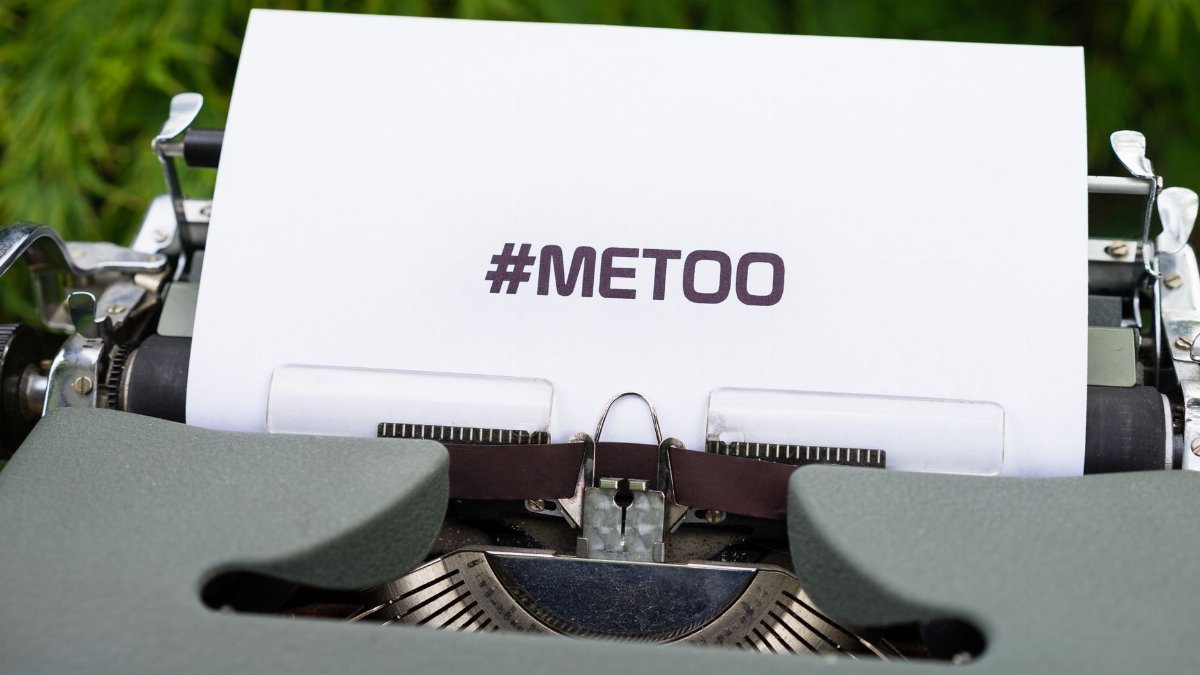
On an ordinary Sunday in October 2017, a brief public message asked anyone who had been sexually harassed or assaulted to answer with two words. The replies did not arrive as a polite trickle. They arrived as a flood that newsrooms, churches, campuses, and family kitchens could not ignore. The phrase #MeToo viral anniversary Boston Globe now names that turn, when a private injury became a civic fact and a date on the calendar that still asks what a society owes the people who spoke.
A morning that refused to stay small

Alyssa Milano posted the call on October 15, 2017, after public accusations against the producer Harvey Weinstein had already shaken Hollywood. She did not invent the language. She asked people to show, in public and in numbers, how common the harm had been. Within a day the hashtag moved across platforms and languages. Survivors who had kept stories inside offices, dressing rooms, parishes, and homes found a chorus instead of a closed door. Editors who had treated such accounts as isolated scandals had to reckon with a pattern.
What made the morning different was not only volume. It was sequence. One reply made the next reply safer to type. A name in one city gave cover to a name in another. The record was messy, uneven, and sometimes cruel in the way open platforms can be. It was also the first time many readers saw the scale of something they had been taught to treat as personal bad luck.
The sentence that came before the hashtag
Long before the viral wave, Tarana Burke had been using the words me too in work with young people, especially Black girls and other young women whose abuse was routinely dismissed. Her project, begun in 2006, was about solidarity and healing, not about trending topics. When the hashtag exploded, Burke had to watch a phrase she had built for care race ahead of the context she had given it. She later became the public conscience of a movement that risked forgetting its own origin.
That origin matters on an anniversary. A hashtag can count replies. It cannot, by itself, fund counseling, change a workplace rule, or sit with a person who is not ready to post. Burke’s earlier work insisted that being believed was only the start. The later viral moment made the belief visible. It did not automatically supply the slower labor of repair.
How newsrooms learned to listen in public

For journalists, the week felt like a broken dam. Tips that once died in a notebook because a source feared retaliation suddenly had company. Investigative desks that had spent months on a single powerful man found readers arriving with stories about bosses, coaches, professors, and clergy who would never make a front page on their own. The craft problem was real. Verification still mattered. So did the risk of treating trauma as content.
Looking back through the frame of the #MeToo viral anniversary Boston Globe, the local lesson is as sharp as the national one. A regional paper lives close to the institutions it covers: hospitals, universities, state offices, sports franchises, parishes. When readers wrote in, they were often writing about places the paper already knew by name. The anniversary is a reminder that proximity is not the same as attention. A city can host the harm for years and still act surprised when the harm is finally said aloud.
What people actually asked for

The public argument sometimes collapsed into a fight about tone, as if the main question were whether a hashtag had been polite enough. People who posted were usually asking for narrower things. They wanted a boss removed from a shift where he could corner an intern. They wanted a school to stop recycling a coach. They wanted a church to stop moving a minister to a new flock. They wanted friends to stop explaining the harm away as a misunderstanding.
Some wanted criminal charges. Many did not, or could not, because time, fear, or the limits of the law stood in the way. The movement was never one demand. It was a stack of demands that shared a premise: silence had been treated as consent, and that bargain was over. Anniversary coverage that flattens those aims into a culture war misses the practical requests that filled inboxes in the first weeks.
Power, money, and the uneven cost of speaking

Fame made some stories travel. Money made some defenses formidable. A well known actor could command a camera. A hotel housekeeper, a farmworker, a graduate student on a visa, or a teenager in a youth program often could not. Burke and other advocates kept pointing at that gap. If the only names that endure are the names already famous, the movement has described the top of a hierarchy and left the bottom untouched.
Retaliation was not theoretical. People lost shifts, recommendations, housing, and family peace. Some were sued. Some were told they had ruined a good man’s life by describing what he did. The anniversary is incomplete if it counts only the resignations and not the people who spoke and then disappeared from the narrative because the cost was too high to keep paying in public.
Institutions that moved and institutions that waited

Companies rewrote handbooks. Legislatures debated limits on nondisclosure agreements that had buried settlements. Universities revisited Title IX offices. News organizations, including those that had missed earlier warnings, assigned teams to patterns rather than to single villains. Some of that work stuck. Some of it was a season of statements followed by a return to old habits once the cameras left.
The #MeToo viral anniversary Boston Globe is useful here as a civic checkpoint rather than a victory lap. A policy on paper is not a reporting channel that staff trust. A training module is not an investigation. Readers can ask local questions without waiting for a national scandal: Who holds complaints? Who is protected when a donor, a coach, or a senior physician is accused? What happens to the person who files, six months later, when the headline is gone?
Faith, conscience, and the weight of a confession

Because this date now sits in a season when many Americans are already thinking about moral inventory, the anniversary has a spiritual dimension that is easy to skip and unwise to ignore. Congregations heard from members who had been harmed by leaders they were taught to revere. Some faith communities opened listening sessions and changed who could be alone with minors or with vulnerable adults. Others treated the moment as an attack on religion itself and closed ranks.
Confession, in the older sense, is not a brand exercise. It names a wrong, accepts consequence, and changes conduct. Survivors do not owe a congregation their story. Institutions that claim moral authority do owe an honest account of how they used power. On this anniversary, the more searching question is not whether a pulpit mentioned the hashtag. It is whether the people who hold keys, budgets, and the benefit of the doubt have altered the conditions that made harm easy to hide.
Law, memory, and the stories that never fit a case file

Courts did some of the work and refused some of it. Statutes of limitation, burdens of proof, and the private nature of many assaults meant that a great share of what people described would never become a verdict. That gap fueled anger and also a necessary humility. A movement that treats every allegation as a trial will fail people. A culture that treats every allegation as gossip will fail them too.
Memory filled part of the space law could not. Families retold old holidays. Colleagues remembered which jokes had been mandatory. Archivists and reporters kept documents that powerful people hoped would age into dust. The public record from that October is not scripture. It is evidence of a shift in what could be said without automatic disgrace falling on the speaker rather than on the act.
The arguments that tried to end the conversation

Backlash arrived quickly and has never fully left. Some critics warned of mob judgment, and that warning was not empty. Online piles can punish the wrong person, skip facts, and confuse cruelty with courage. Due process in workplaces and courts is not a luxury. It is how a society avoids replacing one injustice with another. Serious coverage has to hold that line without using it as a blanket excuse to disbelieve women, men, and nonbinary people who describe abuse.
Other objections were thinner. They mourned the loss of a flirtatious office or treated accountability as the death of art. Those complaints revealed how much ordinary professional life had depended on other people absorbing risk in silence. An anniversary essay can grant the real dangers of rumor. It should not grant the fantasy that the old arrangement was fair merely because it was familiar.
What a later October still measures

Years on, the hashtag is less a daily drumbeat than a reference point. Younger workers enter offices that have posters and portals their predecessors never saw. They also enter industries where whisper networks still do the job that managers will not do. High profile cases still break. So do the smaller ones that never leave a group chat. Progress is visible in who gets hired to investigate, in who is believed on the first telling, and in who no longer has to be famous to be heard.
It is also visible in fatigue. Survivors are asked, every October, to perform their worst day for a fresh audience. Journalists have a duty not to turn remembrance into extraction. The better use of the date is structural: follow the policy that was promised, name the office that stalled, and ask whether the person who reported last year is still employed, still housed, and still safe.
A civic date, not a closed chapter
History sections like to seal a day inside a sentence. This one resists the seal. October 15, 2017, did not end harassment, assault, or the habits that protect them. It ended the plausible claim that such harm was rare, or that speaking would always leave the speaker alone. That is a large change and an incomplete one.
I still remember the strange quiet in a newsroom after the first night of replies, the quiet of people reading what they already half knew. The work since then has been louder and also lonelier, depending on the room. Marking the #MeToo viral anniversary Boston Globe is a way of refusing both amnesia and triumphalism. The date belongs to the people who answered, to the organizer who had said the words years earlier, and to anyone still deciding whether a complaint in a local institution will be met with care or with a waiting game.
Anniversaries are useful when they sharpen questions. Who was protected? Who was moved along? Who was asked to be grateful for a half measure? If those questions reach a parish board, a hospital wing, a campus office, and a city desk with the same seriousness the hashtag once forced onto a national feed, then the morning in 2017 is still doing its work. The #MeToo viral anniversary Boston Globe is not a relic. It is a measure of whether belief, once spoken in public, was allowed to become practice.