

The trading floor does not need a sermon to feel like a place of reckoning. Screens glow, phones buzz, and a single government release can turn a calm morning into a rush for the exits. When consumer prices came in hotter than many economists had expected, the phrase US stocks drop inflation moved from cable chyrons to kitchen tables in a single afternoon. The broad market index fell 1.1 percent, its worst session since July, while the cost of everyday goods rose 3.7 percent from a year earlier. Fuel did much of the lifting. For people who do not live inside a brokerage account, the lesson was plain: a retirement fund and a grocery bill can fall out of step on the same day.
What the inflation report put on the table
Inflation is a comparison, not a mood. The Bureau of Labor Statistics tracks a basket of goods and services and asks how much more, or less, that basket costs than it did a month ago and a year ago. Its consumer price materials, published at the Bureau of Labor Statistics, are the reference point markets treat as official even when traders argue about the details. A 3.7 percent rise from a year earlier is cooler than the peaks of the recent inflation surge, and it is still warm enough to unsettle anyone who hoped the problem had already faded into the background.
The monthly change matters as much as the annual one. A single hot month can be noise. Several hot months start to look like a pattern. Equity traders do not wait for a philosophy seminar on that distinction. They reprice growth stocks, banks, and energy names within minutes, because the number changes the odds of what the central bank will do next. That is why a report about milk, rent, and gasoline can erase a summer of quiet gains before lunch.
Fuel prices and the psychology of the pump
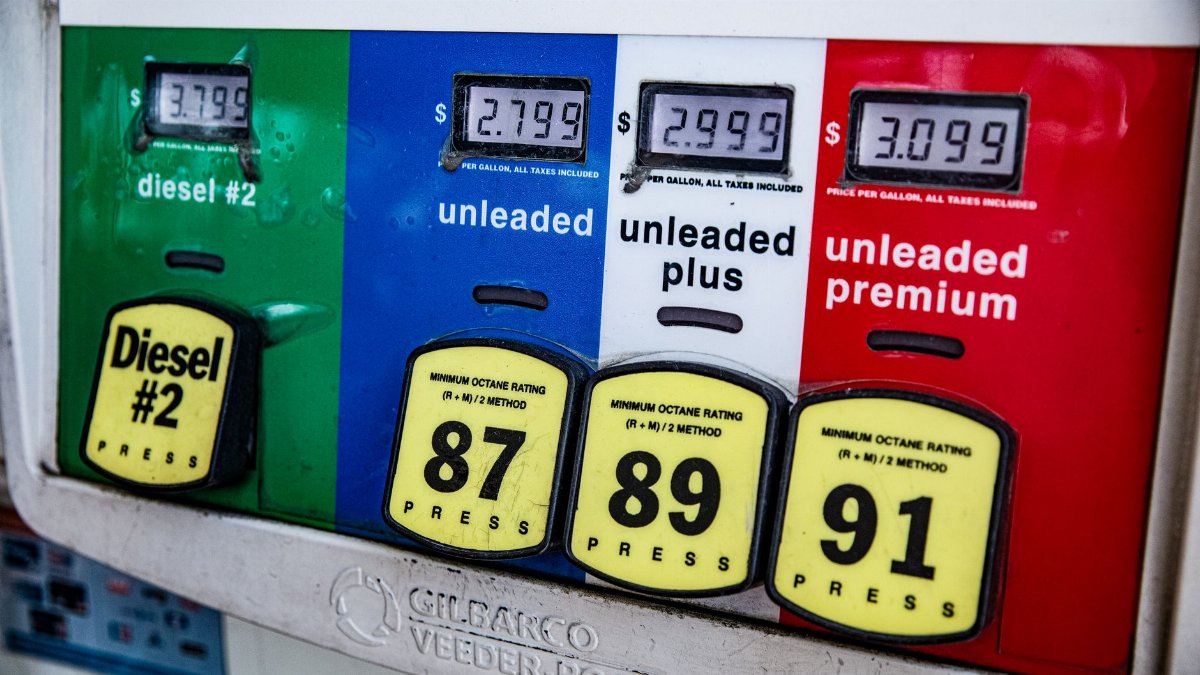
Fuel has a strange power in American life. It is visible, frequent, and impossible to ignore. A driver does not need a spreadsheet to know that filling the tank costs more this week than last month. When gasoline climbs, it feeds directly into the inflation basket and indirectly into the price of nearly everything that moves by truck. Airlines, delivery firms, and farmers feel it. So do households who already rebuilt budgets around higher grocery bills.
Markets know this psychology. Energy shares sometimes rise when crude rises, because producers collect more per barrel. The rest of the market often falls, because higher fuel acts like a tax on consumers and a threat to profit margins. That split is easy to miss in a headline that simply says stocks fell. Under the surface, money is moving from one story to another: from companies that need cheap inputs to companies that sell the expensive input. Neither story is a moral verdict. Both are arithmetic.
Why the worst day since July still matters

A 1.1 percent decline is not a crash. It is not 2008, and it is not the violent air pockets of the early pandemic. Calling it the worst day since July is a way of measuring surprise, not catastrophe. July had been a line in the sand for many portfolios that spent the late summer assuming inflation was gliding lower in a straight line. A straight line is a comforting chart. Real economies rarely offer one.
What rattles people is the break in the narrative. If prices were supposed to cool and instead ran hot, then the path of interest rates looks less friendly. Higher rates for longer tend to compress the value of future profits, which is another way of saying that stocks priced for perfection have less room to disappoint. I have watched readers treat a single red day as proof that the whole year is ruined. That reading overstates the day and understates the habit. The session mattered because it revised expectations, not because it erased wealth in one stroke.
Bonds, yields, and the quiet second market
Stocks get the cameras. Bonds often do the real work. When inflation surprises on the high side, investors demand more yield to hold government debt, because the fixed payments they will receive later buy less in a world of rising prices. Yields and prices move in opposite directions. A selloff in Treasuries can lift mortgage rates, corporate borrowing costs, and the discount rate that analysts use when they value a share of stock.
That chain is worth sitting with. A family refinancing a house, a city issuing bonds for a school, and a software firm planning a hiring round are all, in different ways, reading the same tape. The Federal Reserve describes its policy goals in public materials at the Federal Reserve, including stable prices and maximum employment. Markets try to guess how those goals will be weighed when the data refuse to cooperate. On a day when US stocks drop inflation fears back into the center of the conversation, the bond market is usually the first place the new odds appear.
The Federal Reserve and a narrower path
Central bankers do not set policy on one print, and they say so often. They also cannot pretend a hot print did not happen. Their path narrows when inflation stops improving. Cut rates too soon, and price pressures can reaccelerate. Hold rates high too long, and hiring and investment can slow more than anyone intended. That tension is the job. It is also why speeches, minutes, and projections get parsed like scripture by people who would rather be doing something else.
For a broad audience, the useful point is modest. The Fed does not manage your grocery store. It manages the price of money, and the price of money leaks into rent, car loans, credit cards, and the stock market. A worse inflation reading does not guarantee another rate increase. It does make a quick series of cuts less likely. Equities that had rallied on the hope of easier money give some of that hope back. The giving back is what a 1.1 percent drop looks like in practice.
Households who do not trade for a living

Most Americans are not day traders. They are workers, parents, retirees, and small business owners who meet inflation at the checkout and meet the stock market in a 401(k) statement they open once a quarter. Those two meetings can feel contradictory. Prices up, balances down: both can be true, and both can sting. The sting is not irrational. A household living close to its income has no cushion labeled “market volatility.”
There is also a class split hiding in the averages. Households with large equity holdings feel a bad session as a paper loss that may recover. Households without them feel inflation as a cash loss that does not recover on its own. When commentators say the economy is resilient, they are often describing employment and spending in aggregate. Aggregates hide the neighbor who skipped a repair or delayed a prescription. A serious account of US stocks drop inflation has to hold both facts: markets are a pricing machine, and prices are a lived experience.
Asia wakes up to an American number

Money does not sleep when New York closes. By the time desks in Tokyo, Hong Kong, and Sydney turn on their screens, the American inflation print is already a known quantity. Asian shares often trade mixed after such a session, because the region is not a single bet. Exporters who sell into the United States worry about American demand. Energy importers worry about fuel. Local banks watch their own currencies as the dollar firms or fades with shifting rate expectations.
That overnight handoff is a reminder that a statistic compiled in Washington is now a global input. A manufacturer in South Korea and a fund manager in Singapore do not vote in American elections, yet they reprice risk when American consumer prices surprise. The following morning in the United States, futures markets then import some of that reaction back. The loop is fast, and it can exaggerate a move that began as a careful reading of one table of numbers. Calm in Asia is not a verdict that the American data were fine. It is often a verdict that the surprise was already in the price.
Memory, patience, and the spiritual weather of money

This is a business story, and it is also a story about attention. Fear has a liturgy: refresh the quote, reread the headline, imagine the worst year of your working life compressed into one close. Hope has a liturgy too: assume every dip is a gift, assume every official is either a genius or a villain. Neither practice is a strategy. A more durable posture looks like patience without passivity. You notice the number. You do not let the number become your weather for a month.
Religious and secular traditions have long warned against making a fortune into an idol or a catastrophe into an identity. That warning is not a substitute for a budget, a diversified portfolio, or an honest look at fees. It is a check on the nervous system. I do not think a market column should preach. I do think readers deserve language that treats anxiety as real without treating panic as wisdom. On days when US stocks drop inflation back into the lead of the evening news, the disciplined question is simple. What changed in the facts, and what changed only in my pulse?
What a careful reader should watch next

One session does not settle the argument. The next inflation report will show whether 3.7 percent was a plateau, a bump, or the start of a reheating. Energy prices can reverse if supply loosens or demand softens. Rent, which enters the basket with a lag, can keep pressure on the annual rate even after other prices cool. Employment data will tell the Fed whether the labor market is still tight enough to sustain wage gains that feed into services.
Company earnings add another layer. If executives say customers are trading down, resisting price increases, or delaying purchases, the stock market will hear that as confirmation that inflation is biting demand. If they say volumes are steady, investors may decide the 1.1 percent drop was an overreaction. Neither outcome is guaranteed. The honest forecast is a range, not a slogan.
For readers building or protecting a nest egg, the practical implications are unglamorous. Match the money you need soon to assets that do not swing with every inflation print. Keep the money you will not need for years in a mix you can stand to hold through a red afternoon. Read the primary figures rather than only the loudest interpretation of them. And remember that a worst day since July is a marker on a calendar, not a destiny. The phrase US stocks drop inflation will return whenever prices and portfolios collide. The useful work is to meet that collision with proportion, not with amnesia and not with dread.