
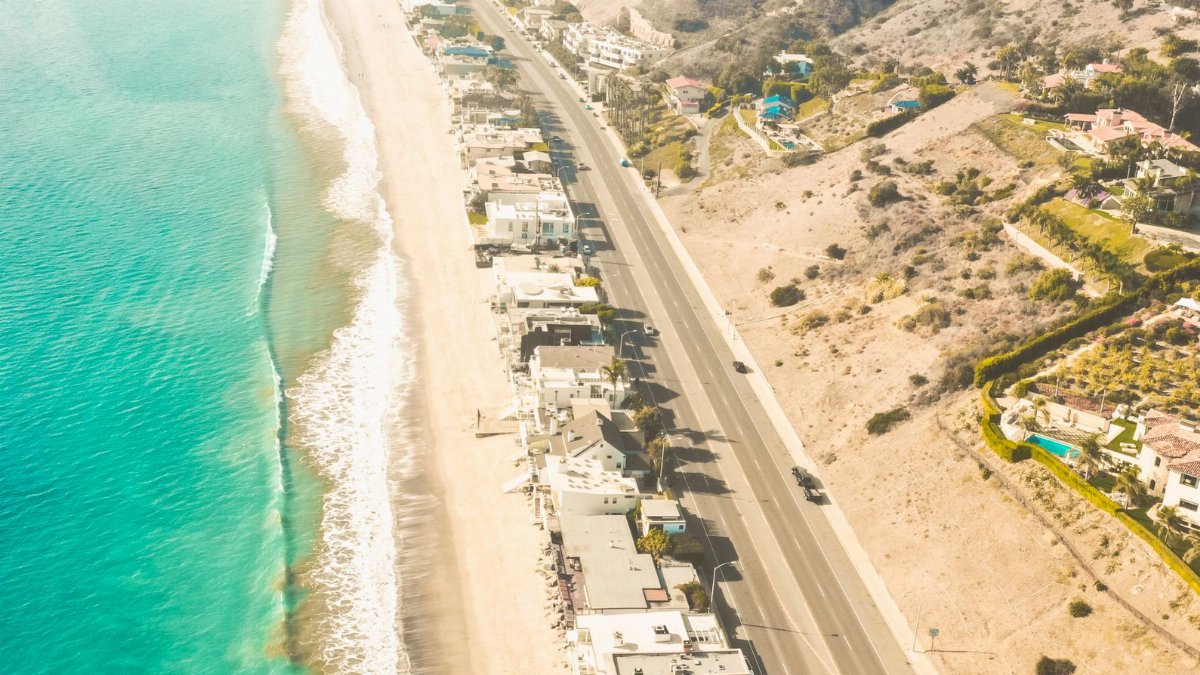
On a bright October morning the Pacific Ocean throws light across the lanes, and the road still asks every driver to decide how fast is fast enough. That choice now has a witness that does not blink. Malibu PCH speed cameras recorded about 100,000 violations in just nine days, a figure large enough to halt a coastal commute in conversation and start an argument that will not stop at the city line. For years this stretch has been loved as a scenic drive and feared as a place where a moment of impatience becomes a headline. The early tally does not settle whether machines should police a famous highway. It does make the scale of speeding harder to wave away as a few reckless outliers.
A coastline that flatters the accelerator
Pacific Coast Highway through Malibu is not an ordinary arterial. Curves open onto water, houses sit close to the shoulder, and the posted limit can feel like a suggestion when the lane ahead is empty and the light is gold. Visitors come for the view. Residents use the same pavement for groceries, school, and work. The mix is unstable. A car moving well above the limit closes distance faster than a person on foot can judge, and a driveway or a crosswalk appears with little warning.
Beauty is part of the hazard. The road photographs like freedom, and freedom is a poor traffic engineer. Drivers who would creep through a dense city grid often treat this corridor as a reward for having arrived. The cameras do not measure romance. They measure speed against a limit the city has already chosen, and the first reading suggests that a great many people are declining the bargain.
A number too large to treat as noise
About 100,000 violations in nine days is not a rounding error and not a single bad weekend. Spread across a little more than a week, it implies a constant stream of vehicles traveling faster than the law allows, at hours when surfers, dog walkers, and commuters share the edge of the lane. Officials and reporters have treated the count as an early snapshot rather than a final verdict, which is the right caution. Snapshots can still be devastating.
The Los Angeles Times account of those first days, available from the newspaper at https://www.latimes.com/, put the scale in public view. Whatever the precise calibration of each unit, the direction of the evidence is plain. If even a fraction of those readings would have produced a citation after a warning period, Malibu is looking at an enforcement load, a political fight, and a safety question all at once. Malibu PCH speed cameras did not invent speeding on this road. They made it countable.
A highway already marked by grief
None of this arrives in a vacuum. In 2023 a driver traveling at high speed struck and killed four Pepperdine University students who were walking near the highway. That crash became a rallying point for families, classmates, and residents who had argued for years that the corridor was treated like a racetrack with a view. Memorials do not set speed policy by themselves. They do strip the debate of abstraction. A limit on PCH is not a theory about driver freedom. It is a guess about how much kinetic energy a human body can survive.
Local advocates have pushed for slower speeds, clearer crossings, and more consistent enforcement long before lenses went up on poles. Some wanted design changes that would make the fast line physically harder to hold. Others wanted police presence that did not vanish when a shift ended. The camera program sits in that history. It is one answer to a demand that the road stop consuming people who were simply trying to get home.
What the machines actually do
Automated speed enforcement is simpler than the folklore around it. A sensor measures how fast a vehicle is moving. A camera records the plate when the reading exceeds a set threshold. A notice follows, often after a period in which drivers receive warnings rather than fines. The point, at least in the statutes that authorize pilots in California, is to change behavior on streets where traditional stops are dangerous, infrequent, or both. An officer pulling someone over on a curving coastal highway creates a new risk of its own.
The machines are not judges of intent. They do not know whether a driver was late for a shift, showing off, or simply following the car ahead. They also do not replace engineering. A camera on a road designed to feel fast will keep ringing until the design, the limit, or the culture changes. Supporters say that is a feature. A steady signal is better than a sporadic ticket that teaches people to watch for patrol cars rather than for pedestrians.
The unease of being watched
Opposition is not only about money. Many drivers hear camera and think of a government that never looks away. Plates, locations, and times of travel are sensitive even when the stated purpose is safety. A program that begins with speeding can, in a sloppier political season, be asked to do other work. That fear deserves a straight answer: narrow legal authority, short retention of images, public audits, and no quiet expansion into general surveillance.
There is a second unease that is more personal. A scenic drive is one of the last ordinary rituals that still feels unsupervised. To put a lens on it feels, to some, like scolding a culture rather than correcting a hazard. That feeling is real. It is not a safety plan. The ocean does not care whether a driver resents the equipment. Physics does not grade intent.
What safety agencies have said for years
Federal safety officials have repeated a dull and important fact: as speed rises, the chance of death and severe injury rises with it. Stopping distance grows. The energy in a crash grows faster than the speedometer suggests, because energy scales with the square of velocity. A few miles per hour over a limit in a neighborhood is not a personality trait. It is a change in what happens when something goes wrong. The National Highway Traffic Safety Administration collects that case at https://www.nhtsa.gov/.
Research reviews in the United States and abroad have generally found that speed cameras reduce speeding and, in many placements, reduce serious crashes. Results vary with site, threshold, and whether drivers learn the locations and only brake for the lens. That last problem is real. A camera that creates a brief slowdown and a long sprint afterward is a weaker tool than a corridor treated as a whole. Malibu should publish before and after speeds, not only citation counts, or the public will be asked to trust a black box.
Who is passing through, and who pays

A fine that stings a wealthy weekend visitor may wreck a month for a worker driving the same road to a service job. If the early readings are as broad as reported, the program will not only catch thrill seekers. It will catch ordinary speeding, which is widespread and unevenly affordable. Equity is not an excuse to ignore a deadly corridor. It is a reason to design the penalty schedule with care: warning periods that are real, payment plans, and a focus on the highest speeds rather than a harvest of technical violations just over the line.
Tourism complicates the politics. Malibu lives with cars that do not live in Malibu. A resident who wants quieter nights may welcome a tool that reaches visitors a local officer cannot stop one by one. A resident who drives the highway every day may feel uniquely exposed. Both can be true. The fair test is whether speeds fall for everyone, not whether the town can balance its budget on notices mailed out of town.
Design still has to do its job

Cameras are a behavioral tool. They are not a sidewalk, a refuge island, a clearer crosswalk, or a limit that matches the way the road is built. If lanes feel like a parkway, drivers will drive like a parkway. Cities that rely on enforcement alone often discover that compliance fades when the equipment is controversial or when people map the poles. The stronger programs pair the lens with street changes that make the safe speed the natural one.
On this corridor, that conversation is old and unfinished. Crossings, lighting, turn pockets, and lower limits in the most exposed segments have all been urged. Some changes are slow because the highway is also a regional route, tangled in agencies and in the simple fact of cliffs and houses. Slowness is not the same as impossibility. A camera program that arrives without a design agenda will look like punishment. A design agenda without any enforcement will look like a press release.
A famous town on a public test
Malibu is small, wealthy, and photographed out of proportion to its population. That makes the pilot a symbol whether officials want a symbol or not. If violations drop and serious crashes ease, other coastal cities will cite the example. If the numbers stay ugly, or if the program is tangled in lawsuits and broken trust, critics will say the coast tried a gadget and learned nothing. Malibu PCH speed cameras are therefore more than local hardware. They are a public test of whether a place famous for leisure can accept a plainer rule.
City leaders will be tempted to lead with the shock number. Shock fades. What lasts is whether the town explains the thresholds, the warning window, the privacy rules, and the crash record in language a driver can check. Opacity is how a safety tool becomes a rumor. Rumor is how a safety tool gets pulled down.
The moral claim of a shared road
I keep returning to a simpler claim than the technology. A road is a promise that strangers can pass one another without treating proximity as a contest. Spiritual traditions argue about many things. Most of them agree that attention to the vulnerable is not optional. The person in the next lane, the student on the shoulder, the worker stepping from a parked car: none of them consented to absorb someone else’s hurry.
That is not a sermon against driving. It is a description of what a limit is for. When a machine counts violations by the tens of thousands, it is counting moments in which that promise was set aside. Some of those moments would have ended harmlessly. The grief already stored along this highway shows that not all of them do. Awe at the coastline is compatible with restraint. In fact, restraint may be the only way the coastline stays a place people can love without flinching.
What the public should demand next
The useful follow through is dull and necessary. Publish the locations. Publish the distribution of speeds, not a single carnival figure. Say how many notices were warnings and how many were fines. Report whether the worst speeding, the kind that turns a mistake into a fatality, declines after the first news cycle. Compare injury crashes over a period long enough to mean something. Invite independent review of the error rate so that a bent plate read does not become folklore.
Drivers deserve to know the rules before they become a data point. Residents deserve to know whether the tool they were promised is changing the road or only documenting it. If the early count holds, the argument is no longer about whether speeding on this highway is rare. It is about what a community does once it can see the habit clearly. Malibu PCH speed cameras have forced that seeing. The next months will show whether seeing is enough.