
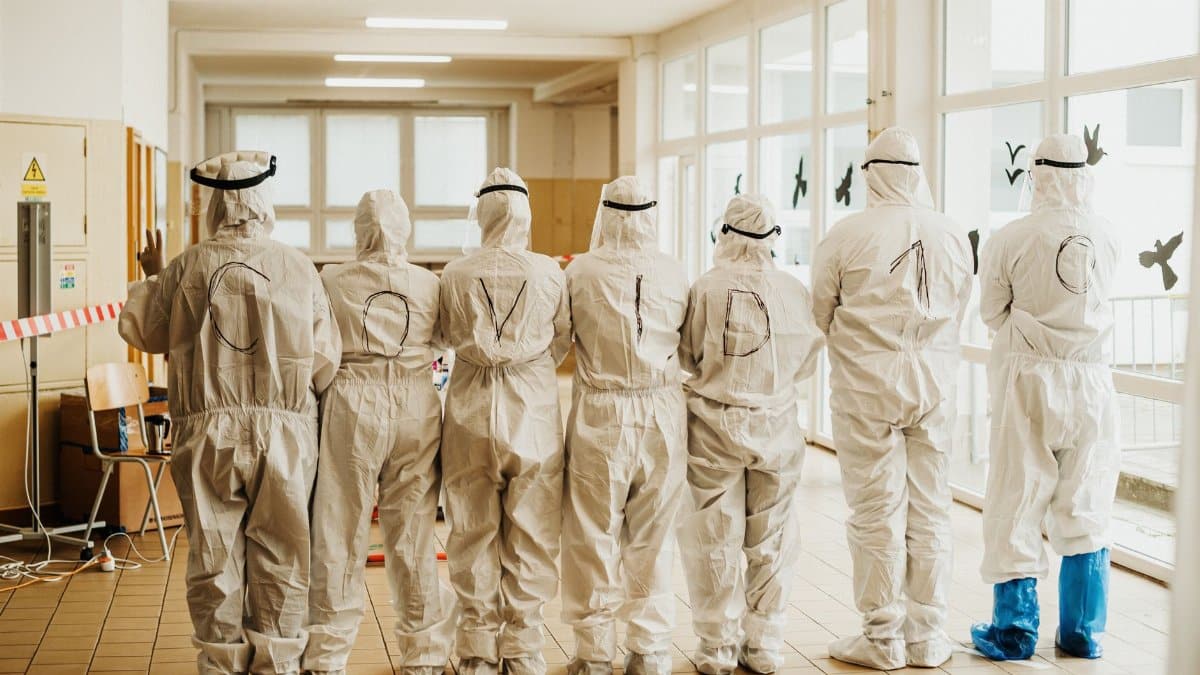
On a gray October morning in Worcester, a primary care nurse opened the same public dashboard she now reads the way other people read a forecast. The sewage signal had risen after a strikingly quiet summer. Hospital beds and death reports had not followed it upward in any dramatic way. That split, more than any single case count, is what Massachusetts COVID endemic levels look like in practice: a virus that remains in circulation, sometimes louder in the data than in the emergency department, and no longer organized around the old idea of a single overwhelming wave.
A fall rise that does not rewind the clock

Reporting this month in the Boston Globe described wastewater readings ticking up from a record low summer, while hospitalizations and deaths stayed near recent lows. The picture fits a virus that has settled into seasonal habit without surrendering the capacity to surprise. People still get sick. Some still need oxygen. A smaller number still die. The difference from 2020 and 2021 is scale, predictability, and the tools sitting on the shelf. Immunity from infection and vaccination is uneven, and it fades, but it is no longer absent. Clinicians describe a respiratory season, not a society wide emergency. That distinction matters for how families plan travel, how schools set expectations, and how hospitals staff the weeks between Labor Day and the holidays.
Readers who want the official view can follow the state summaries at the Massachusetts Department of Public Health COVID reporting page and the national wastewater program at the Centers for Disease Control and Prevention. Those pages move. A newspaper sentence cannot freeze them. What holds steady is the method: watch sewage, clinics, and hospitals together, and resist the urge to treat any one line as the whole story.
Why sewage speaks before the waiting room

Wastewater surveillance became one of the more durable inventions of the pandemic years. People shed virus whether or not they seek a test, and many no longer test at all. A municipal sample can therefore hint at spread days before a clinic notices a busier afternoon. In Massachusetts, that early ear is especially useful because testing habits have changed so completely. A home test taken on a Sunday and never reported does not enter a case curve. It does, in a diluted way, enter the sewer.
The method has limits. Rain can dilute a sample. A holiday weekend can change who is flushing into which plant. A rise in virus concentration is a signal, not a verdict about severity. Public health analysts treat it as a smoke alarm, not as a fire report. When Massachusetts COVID endemic levels edge higher in sewage and stay flat in intensive care, the honest reading is increased circulation with limited severe disease, not a return to the first winter.
Hospitals remember the difference
Ask an emergency physician what has changed and the answer is often practical. Rooms are full of the usual autumn mix: asthma, heart failure, broken hips, influenza, and a COVID diagnosis that is sometimes the main problem and sometimes a passenger. Antivirals exist for people who qualify. Oxygen protocols are routine. Staff are tired in the ordinary way of a hard profession, not in the extraordinary way of a system near collapse. None of that erases grief. It does change what a headline should promise.
Deaths near recent lows are not a moral permission slip. They are a measurement. Age, immune compromise, and chronic illness still sort risk more reliably than zip code slogans. A state can post reassuring hospital numbers and still contain households where one infection is a serious event. Journalism that flattens those households into a victory lap misses the endemic reality as badly as journalism that treats every uptick as 2020 again.
Variants keep moving, panic does not have to

The virus continues to spin off descendants. Names change faster than public memory. What has not changed is the basic pattern of an endemic respiratory pathogen: new branches seek whatever advantage they can find in a population that already has partial immunity. Some branches spread more easily. Few, in recent years, have rewritten the clinical playbook. Genomic labs in the region still sequence samples so that vaccine advisers and clinicians are not guessing in the dark. That work is quieter than it once was, and quieter is not the same as unimportant.
The Globe account of the current season placed variants beside flu and the vaccine calendar, which is the right company. A variant update without a severity update is incomplete. So is a severity update that ignores who is being counted. Older adults and people with weakened immune systems remain the center of serious outcomes. Younger healthy adults more often meet a miserable week, a lost shift, and a negative test that arrives after the worst has passed.
Vaccines as maintenance, not miracle

Updated vaccines are now part of the fall routine, closer in public feeling to the flu shot than to the first doses that felt like a historic appointment. Uptake is uneven. Some people skip the visit because the last infection was mild. Others skip it because the messaging has been noisy for too long. The medical case is narrower and stronger than the old universal drumbeat: additional protection against severe disease, especially for older adults, pregnant people, and anyone with significant medical risk, timed before indoor season gathers force.
Pharmacies and primary care offices remain the practical path. The CDC page on staying up to date lays out current eligibility in plain language, and Massachusetts clinicians generally follow that federal frame while watching local hospital trends. A shot will not grant a season free of colds. It can still shift the odds of a hospital stay. In an endemic period, shifting odds is the job.
Flu and the rest of the respiratory crowd
COVID no longer travels alone in the public imagination, and it never really traveled alone in the airway. Influenza, RSV, and ordinary cold viruses share the same months, the same classrooms, and sometimes the same patient. A wastewater rise for one virus can coincide with a clinic surge for another. That overlap is why blanket advice has grown less fashionable. The useful question is which pathogen is stressing which service, and which prevention step matches the person in front of you.
For many households the overlapping season is mostly an inconvenience. For neonatal units, nursing homes, and transplant clinics it is a planning problem with names attached. Hospitals in Boston and beyond have learned to flex staffing when two viruses rise together. They have also learned that a quiet COVID chart does not guarantee a quiet January if flu arrives late and hard. Endemic does not mean solitary.
Who still carries the heavier risk

Risk in 2026 is less about whether the virus exists and more about the body it meets. Age remains the steepest slope. Immune suppressing medicines, advanced kidney disease, and serious lung or heart illness still convert a common infection into a dangerous one. Pregnancy deserves its own caution, not because every case is severe, but because the downside is shared by two patients. These are not new facts. They are the facts that endemic language sometimes buries under the relief of lower averages.
Access still shapes outcomes. A person who can reach a clinician within the antiviral window is not in the same position as a person who cannot get an appointment, a ride, or a paid sick day. Massachusetts has dense medical resources by national standards and still contains gaps, especially for hourly workers and for residents far from a large hospital. When commentators discuss Massachusetts COVID endemic levels, the average can hide that gap. Averages are not anecdotes, and anecdotes are not policy, but both belong in an honest account.
Endemic is a description, not a consolation prize

Scientists use endemic to mean a pathogen that stays in a population at some expected, if fluctuating, level, rather than arriving as a one time shock. The word does not mean harmless, and it does not mean finished. Malaria is endemic in places where it still kills. Influenza is endemic and still fills wards in bad years. COVID has joined that unglamorous category in much of the United States: always possible, sometimes seasonal, rarely the sole organizing fact of civic life.
The psychological shift is harder to measure than a sewer sample. Many middle aged readers have already made it. They no longer refresh case maps at midnight. They also have not forgotten the years when a cough could empty a workplace or keep a parent from a funeral. Memory and math can coexist. A society can honor the dead, protect the vulnerable, and refuse to live as if every autumn is an ambush.
What a reasonable autumn actually requires

The practical list is shorter than it used to be, which is part of why people trust it more when it is stated plainly. Stay home when you are febrile and miserable. Consider a test if the result would change whether you visit a grandparent or start an antiviral. Keep vaccinations current if you are in a higher risk group, and talk with a clinician if you are unsure. Improve ventilation when a house fills up for a holiday. Masks remain a personal and situational tool, especially in a crowded clinic waiting room or on a long visit to someone frail, not a permanent costume and not a symbol that needs to be won or lost.
Institutions have a shorter list too. Nursing homes should not wait for a newspaper story to notice a cluster. Schools can emphasize attendance policies that do not punish a fever. Employers who still treat illness as a character flaw will keep sending contagious people into shared air, COVID or otherwise. None of this requires a new emergency declaration. It requires the boring competence that endemic diseases demand year after year.
A civic mood after the emergency

There is a spiritual dimension to this quieter epidemiology, if the word is allowed to mean something modest: how a community holds fear without being ruled by it, and how it keeps faith with people the averages leave behind. Congregations, union halls, and neighborhood clinics already do a version of this work when they check on the homebound or organize a ride to a pharmacy. Public health is not a substitute for that care, and that care is not a substitute for surveillance. Together they describe a mature response.
The temptation, after so many years of alarms, is either numbness or nostalgia for certainty. Neither serves a reader in Massachusetts this fall. The sewage line can rise. The hospital line can stay low. Both statements can be true in the same week. Living with that tension is what Massachusetts COVID endemic levels ask of the public now: attention without panic, protection without theater, and enough humility to update the story when the data change.
Reading the next headline with a cooler eye

The next update will not be the last. A colder month, a new variant, or a sharp flu season can bend the curves. The standard for concern should stay tied to severity and to capacity, not to the mere presence of a virus that is not leaving. Journalists, clinicians, and readers share that discipline. Cite the dashboard. Name the limits. Separate a real threat to vulnerable people from a general return to lockdown logic that the evidence no longer supports.
COVID is back in the sense that it never fully left. It is not what it used to be in the sense that matters most to hospitals, families, and the shape of an ordinary week. That is not a slogan. It is the current balance of wastewater, wards, and memory, and it will need to be checked again before winter decides what it wants to be.