

On a gray morning along the Charles River, the walk from a global power company to one of the most famous engineering campuses in the country is short enough to feel almost domestic. That closeness is now attached to a number. GE Vernova MIT hiring double is the plain description of a plan by chief executive Scott Strazik to lift annual recruits from the Massachusetts Institute of Technology from about 80 to about 160, within a $50 million alliance meant to tie the firm more tightly to the school next door.
A hiring pledge with a campus address

The ambition is simple to state and harder to keep. GE Vernova, the energy business spun out of the old General Electric, wants more of its early career technical talent to come from MIT. Executives have framed the move as part of a broader alliance valued at $50 million, a sum large enough to signal seriousness to faculty, students, and rival employers who already treat Cambridge as a recruiting ground.
According to reporting in The Boston Globe, Strazik has set the hiring aim in public terms: roughly twice as many MIT hires as the recent baseline of about 80. For a company whose products sit inside power plants, grid control rooms, and wind fleets, the point is not prestige for its own sake. It is a bet that the people who will design the next generation of turbines, software, and grid equipment are already walking those streets.
Why the school next door is not a metaphor

Boston has long sold itself as a place where laboratories and factories can share a subway line. In practice the relationship is uneven. Universities produce ideas, papers, and graduates. Industrial firms need people who will stay through a product cycle that lasts longer than a semester. GE Vernova sits in that gap. Its Cambridge presence makes MIT more than a brand on a recruiting slide. It is a neighbor whose students can visit a working energy company without booking a flight.
That geography matters for a generation that can choose among software firms, national laboratories, and climate startups. A short commute does not decide a career. It does lower the cost of curiosity. A student can spend an afternoon with engineers who actually ship hardware, then return to a problem set before dinner. Companies that understand this rhythm tend to hire better than companies that arrive once a year with a booth and a tote bag.
What doubling the class would actually change

Eighty hires a year is already a serious footprint for one university. One hundred sixty would make MIT a structural source of GE Vernova talent rather than a prized exception. The phrase GE Vernova MIT hiring double captures the scale, but the meaning sits in the departments that would feel it: electrical engineering, mechanical engineering, computer science, materials, and the policy programs that now sit beside hard science because the grid is also a political object.
A larger class would also change the internal culture of the company. Alumni networks thicken when enough people share a campus memory. Mentoring becomes easier. Referrals rise. So does the risk of sameness. A firm that draws too heavily from one school can mistake familiarity for excellence. The test of the pledge will be whether the extra hires widen the company’s technical range or simply reproduce a single pedigree at twice the volume.
The fifty million dollar frame

Money is the part of campus alliances that photographs well and ages poorly if it is not attached to work. Fifty million dollars can fund fellowships, joint laboratories, faculty engagement, and the unglamorous staff time required to turn a memorandum into internships that actually convert. It cannot, by itself, make a student choose a turbine maker over a software firm that pays more in the first year.
Readers should treat the figure as a ceiling on intention, not a guarantee of outcomes. Alliances of this kind often blend research support, recruiting events, and branded programs whose impact is difficult to audit from outside. The honest question is narrower. Does the spending create repeated contact between GE Vernova engineers and MIT students before senior year, when offers are already stacked on a desk? If the answer is yes, the hiring target has a path. If the answer is mostly logos on a webpage, the number 160 will remain a speech.
Students are choosing among kinds of difficulty
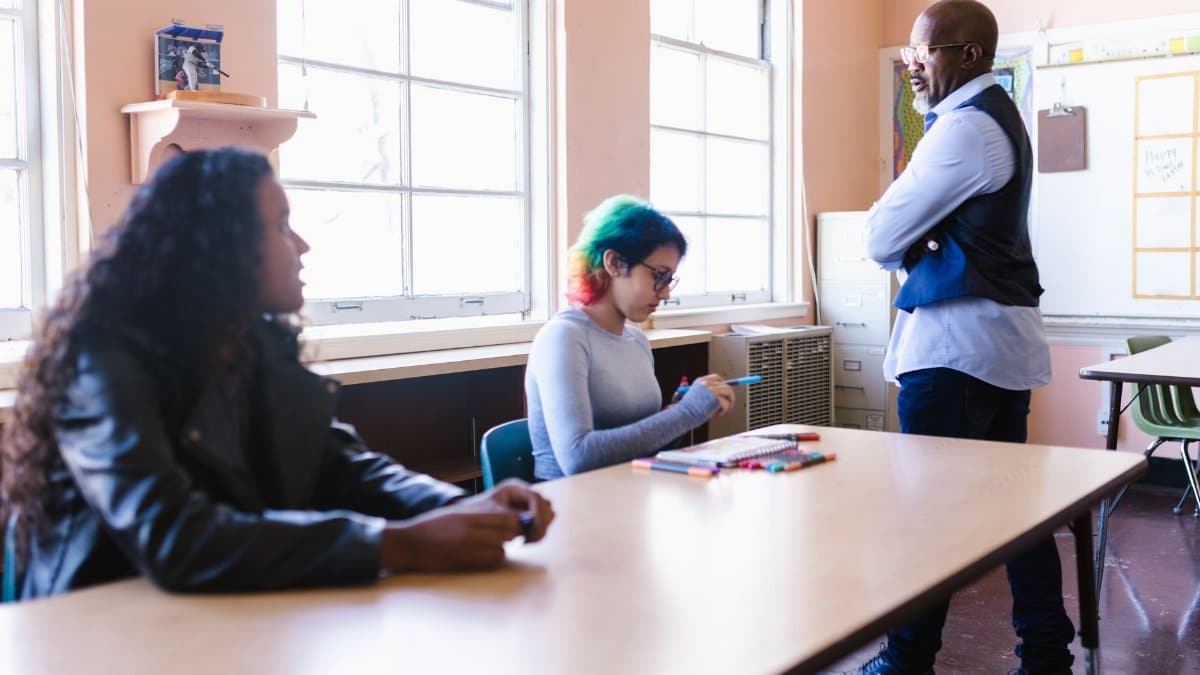
Energy work is not a soft landing. It asks for patience with regulation, supply chains, and machines that fail in public. It also offers a kind of consequence that many office jobs cannot match. A flawed software update can annoy millions. A flawed grid decision can darken a city. Students who want their labor to touch physical systems have reasons to listen when a company like GE Vernova comes calling.
They also have reasons to hesitate. Industrial employers have spent years telling campuses that they are transforming, then asking new hires to wait their turn inside large organizations. The students who will decide this pledge are not naive about that history. They will ask who manages them, whether early assignments involve real equipment, and whether a Cambridge hire is expected to relocate to a plant town within two years. Those questions are more predictive than any slogan about the energy transition.
Faculty ties are the quiet half of recruiting

Hiring targets get the headlines. Faculty relationships decide who hears about the jobs. Professors remember which companies funded a student’s summer with integrity and which ones treated a laboratory as a billboard. If GE Vernova wants twice as many graduates, it will need advisers who trust the firm enough to mention it without a wince.
That trust is built in small ways. Clear intellectual property terms. Engineers who show up to critiques and stay for the hard questions. Research projects that are allowed to publish when the science is real. A $50 million alliance can underwrite those habits, but only if executives resist the urge to measure every campus hour by immediate headcount. The hires often arrive a year or two after the relationship looks, from a finance office, like a cost.
The market around this pledge is crowded

MIT does not lack suitors. Defense contractors, chip designers, cloud companies, and climate funds already treat the career fair as a contact sport. In that setting, GE Vernova MIT hiring double is less a slogan than a competitive claim. It says the company expects to win a larger share of a finite class against employers with deeper cash compensation and simpler origin stories.
Compensation will matter, and so will mission. Some graduates want the highest first offer. Others want a role they can explain to a parent without irony. Energy sits in a useful middle: technical, tangible, and tied to public need. Whether that middle is enough depends on the offer letter and on the stories current employees tell when no recruiter is in the room. Doubling a pipeline without fixing the story inside the company is how targets become attrition statistics.
What executives appear to want from the alliance

Strazik’s stated aim is numerical, which is useful because numbers can be checked. A move from about 80 MIT hires to about 160 is either happening or it is not. Around that count, executives are signaling a desire for deeper technical partnership: more students who understand power electronics, grid software, advanced manufacturing, and the materials inside machines that must run for decades.
There is a strategic logic here that does not require romance about innovation districts. GE Vernova competes in businesses where talent shortages are not abstract. Utilities and manufacturers across the country report trouble filling roles that combine electrical skill with field judgment. A company that can reliably draw from a top engineering school has a small advantage in a market where many rivals are fishing in the same pond. The advantage compounds only if those hires are given work worthy of the training they already paid for in late nights and problem sets.
The risk that a pledge stays on paper

Campus announcements fail in familiar ways. A leadership change cools the enthusiasm. A budget year arrives and the fellowship line is trimmed. Recruiters hit the number by counting intern conversions loosely, then the following year the pipeline looks thin again. None of that is unique to GE Vernova. It is the ordinary fate of corporate university deals that are launched for a headline and staffed as an afterthought.
The safeguard is boring and therefore rare. Publish the count. Define what counts as a hire. Keep the same definition for several years. Let faculty see whether research support survived the first flush of attention. If the company can do those things, the pledge becomes a management tool. If it cannot, observers should treat GE Vernova MIT hiring double as branding rather than as a workforce plan.
A city that has heard this promise before

Greater Boston has a long memory for companies that promised to hire the region’s graduates and then discovered that their growth lived somewhere else. The universities remained. The factories, sometimes, did not. That history does not condemn the current plan. It does set the standard by which local readers will judge it. A neighbor that hires, trains, and keeps people is different from a neighbor that sponsors a lecture and leaves.
Strazik is asking the public, and the campus, to believe that this time the industrial employer intends to stay close. The Charles River setting makes the claim vivid. So does the specific doubling. Vague talk of partnership can survive a decade of inaction. A move from 80 to 160 cannot hide for long.
How to read the number without cynicism or cheerleading

A fair reading sits between skepticism and hope. Skepticism is earned by decades of corporate campus theater. Hope is earned by the simple fact that energy companies need engineers and MIT produces them a short walk away. The $50 million alliance is large enough to matter if it is spent on repeated human contact rather than on ceremony. The hiring aim is clear enough to audit.
Middle aged readers who remember the old General Electric may feel a particular tug at this story. That company once defined a certain American bargain: technical training, a long career, and machines that kept the lights on. The successor firm in energy is smaller in scope and louder about climate and grids. Whether it can rebuild a version of that bargain with a new generation is not a question a press announcement can settle. It is a question the next several recruiting seasons will answer in offer letters and in who is still there after year three.
The quieter test ahead

If the plan works, the evidence will be ordinary. More MIT names on GE Vernova teams that design grid software, service turbines, and build the equipment utilities actually buy. More professors willing to send their best students without a caveat. Fewer speeches required to explain why a power company belongs beside a research university.
Until then, the useful sentence remains the numerical one. GE Vernova MIT hiring double names a direction, not a completed fact. Scott Strazik has put a target on the table: from about 80 MIT hires toward 160, under an alliance measured in tens of millions of dollars. The river between the company and the campus is narrow. The distance between a target and a workforce is not.