

On a clear October morning, the paths around Druid Hill and Patterson Park fill with walkers who are not thinking about trophies. They are thinking about a safe loop, a bench in the shade, a field where a child can run. That ordinary rhythm is the real backdrop for a civic headline. Baltimore parks Gold Medal recognition arrived this month, after the city Recreation and Parks department won a national honor for its programs, as the Baltimore Sun reported on Oct. 3. Awards do not mow grass or keep lights on. They do force a city to look at what it claims to value, and at whether the places people actually use match the language on a plaque.
What the national honor is built to measure
The Gold Medal program run by the National Recreation and Park Association is not a beauty contest for a single lawn. Agencies compete within population classes, and judges look across planning, resource management, programs, and how a department serves the public it is charged to reach. The association describes the award as recognition for excellence in the field, a standard that has been used for decades to compare agencies that otherwise rarely sit in the same room. A useful overview lives on the association site at nrpa.org.
That frame matters in Baltimore, where recreation is not a side hobby of government. It is how a dense city offers room to move, to gather, and to cool off when summers run hot. The Sun account of the win, published at baltimoresun.com, places the department among agencies judged worthy of that national mark. Readers should treat the medal as a verdict on a body of work, not as proof that every court, pool, or trail is finished.
A department that lives in public view
Recreation and Parks is one of the city agencies people can audit with their own eyes. A broken fountain, a locked restroom, a field gone patchy after rain: these are not abstract budget lines. They are Saturday mornings. When a department wins a national prize, the praise and the skepticism arrive together, which is healthy. Praise says the professional peers saw planning, partnerships, and programs worth copying. Skepticism asks whether the same standard holds on a block far from a signature park.
Baltimore has spent years arguing, in council hearings and neighborhood meetings, about maintenance backlogs, staffing, and which communities wait longest for basic upkeep. Those arguments do not vanish because a medal arrived. If anything, the award gives residents a sharper question. If the department can meet a national bar on paper and in selected programs, where is the gap between that file and the park at the end of the street?
Why the phrase Baltimore parks Gold Medal will travel

Awards become shorthand. In the weeks after a win, the phrase Baltimore parks Gold Medal will show up in speeches, grant letters, and social posts. That is not empty branding. Funders and partner groups look for signals that a city can manage public space with some discipline. A national medal can open doors for programming money, for corporate gifts, and for the kind of volunteer energy that follows a visible success.
Shorthand also flattens. A parent waiting for a recreation center to reopen after a repair does not experience a medal. A coach who cannot get consistent field time does not experience a medal. The useful version of the headline is the one that sends people back to schedules, fees, and maps, not the one that ends the conversation.
Programs are the part residents can join

Judges in this field tend to care less about rhetoric than about whether people show up. Youth sports, senior fitness, summer camps, after school rooms, nature walks, and cultural events are the daily proof of a recreation system. Baltimore has long treated these offerings as more than leisure. In a city where many households do not have a backyard, a public program is access itself.
The award, as reported, honors parks and recreation programs as a whole. That invites a closer look at who is enrolled, who is turned away by cost or distance, and which seasons still leave large gaps. A strong department publishes calendars people can trust, staffs sites so that a posted hour is a real hour, and adjusts when attendance tells a different story than a brochure. Those habits are quieter than a medal ceremony. They are also what the medal is supposed to represent.
Maintenance is the unglamorous half of excellence

Anyone who has loved a city park knows the split between design and upkeep. A restored pavilion can look magnificent on opening day and tired two winters later if crews are thin and parts are slow to arrive. National awards often credit capital plans and asset management alongside festivals. Residents credit whatever still works in March.
Baltimore parks carry heavy use. Festivals, youth leagues, dog walkers, and people seeking shade all share the same turf. That shared use is a civic good and a maintenance burden. Trash, irrigation, lighting, and safe routes to the gate decide whether a park feels welcoming after dark or only in a press photo. An honest reading of Baltimore parks Gold Medal news includes that burden. Excellence that cannot be repeated next season is a performance, not a system.
Equity is the test an award cannot grade alone

Large American cities have a long record of investing first in parks nearest to wealth and attention. Baltimore is not exempt from that history. Neighborhoods differ in tree cover, in the condition of courts, and in how quickly a complaint becomes a work order. A national medal should raise the floor of that conversation, not close it.
Equity here is practical. It is bus access to a pool. It is a recreation center with hours that match shift work. It is programming in more than one language. It is fields that are not booked solid by groups with the staff to claim them first. Departments that win medals usually submit evidence of outreach and of efforts to spread resources. Residents can ask to see that evidence in plain language, ward by ward, rather than accept a citywide average that hides the outliers.
Rest, ritual, and the quiet use of public ground
There is a reason parks sit near the center of how people describe a good week, even when they never join a league. A walk at dusk, a bench shared with a neighbor, a holiday gathering under trees: these are small rituals that hold a city together when formal institutions feel distant. They are not a substitute for housing, safety, or wages. They are still part of how people stay oriented.
In that sense the medal is a story about public care. A park that is clean, lit, and open says the city expects you to be there. A park that is closed, dark, or left to decay says the opposite. Spiritual language is easy to overuse in this setting, and it should stay modest. The point is simpler. Shared ground gives people a place to breathe that does not require a purchase. When Recreation and Parks is judged excellent, part of what is being judged is whether that invitation is real.
What peers tend to copy after a win

Other cities watch Gold Medal winners for tactics they can borrow. Partnerships with schools, clear master plans, volunteer structures, data on participation, and visible leadership during storms or heat waves often appear in winning applications. None of those tactics is unique to Baltimore. What travels is the combination: a department that can describe its system and also show people using it.
Baltimore can offer lessons if it is willing to talk about failure as well as prize day. Which pilots did not draw a crowd. Which facilities cost more to run than expected. Which neighborhoods still lack a basic loop for walking. Peer learning works when the winner does not edit out the hard parts. A medal that becomes a script is less useful than a medal that becomes a case file others can read.
Money, staffing, and the year after the headline

Awards do not appropriate budgets. Councils do. The year after recognition is often when a department is asked to do more with the same crews, because success creates demand. More camps, more evening hours, more requests to host events. If staffing and supplies do not move with that demand, the medal becomes a burden. Sites look overpromised. Staff burn out. The public decides the honor was advertising.
Residents who want the win to matter can watch a few plain indicators. Are seasonal jobs filled before summer. Are capital projects that were already funded actually finished. Do fee policies still leave a free or low cost path into programs. Those indicators will say more about the next five years than the ceremony will.
How to read the Sun report without inflating it

The Baltimore Sun report of Oct. 3 is the local record of the win. It is the right starting point, and it should be read as news, not as a complete audit. Journalism can establish that the department received the honor and can sketch what the honor means. It cannot, in one story, inspect every acre. Readers who care can pair the article with budget documents, board agendas, and a walk through the park they know best.
That pairing is the civic habit the moment calls for. Celebrate the professional recognition. Then ask the follow up that keeps public agencies honest. Show the work where people live.
A medal as a starting line
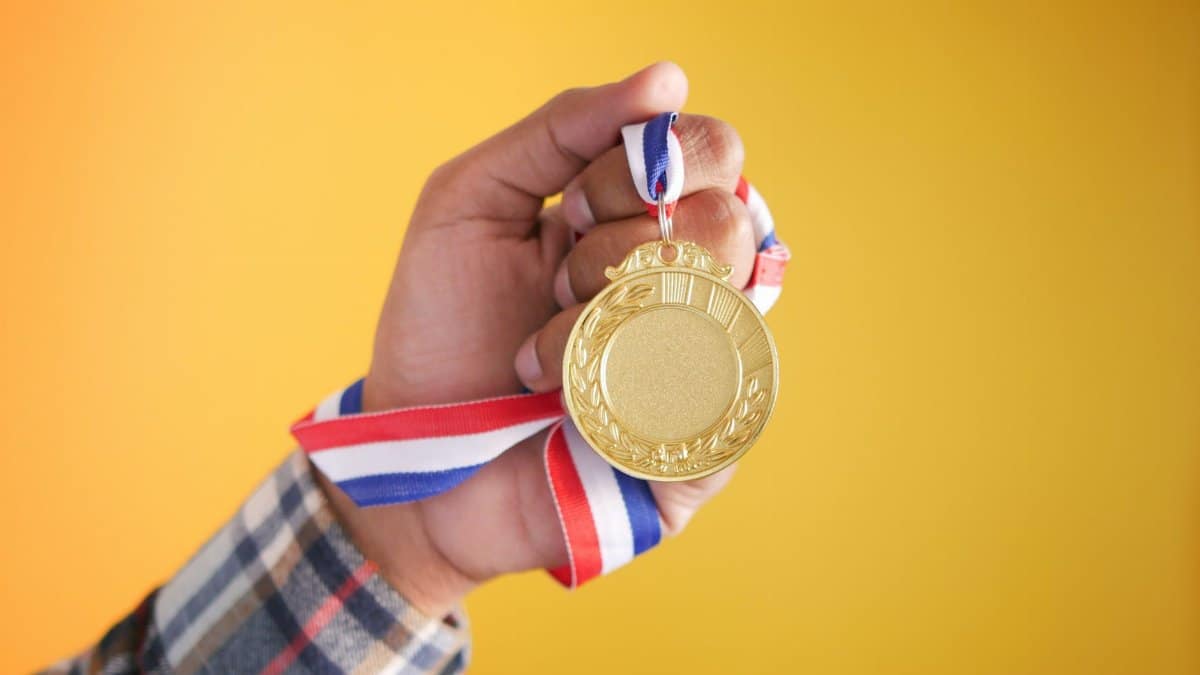
Cities collect honors and then return to trash day, payroll, and rain damage. Baltimore will do the same. The value of Baltimore parks Gold Medal recognition is not that it freezes a perfect picture of the system. No such picture exists. The value is that outside judges looked at planning and programs and found them strong enough to lead their class of peers.
Strength, in this setting, is a claim that can be tested. It will be tested by parents at registration, by older residents who need a flat path, by teenagers who want a court with lights, and by crews who know which gate sticks in cold weather. If the department treats the medal as a starting line rather than a curtain call, the award will age well. If it treats the medal as the end of the argument, the public will notice the difference before the next application cycle begins.
For now the fact on the record is straightforward. Recreation and Parks has a national Gold Medal, reported by the Sun, for the programs and park system it runs. The rest is the long work of making that sentence true on an ordinary Tuesday, in every part of the city that the headline named.