
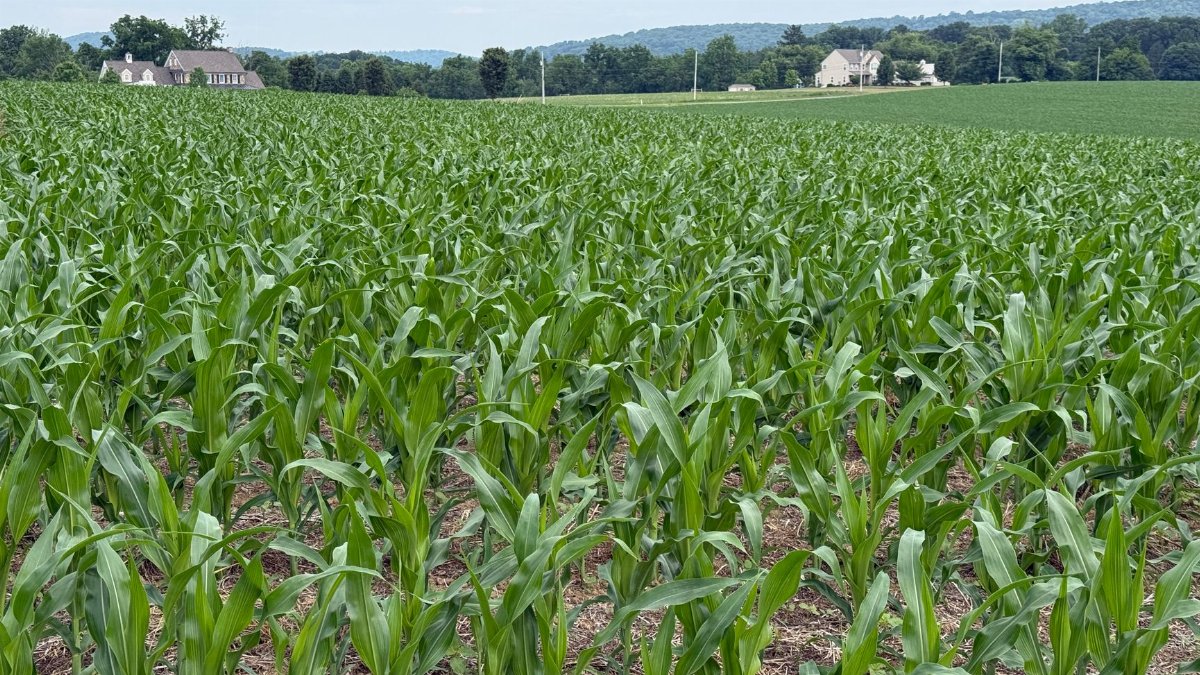
In a state that has spent years arguing about vaccines, schools, and the memory of childhood illness, a single death has cut through the noise. Published accounts describe a woman of 20 from an Amish family in Lancaster County who had leukemia and who died after catching measles during what has been described as the largest outbreak in Pennsylvania in decades. The phrase Lancaster measles death does not hold a life, a family, or a church district. It does hold a fact that doctors have repeated until it sounded abstract: when a virus returns to places where protection is uneven, the people least able to fight it are often the first to be lost.
What the reports actually establish
The outline of the case is spare, and that sparseness matters. She was young. She belonged to a plain community in a county whose farmland, buggies, and produce markets are familiar far beyond Pennsylvania. She was already sick with leukemia, a cancer of the blood and bone marrow that weakens the very system a body uses to recognize and clear infection. She caught measles. She died.
Those facts are enough to explain why clinicians flinched when the news moved. Measles is not a quaint rash from a grandparent’s story. It is among the most contagious viruses known to medicine. In a room, or a worship gathering, or a waiting area, it can reach people who never touched the sick person, because the virus hangs in the air. For most healthy children the illness is miserable and then over. For someone whose defenses have been stripped by cancer, or by the drugs used to treat cancer, the same virus can become pneumonia, brain inflammation, or a failure of organs that no amount of late heroism fully reverses.
Readers should be careful with what has not been established in public. A name is not required to mourn. A hospital floor plan is not required to understand risk. Inventing motives for a family, or a bishop, or a county nurse, would turn a death into a prop. The honest version is narrower and harder: an outbreak large enough to be called the worst in the state in decades found a person who could not afford to meet it.
Why leukemia changes every calculation
Leukemia does not merely add a footnote to a measles chart. It changes the meaning of exposure. Many patients spend months with low white cell counts. Some receive chemotherapy that intentionally suppresses immunity so that malignant cells can be killed. Others undergo procedures that wipe the immune memory built by childhood vaccines. A person in that condition may have been vaccinated years earlier and still lack protection when a new virus arrives. She also may be unable to receive a live vaccine at the moment she needs it most, because a weakened measles virus, safe for a healthy child, can be dangerous in a body that cannot control it.
That is the cruel bind. The people who most need a ring of immunity around them are often the people who cannot manufacture that immunity themselves. Their safety depends on classmates, cousins, drivers, nurses, and neighbors. When that ring thins, individual virtue is not the whole story. A young woman in treatment can do everything her doctors ask and still inhale a virus that someone else carried in from a gathering, a shop, or a shared ride.
Families who have sat in cancer clinics know this dependence already. They mask in hallways. They postpone weddings. They ask visitors to stay home with a cough. Measles makes those private bargains public, because the virus does not respect the boundary between a sickroom and a county.
A community that is not a single mind
Lancaster County holds one of the largest Amish populations in the country, and outsiders often speak of it as if it were one household with one rule. It is not. Church districts differ. Families differ. Some plain people use hospitals readily. Some accept some vaccines and refuse others. Some have spent the last generation negotiating, in English and in Pennsylvania Dutch, what modern medicine asks of a people who prize humility, separation, and mutual aid.
Any serious account of this death has to hold two truths at once. First, low vaccination coverage in some tight knit groups has helped measles find footing again in the United States, including in communities that travel, trade, and share worship. Second, blaming an entire faith for the death of a young woman with cancer is a moral shortcut. She was a patient as well as a church member. Her vulnerability was medical. The outbreak that reached her was social.
People who know these townships describe a culture of showing up. Meals appear after a diagnosis. Barns are raised. Funerals draw long lines of buggies. That same density of care, the thing outsiders admire in photographs, is also a density of contact. A virus loves what a grieving community does best: gathering, touching, singing, sitting close for hours. Public health advice that ignores that reality will be ignored in return.
How a forgotten illness learned the roads again
Measles was declared eliminated in the United States in 2000, a technical term that never meant the virus had vanished from the earth. It meant that continuous spread inside the country had stopped, because enough people were immune. Importations still happened. Travelers still arrived infectious. What changed, in recent years, is the size of the dry grass. Pockets of under vaccination, distrust seeded by the pandemic, and the ordinary churn of school exemptions gave the virus room to move once it landed.
The Centers for Disease Control and Prevention describes measles as a disease that can infect up to nine in ten susceptible people who share a space with a contagious patient, and it notes that complications include pneumonia and encephalitis, with higher danger for infants and for people with weakened immunity. That description lives in plain public guidance, not in a specialist journal: https://www.cdc.gov/measles/about/index.html
Pennsylvania’s outbreak, as described in news reports, belongs to that national return. Calling it the largest in decades is not a poetic phrase. It is a comparison with a long quiet period when pediatricians could finish a career and rarely see the illness. Quiet periods breed forgetfulness. Parents who never watched a child struggle for breath do not feel the old fear. Clinicians trained after elimination may recognize the rash from a textbook and still lose a day confirming what an older doctor would have named at the door.
The spiritual weather around a medical fact

This story sits, awkwardly, in the space between health and belief. Measles is not a judgment. Leukemia is not a lesson. Yet people reach for meaning when a young adult dies, and plain communities are not alone in that reach. Sermons this week, if they mention her at all, are as likely to speak of suffering borne together as of any argument about shots. Neighbors will cook. Ministers will sit. The work of mourning is older than the vaccine schedule, and it does not pause for a press briefing.
There is also a spiritual claim inside public health, though officials rarely use that word. It is the claim that my body is partly your business, and yours is partly mine. Religious traditions have their own versions of that claim: care for the widow, the stranger, the child, the person who cannot walk to the well. An immunocompromised patient is a test of whether that language is decoration or duty. A county can pray for healing and still leave the healed, and the not yet healed, exposed to a preventable virus. Prayer and prevention are not rivals unless someone forces them to be.
Journalists should not pretend to know how her family understands this. Respect, here, looks like restraint. Report the medicine. Describe the outbreak. Leave the soul work to the people who loved her.
What hospitals see when the old virus returns
Emergency rooms are built for the unexpected, but measles rearranges them. A single suspect case can trigger masks, air handling questions, lists of everyone who sat nearby, and calls to staff who may be pregnant or unsure of their own vaccine history. In a cancer hospital the stakes rise again. A waiting room shared by transplant patients is not a neutral space. One infectious arrival can consume days of staff time and, worse, can seed infections that never become headlines.
Rural and county hospitals face a different strain. They may not see measles often enough to keep the reflex sharp. Testing has to be ordered. Specimens have to move. Families who prefer to be treated at home, or who arrive late because a buggy trip is not a casual errand, meet a system designed around cars and clocks. None of that excuses a gap in vaccination. It does explain why an outbreak in a plain community can look, from the outside, like stubbornness, when part of it is logistics, language, and trust built or broken over years of outside attention.
Doctors who have treated measles in recent American outbreaks describe a particular grief: the sense that the worst outcomes were available to be prevented, and that prevention failed at a distance from the bedside. By the time a patient with leukemia is short of breath, the argument about mandates is already too late for her.
The argument that will follow, and the part worth keeping

Deaths concentrate debate. Some voices will treat Lancaster measles death as proof that plain communities must be compelled. Others will treat it as proof that the state should stay out of church life. Both moves use a young woman as evidence in a case she did not file. The more durable argument is narrower. Live virus vaccines are the reason measles became rare. They do not work if too few people take them. People who cannot take them depend on those who can. A state that wants fewer funerals has to close immunity gaps without caricaturing the families inside them.
That work is slow and local. It looks like clinicians who already have trust, not strangers with microphones. It looks like information in the languages people actually speak. It looks like making vaccine visits fit a farm calendar. It looks like admitting, out loud, that medical institutions have sometimes talked down to religious minorities and then wondered why the door stayed shut. Shame is a weak public health tool. Relationship is a stronger one, and it cannot be spun up in the week after a death.
Parents outside the Amish world should not watch this story as a spectacle about someone else. Exemption rates, delayed shots, and casual certainty that measles is mild have widened susceptible circles in suburbs as well as townships. The virus does not check a census form. It checks immune memory.
What a county can still do
Practical steps are not dramatic, which is why they are often skipped in the first rush of coverage. People born after the mid century vaccine era should know their own records, and parents should know their children’s. Adults unsure of immunity can ask a clinician about testing or vaccination. Anyone with a fever, cough, red eyes, and a rash should call before walking into a clinic, so a waiting room full of infants and cancer patients is not the place of first contact. Households with a high risk patient can limit gatherings while an outbreak is active, even when that choice cuts against hospitality.
County leaders can publish clear counts, exposure sites, and dates without turning a community into a target. Pastors and bishops, where they are willing, can separate the theology of humility from the epidemiology of air. Health departments can meet people at produce auctions and fire halls rather than only at websites. None of these steps resurrects a woman of 20. They are the form that regret takes when it decides to be useful.
Schools and workplaces will ask what the rules should be. The answer from infectious disease practice has been stable for years: two doses of measles vaccine for those who can receive them, rapid isolation of suspected cases, and special protection for infants and the immunocompromised. Stability is not the same as compliance. Compliance is a social achievement, rebuilt every generation, and this generation is being asked to rebuild it in public.
Remembering a person inside a headline
News language flattens. Lancaster measles death is four words, easy to search, easy to share, easy to forget by the next cycle. Behind them was a daughter in treatment, a body already carrying a hard diagnosis, a community that will mark her absence in ways most readers will never see. The outbreak that reached her is a Pennsylvania story and a national one: a virus written off as historical, a map of immunity with holes, a medical system that can do astonishing things for leukemia and still lose a patient to a disease of the 1950s.
If there is a fitting tribute, it is not a louder argument. It is a plainer one. Protect the people who cannot protect themselves. Treat religious neighbors as neighbors, not as symbols. Keep the old fear of measles just active enough that it does not have to teach the lesson again in another obituary. A county can hold grief and responsibility in the same hand. That is not a slogan. It is the ordinary work of living beside one another when the air itself can carry harm, and when the next life at risk may already be sitting, quietly, in a clinic chair.