
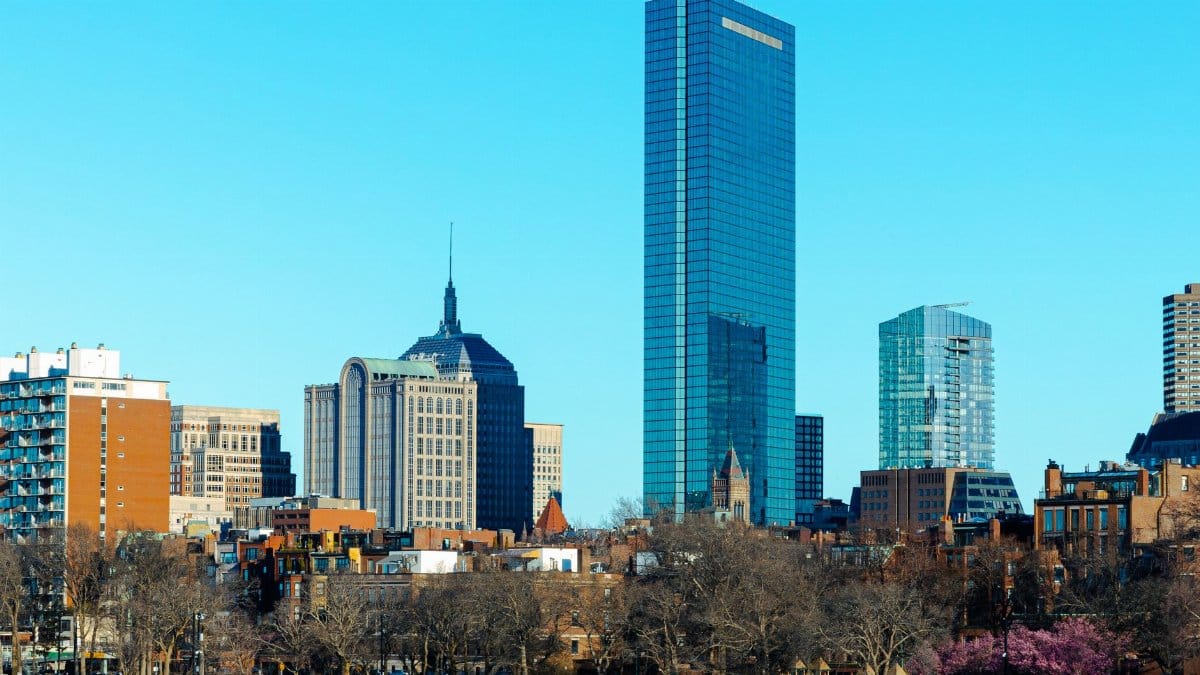
On the last Wednesday of September in 1976, Boston finally opened a tower it had been apologizing for. Sheets of plywood had stood in for glass. Lawsuits had piled up. Neighbors had watched a church settle while a pit was dug beside it. The Hancock Tower 50th anniversary returns that uneasy debut to public view, not as a postcard but as a lesson in what a city will tolerate before it calls a building finished.
A late arrival on the skyline
The John Hancock Tower, now also known as 200 Clarendon Street, was meant to be a quiet mirror. Henry N. Cobb, working with the office of I. M. Pei, designed a rhomboid of reflective glass that would step back from Copley Square and leave Trinity Church visually intact. Insurance executives wanted a headquarters tall enough to announce the company without shouting in stone. What they got, for several years, was a construction site that refused to behave.
Ground was broken in the late 1960s. By the middle of the 1970s the frame was up and the promise was not. Office tenants waited. Commuters on Boylston Street learned to glance up and then look away. The building that would become the tallest in New England spent its youth looking wounded.
Glass that left the facade
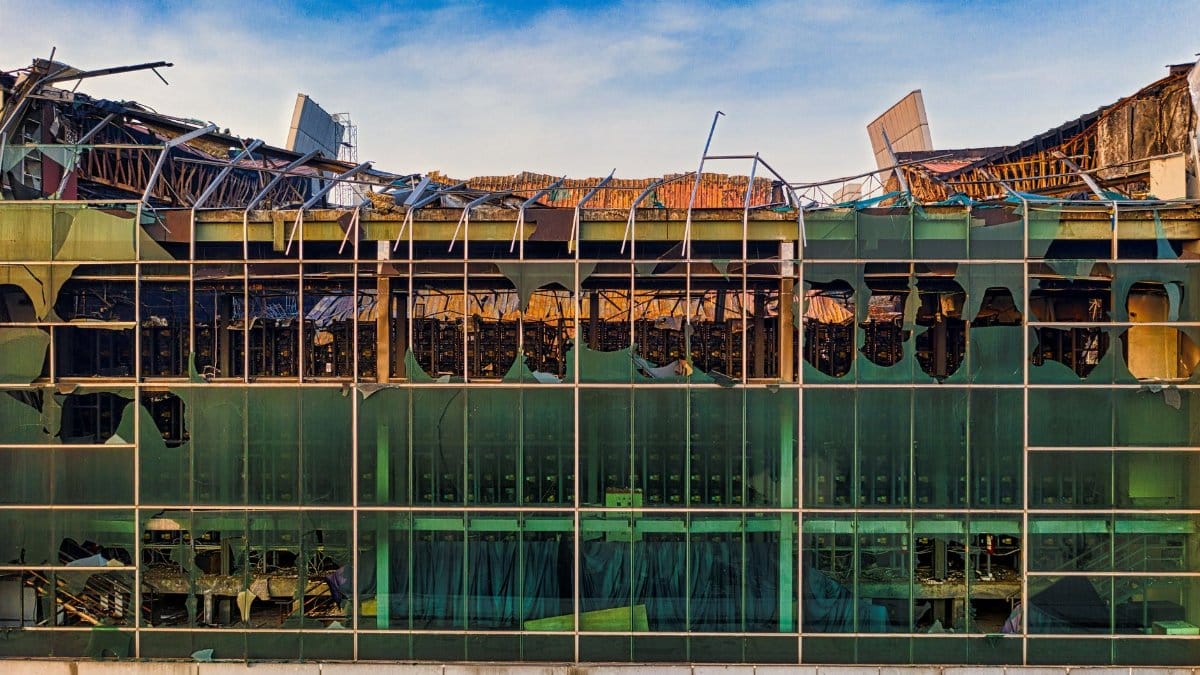
The scandal everyone remembers is the windows. Thousands of panes, coated to reflect the sky, began to crack and fall. Engineers traced the failures to a grim combination of thermal stress, the way the glass was set, and the movement of a very tall, very slender structure in New England wind. Plywood went in where glass came out. For a season the tower looked less like a jewel than like a warehouse that had been stretched into the clouds.
Replacement was total. Crews removed the original units and installed a tougher system. The cost ran into the millions, and the embarrassment ran further. A headquarters built to project solidity had become a case study in fragility. Insurers, of all people, had commissioned a building that could not keep its skin on.
The church next door

Windows were only half the trouble. Excavation for the tower disturbed the ground beside Trinity Church, H. H. Richardson’s masterpiece in rough stone. The church settled. Cracks appeared. A temporary steel frame was erected to hold the older building while lawyers and soil experts argued over who owed what to whom. The contrast was almost too neat for a sermon: a nineteenth century church braced in steel so that a twentieth century mirror could rise.
Copley Square has always been a negotiation between eras. The library, the church, the older Hancock building with its weather beacon, and then this new slab. The negotiation in the 1970s was not metaphorical. It was measured in inches of settlement and in the patience of a congregation that had not asked to become a construction casualty.
Wind and a weight no visitor sees

Even after the glass was replaced, the tower moved more than its occupants could comfortably ignore. Tall buildings sway. This one swayed in a way that threatened both comfort and the integrity of the facade. The fix was a pair of enormous tuned mass dampers near the top, lead weights on a sliding system that shift against the wind so the building does not have to. They remain among the most famous hidden machines in American architecture.
Visitors who ride to the observation spaces, when those spaces are open, rarely think about lead sliding on oil. They think about the harbor, the Charles, the grid of the Back Bay. The romance of the view depends on machinery that exists to cancel romance’s opposite, which is nausea and cracked seals. That bargain is the real engineering story of the tower, more than any rendering from the design years.
What opening day actually meant

September 29, 1976, was not a ribbon with a clean conscience. It was an admission that the building could at last be used. Workers moved in. The plywood came down in stages as new glass went up. The company that had lent its name to the tower tried to reclaim the narrative of progress. Boston, which likes a grudge almost as much as it likes a skyline, kept both versions: the landmark and the fiasco.
The Hancock Tower 50th anniversary is a useful date because it marks use, not conception. Conception had been confident. Use had been delayed by physics, by contracts, and by the simple fact that a mirror is only as good as the panes that hold the reflection. Anniversaries of groundbreaking flatter the idea. Anniversaries of opening tell you when the idea had to face Tuesday morning.
How a scandal became a silhouette

Memory is kinder than newspapers were. Within a decade the tower had settled into the role it was drawn for. Photographers loved the way it doubled the clouds and erased itself against a bright day. Architects who had mocked the failures began to defend the proportions. The older, narrower Hancock building beside it, once the modern one, started to look like a footnote with a lighted spire.
That reversal is common in cities and still worth pausing over. Failure, if it is expensive enough and visible enough, can become folklore. Folklore, repeated on tours and in alumni anecdotes, can sound like affection. Affection is not the same as forgiveness, but it does change what a skyline is allowed to mean. People who arrived in Boston after 1985 often meet the tower first as beauty and only later as anecdote.
A name that slipped
Corporate life moved on. John Hancock, long folded into larger insurance empires, no longer occupies the building as it once did. The address 200 Clarendon has gained ground in leasing brochures. The popular name has not. Cab drivers, holiday visitors, and people arguing about height still say Hancock. A tower can outlast the firm that paid for it and still carry the firm’s name like a borrowed coat.
That stickiness matters for the Hancock Tower 50th anniversary. The date is not a corporate jubilee in any simple sense. It is a civic one. The building belongs to the square, the postcards, and the arguments about whether Boston should have grown this tall at all. Ownership on a deed is narrower than ownership in a view.
Height, humility, and a reflective faith

There is a spiritual reading available here, if one wants it, and Copley Square almost insists. A church of heavy masonry stands in the shadow of a building that tries to disappear. One tradition stacks stone and trusts weight. The other borrows the sky and trusts calculation. Both have needed repair. Both have asked their neighbors for patience. The square holds them without resolving which virtue is greater, permanence or lightness.
I walk that square when I am in the city and still feel the old unease under the pleasure of the reflection. A tower that once shed glass is a poor symbol of invulnerability, which is precisely why it remains interesting. Civic pride that forgets the plywood is thinner than the glass. Civic pride that remembers it has somewhere to stand.
What the files still teach

Architects and engineers still assign the episode in studios, not as gossip but as method. Facades are systems, not decorations. Soil is not a blank page. Wind is a client whether you invite it or not. The tower’s early years are taught beside other famous missteps because they show how a design can be elegant in drawing and hostile in weather. Students who only see the finished mirror miss the syllabus.
The public version of that lesson is softer and just as necessary. Cities sell completion. They underplay the years when completion was a hope. Marking the Hancock Tower 50th anniversary without the falling windows would be a kind of amnesia. Marking it only as disaster would ignore the half century in which the building has done the ordinary work of offices, elevators, and lunch hours high above the square.
Neighbors who stayed
Trinity Church still holds services. The Boston Public Library still turns its courtyard inward, away from the glass. The square still fills for protests, tourists, and people waiting out a train. The tower did not empty the neighborhood of older meanings. It compressed them. Compression is the Back Bay’s native art: fill, landfill, and the insistence that a made ground can carry both a Romanesque church and a late modern prism.
Residents who lived through the plywood years sometimes speak of them the way others speak of a blackout or a strike, as a period when the city showed its wiring. Younger residents inherit the wiring without the memory. Anniversaries are one of the few tools a city has for passing the wiring along without pretending the current was always steady.
An anniversary without nostalgia

Fifty years is long enough for nostalgia and short enough for witnesses. People who took the first elevators are in their seventies and eighties. People who watched panes fail are fewer, but not gone. Their account should outrank the brochure. The brochure will say slender, reflective, iconic. The witnesses will say delayed, expensive, and eventually worth the walk across the square at dusk, when the glass goes blue and the church reads as a dark anchor.
Both sentences can be true. The Hancock Tower 50th anniversary is an invitation to keep them in the same paragraph. Boston has spent decades polishing the first sentence. The second sentence is the one that keeps the first from becoming advertising.
What the date asks of us now

Climate, energy, and the cost of glass have changed the questions a tower must answer. A facade that once failed from stress now faces a century of heavier storms and a public less willing to treat technical failure as a private embarrassment. The dampers still work. The lesson still applies: height is a promise you maintain, not a trophy you unveil once.
If the city marks the opening this fall, it should mark the trouble with equal type size. Not to shame a generation of builders who solved what they broke, but to remind the next generation that a skyline is a maintenance agreement with wind, soil, and neighbors. The Hancock Tower 50th anniversary is that agreement’s birthday. The mirror looks effortless. The years behind it were not.