
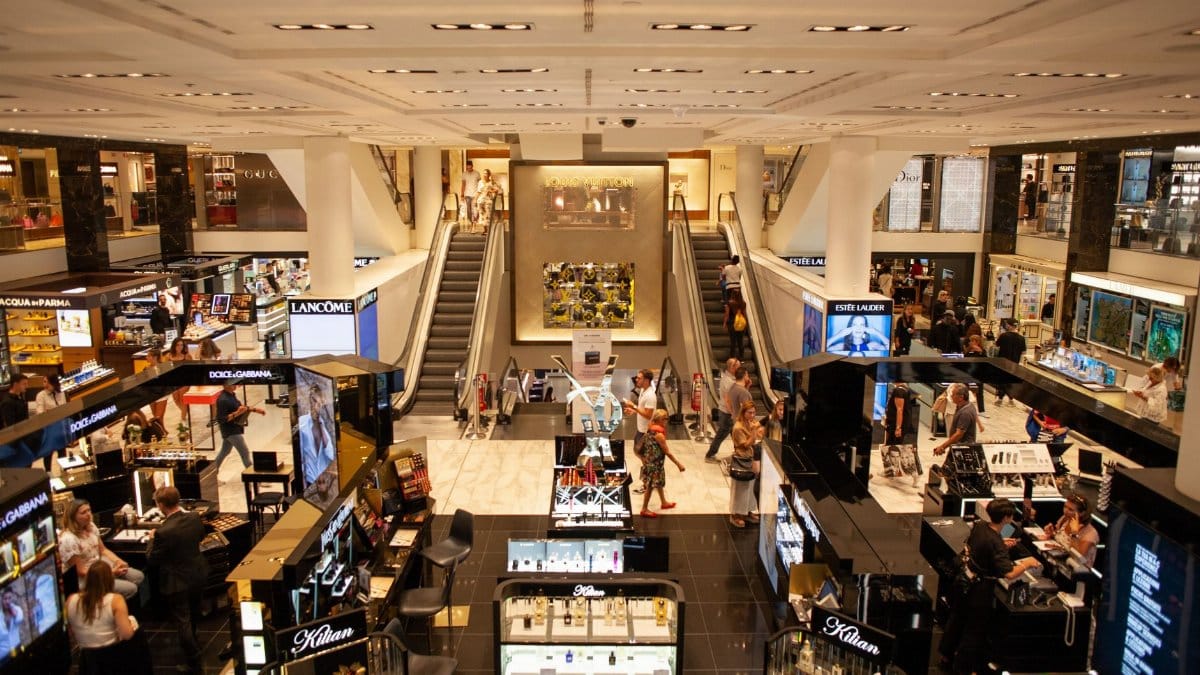
The glass along Market Street still reflects the afternoon crowd, but the old Bloomingdale’s entrance does not open for it. San Francisco Centre, the downtown mall once sold as a vertical city of shops, has been losing the stores that gave people a reason to ride the escalators. What is now being discussed is not a purchase of the whole property. The SF Centre Bloomingdale deal would instead concern the former department store wing, with a buyer tied to Austin said to be in talks for that slice alone. For a city that has heard many promises about downtown, the modesty of the target may be the most interesting fact.
Why one wing is the whole argument

Department stores used to be the reason a mall could charge rent on the smaller shops around them. When the anchor leaves, the logic frays. Food vendors, cosmetics counters, and the odd surviving clothier lose the accidental customers who came for a coat and stayed for lunch. Buying only the Bloomingdale’s wing is a bet that the container still has value even if the brand on the door does not. It is also an admission that the wider mall, with its empty storefronts and uncertain income, is a harder asset to price. In commercial real estate, a smaller parcel with a clear boundary can be easier to finance than a landmark that no longer performs like one. Lenders prefer a story they can draw on a single page. A whole troubled centre rarely fits.
The anchors did not leave quietly
Nordstrom closed its San Francisco Centre store in 2023, ending a long run that had helped define the shopping complex. Bloomingdale’s followed, shutting the Market Street location after years in which downtown foot traffic failed to recover its old rhythm. Those exits were not obscure. They were covered as civic events because each one subtracted a reason to come downtown on a Saturday. The city still has Union Square a short walk away, and some luxury names remain there, but the centre itself became a symbol of subtraction. A partial sale does not rewrite that history. It starts from it. Anyone pricing the wing has to price the memory of departure as well as the square footage still standing behind the glass.
A buyer with a limited appetite

The account now circulating describes a purchaser connected to Austin, not a local department store chain riding in to reopen the old floors under the same name. That distinction matters. An investor can see square footage, a street frontage, and a location rich in transit without promising to become a merchant. The SF Centre Bloomingdale deal, as it has been sketched in public reporting, is a negotiation for the former store, not a pledge to restock it with dresses and perfume. Until papers are signed, even that limited account can shift. Negotiations fail. Lenders object. A number that looked sensible in a model can look reckless after one more walk through a quiet concourse. Distance can be an advantage or a blind spot. An out of town buyer may see value that local fatigue has stopped noticing, or may miss frictions that only show up after the third winter of slow weekends.
What the box still contains

The former store is not a blank lot. It is a large, finished retail box with loading access, escalators, and a face on one of the city’s most famous streets. Those features are expensive to build and tedious to permit. A new owner could pursue another retailer, divide the floors, or seek a mix of uses if the city and the building rules allow it. None of that is simple. Splitting a department store into smaller shops requires capital, tenants, and time. Converting retail space toward offices would swim against a market already full of surplus floors. Entertainment, health services, or education uses get mentioned whenever a big urban store goes dark. Mentioning them is not the same as leasing them. Each alternative needs its own customers, its own hours, and its own tolerance for a downtown that is busier on some days than on others.
Weekdays are the hard part

San Francisco’s downtown was built on a bargain: office workers would fill the sidewalks from Monday to Friday, and visitors would thicken the weekends. The first half of that bargain broke during the pandemic and has only partly returned. Hybrid work kept many desks empty. Conferences came back in bursts. Tourism improved, then met the ordinary limits of weather, prices, and reputation. A mall attached to a transit station still has a structural advantage. People are already there, changing trains, cutting through toward Mission Street, or killing twenty minutes. Advantage is not destiny. If the stores they pass are dark, the shortcut teaches them to keep walking. A buyer of one wing inherits that lesson whether or not the purchase includes the food court, the cinema, or the upper floors where vacancy has been hardest to hide.
Ownership was already complicated

San Francisco Centre has not had a simple recent story of one proud owner and one clear plan. The operator long associated with the complex stepped back as conditions worsened. Lending relationships, ground leases, and the division between retail space and adjacent office interests have made the property feel less like a single building and more like a set of overlapping claims. That is one reason a separation can appeal. The SF Centre Bloomingdale deal would test whether a piece can be pulled free cleanly enough for a new buyer to underwrite it. Clean separation is a legal task as much as a real estate one. Shared corridors, utility lines, and the question of who maintains the parts nobody wants can stall a sale that looks tidy in a headline. Shoppers experience one building. Lawyers may experience several. The gap between those experiences is where deals often go to rest.
The rest of the centre does not vanish
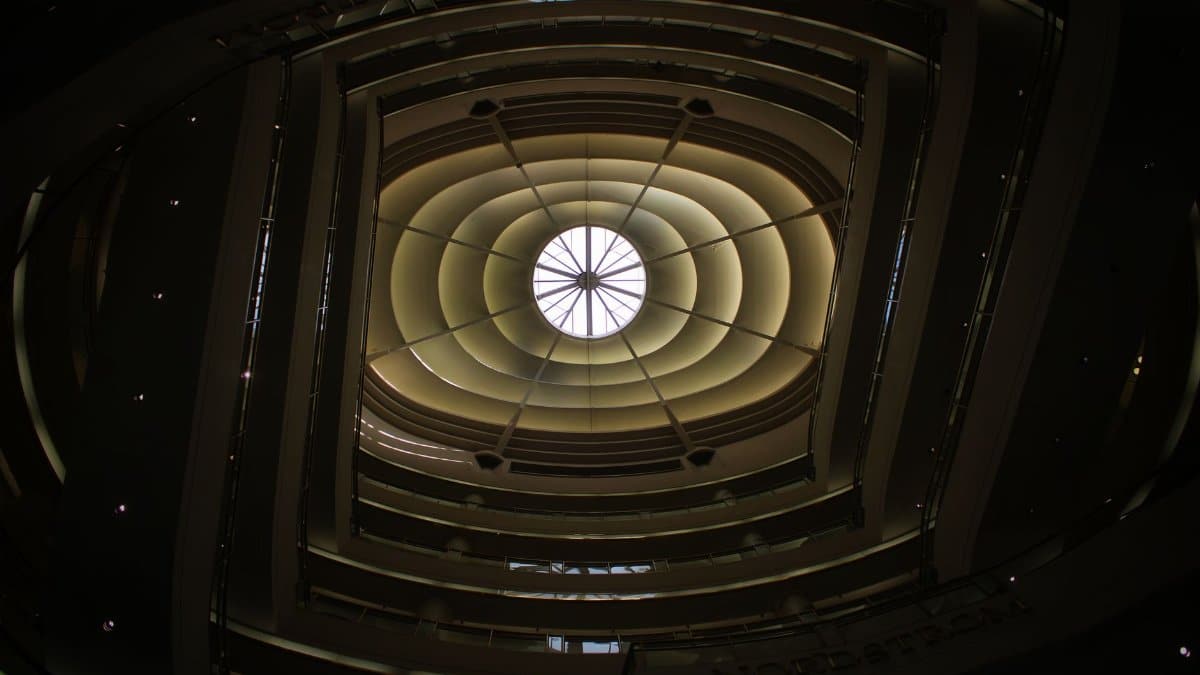
Even if the wing changes hands, the larger mall remains. Food tenants, a cinema, and a scatter of shops have tried to hold on while anchors departed. Their leases, their customer counts, and their confidence are tied to what happens next door, whether or not the legal parcels are distinct. A new owner of the old Bloomingdale’s space might improve one frontage and leave the interior concourse looking just as stranded. Or a visible reuse could send a signal that capital has not fully abandoned this block. Signals are fragile. Retailers do not sign ten year commitments because a neighboring box might someday be interesting. They sign when they can see customers. For the tenants who stayed, a partial sale is neither rescue nor insult until the lights, the hours, and the foot traffic say which one it is.
City hall can cheer and still not close the sale
Local officials have spent the post pandemic years urging investment downtown, adjusting rules, and arguing that San Francisco’s obituary has been written too early. A sale of a prominent vacancy would give them a fact to point to. It would not give them control of the business plan. The city can police safety, clean streets, and process permits. It cannot order a profitable tenant to appear. That limit is worth saying plainly, because civic rhetoric often treats a private closing as a public rescue. The SF Centre Bloomingdale deal, if it is completed, would be a private allocation of risk. Taxpayers should know the difference between a transaction and a turnaround. Celebration is cheap. A permit that arrives on time, a sidewalk that feels ordinary, and a police response that does not become the story are the public contributions that actually change a pro forma.
Reputation is a tenant too

Downtown San Francisco carries a national story that is louder than its daily reality and still not invented from nothing. Visitors trade clips of emptiness and disorder. Residents trade counterexamples: a busy farmers market, a full concert, a good lunch, a train that came on time. Both accounts can be true in the same week. A buyer from outside the city, including one with Austin ties, walks into that argument whether or not the purchase agreement mentions it. Underwriting has to price fear as well as foot traffic. If the fear is overstated, the basis can be a bargain. If the fear is a proxy for rents that no longer clear, the bargain is a trap with good architecture. Outsiders sometimes pay a premium for a famous address and sometimes demand a discount for a famous problem. Which instinct wins will say more about the next year on this block than any slogan from a press conference.
What shoppers would notice

Most people will not read the sale documents. They will notice whether the lights are on and whether the windows have something in them besides paper. They will notice if the entrance stops being a dead stretch between the transit station and the street. They will notice if security feels ordinary rather than theatrical. Those are humble metrics, and they are the ones that decide whether a partial deal becomes a place again. Journalists can overrate the moment a contract is rumored. Leasing is slower and less cinematic. Construction is slower still. A city learns the truth of a real estate bet on a random Tuesday, not on the day the rumor starts. If the wing reopens as something people use, the corporate origin of the buyer will fade. If it stays dark under a new name on a deed, the origin will not matter either.
Memory is not a business plan

People who worked downtown in the 2000s remember this complex as a reliable errand. A gift, a pair of shoes, a movie, a train home. Memory is a poor underwriting model. The customer who used to stop after work may now leave the office at three and finish the errand near home in another county. The visitor who used to build a day around Union Square may now spend it in a single neighborhood and never cross Market Street. Any plan for the old store has to assume a smaller, more deliberate customer, not the accidental crowd that department stores once harvested. That is a harder retail concept, and it is the honest one. Nostalgia can fill a hearing. It cannot fill a sales floor five days a week.
A narrower hope, honestly named
There is a temptation to treat any capital willing to touch this property as proof that the spiral has reversed. That temptation should be resisted. A negotiation for one wing is not a rebirth of the American department store, and it is not a verdict on San Francisco. It is a specific gamble by a specific buyer that a defined piece of a damaged mall can be owned at a price that leaves room for error. The SF Centre Bloomingdale deal deserves attention because of that specificity. Grand plans have been easy to announce in this city. A limited plan that survives contact with lenders, tenants, and an ordinary Thursday afternoon would be harder, and more useful. Downtown does not need another myth. It needs a door that opens, a tenant who stays, and a price that was not a fantasy.