

Imagine sitting with a group of friends on a crisp autumn evening, the conversation drifting toward the mysteries of the stars. One person pulls up their birth chart on a phone app, pointing to a section labeled “houses.” Eyes widen with curiosity as they ask, “What does this even mean?” It’s a question that’s quietly gaining traction across the U.S., as more people turn to astrology for insight. The concept of astrological houses meaning is at the heart of this fascination—a framework that divides a birth chart into 12 segments, each representing a distinct area of life, from relationships to career. Far from being a passing trend, this ancient system offers a lens through which many are seeking to understand their personal journeys in 2025. But how exactly do these houses shape our stories, and why are they resonating so deeply today?
The Foundation of Astrological Houses
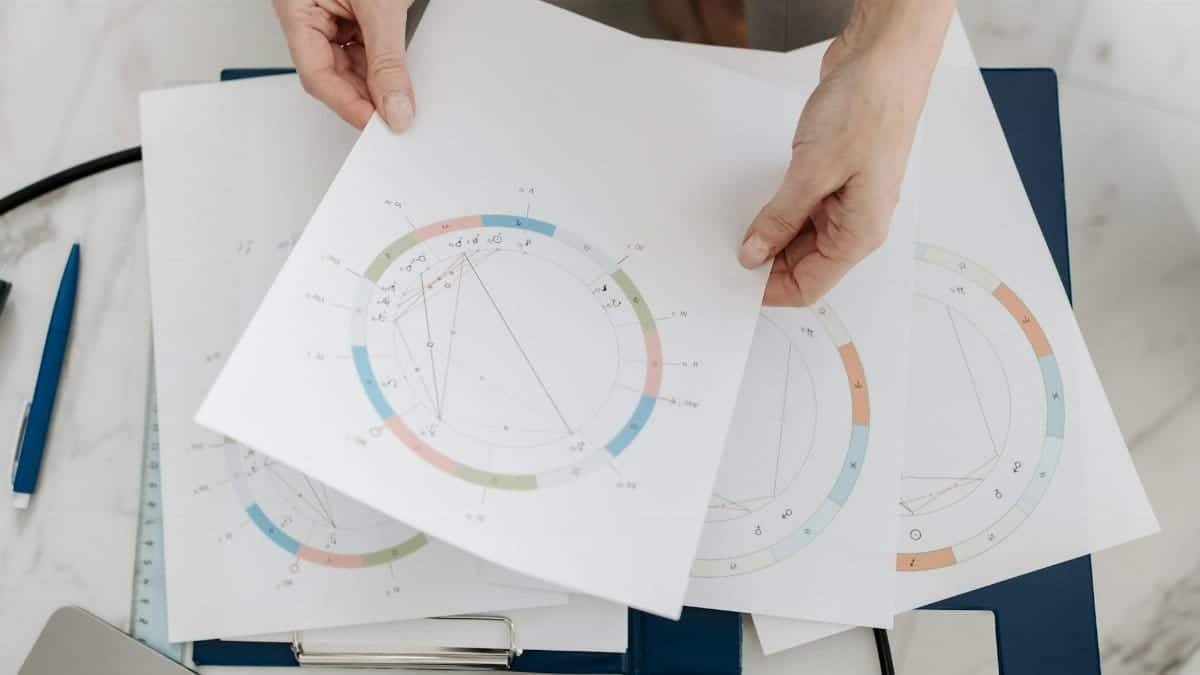
At its core, the astrological houses are a map of human experience. Picture a circular chart, sliced into 12 unequal pieces, each house tied to a specific theme. The first house governs self-identity and appearance, while the seventh rules partnerships and marriage. These divisions are determined by the time and place of one’s birth, making them uniquely personal. According to astrologers, the houses show where planetary energies play out in a person’s life, unlike the zodiac signs, which describe how those energies manifest. This distinction is key to grasping astrological houses meaning. A report from Pew Research Center notes that belief in astrology has held steady among Americans, with many turning to such tools for self-reflection.
Think of the houses as rooms in the mansion of your life. Each room has a purpose, a vibe, a set of challenges. When someone discovers, say, that their fourth house of home and family is influenced by a particular planet, it can feel like unlocking a hidden chapter of their story. This framework isn’t just esoteric fluff—it’s a way to organize and interpret the chaos of existence.
How the Houses Reflect Life’s Facets

Every house in a birth chart corresponds to a slice of reality. The second house, for instance, deals with money and personal values, while the tenth focuses on career and public reputation. This segmentation helps people pinpoint where they might face struggles or find ease. A person with a crowded sixth house might be preoccupied with health and daily routines, perhaps wrestling with stress or overwork. Meanwhile, an emphasis on the ninth house could signal a hunger for travel, learning, or spiritual growth. Resources like Astrology.com offer detailed breakdowns of each house’s significance, grounding these concepts in accessible language.
These connections aren’t just theoretical. They often strike a chord with lived experience. A woman in her forties, for example, shared anonymously in a recent online discussion how learning about her eighth house—linked to transformation and shared resources—helped her navigate a painful divorce. It wasn’t a cure, but it gave her a way to frame the upheaval. Such stories reveal why the astrological houses meaning resonates: they offer a structure to process life’s messiness.
The Cultural Surge of Astrology’s Appeal

Astrology’s popularity isn’t new, but its integration into mainstream American life has accelerated. Apps like Co-Star and The Pattern have millions of users, many of whom are middle-aged adults seeking clarity amid career shifts or family changes. A 2017 survey by the National Science Foundation found that a significant portion of Americans read horoscopes at least occasionally, a trend that’s only grown with digital access. The houses, in particular, appeal because they go beyond generic sun-sign predictions, offering a tailored blueprint.
This isn’t just about curiosity. In a world of economic uncertainty and social flux, the houses provide a sense of control, a way to map out personal terrain. Walk into a coffee shop in Portland or scroll through a community forum in Chicago, and you’ll hear whispers of “my second house” or “my twelfth house struggles.” It’s a shared language emerging in 2025, one that bridges generational and cultural divides.
Challenges in Interpreting the Houses

Understanding astrological houses meaning isn’t always straightforward. The system’s complexity can be daunting—houses vary in size based on latitude of birth, and their interpretation depends on planetary placements and aspects. A beginner might feel overwhelmed trying to decipher why their fifth house of creativity feels “blocked.” Even seasoned astrologers admit that context matters: a house’s meaning shifts based on individual charts. The Astrodienst platform emphasizes that cultural and personal factors influence how houses are experienced, adding layers of nuance.
Then there’s the skepticism. Critics argue that astrology lacks empirical grounding, pointing to studies like those summarized by the Association for Psychological Science that find no consistent link between astrological predictions and real-world outcomes. Yet, for many, the value lies not in literal truth but in the framework for introspection. It’s less about prediction and more about prompting questions: Why do I struggle in this area? What can I prioritize?
Practical Ways to Engage with the Houses

So, how does one apply this knowledge? Start simple. Pull up your birth chart using a free tool online—most require only your birth date, time, and location. Identify which houses hold key planets or clusters of energy. A crowded eleventh house, tied to friendships and aspirations, might suggest focusing on community involvement. Reflect on whether the themes of each house match your current challenges or strengths. Many find journaling about these connections helpful, noting patterns over time.
Beyond personal use, some bring this into everyday decisions. A small business owner might consult their tenth house before a major launch, not as a crystal ball but as a way to focus intent. Others use house transits—when planets move through specific houses—to time personal goals. It’s not science, but for believers, it’s a ritual that grounds them amid life’s unpredictability.
The Emotional Pull of a Cosmic Map

There’s something undeniably human about seeking patterns in the stars. The astrological houses meaning taps into a longing for structure, for a sense that life’s randomness isn’t entirely random. When a person learns their fourth house speaks to family roots, they might feel compelled to reconnect with estranged relatives or dig into ancestry. It’s not just data—it’s a nudge toward meaning. In a therapy group in Seattle, one participant described their twelfth house of the subconscious as a “quiet whisper” urging them to confront buried fears. The language of houses gave them a way to name what felt nameless.
This emotional resonance is perhaps why astrology endures, even among skeptics. It mirrors the way we tell stories about ourselves, piecing together fragments into a coherent whole. As more Americans grapple with identity and purpose in 2025, the 12 houses offer a canvas to sketch out answers, however provisional they may be.
Bridging Ancient Wisdom with Modern Needs

The system of astrological houses dates back to ancient Babylon, yet its relevance feels strikingly current. Today’s users aren’t just mystics—they’re often pragmatic, seeking tools to navigate a fragmented world. The houses adapt to modern contexts, whether it’s interpreting the sixth house for workplace wellness or the third for digital communication. This flexibility keeps the practice alive, evolving with societal shifts.
Yet, there’s a tension here. As astrology grows more commercialized, with influencers and apps simplifying complex ideas, some worry the depth of astrological houses meaning gets lost. Purists argue for studying traditional texts alongside modern takes, balancing accessibility with authenticity. It’s a reminder that while the houses are a personal map, they’re also part of a broader, ancient conversation—one that continues to unfold.